
anker-solix
Anker SOLIX F2000 (PowerHouse 767)
Anker 2kWh backup with a decade rated battery, four AC outlets, three USB-C ports, and a dedicated RV outlet. Familiar, quiet, and built to sit ready for a decade.
Full review →
Categories
CampingQuiet electricity for the campsite: lights, phones, a fan, and the coffee maker, without a generator's noiseHome backupWhen the grid drops, essentials stay on: fridge, router, lights in one room, phones charged, medical devicesEvents & on-siteRunning shows, shoots, food stalls, and vendor booths off the grid, with clean power and no fumesEmergency prepThe battery you want charged before the storm: communications, lighting, refrigeration, and medical devicesRV / off-gridHouse power that moves with you: 12-volt ecosystems, solar pairing, and batteries that charge from the12V & jump startThe 12-volt rescue: keeping vehicle accessories, lights, and small 12-volt systems alive when you are the onlyProducts
All power stationsCompare specsAferiyAllpowersAnker SOLIXBLUETTIEcoFlowGeyotoGoal ZeroGrowattJackeryRenogyYEAGULCHArticles
Residential vs Business Portable Power: How to Tell What You Actually NeedPortable Power for a Landscaping Company: Ditching the 200-Foot Extension CordPortable Power for a Food Truck That Wants to Plug In AnywhereRunning Job Site Power Without a GeneratorWhole Home Backup vs Appliance Backup: Pick the Right SizeHow Long Will a Power Station Run: A Practical Planning GuidePairing a Solar Panel for a Power Station: What to MatchPortable Power for Outdoor Events: Weddings and ReceptionsGuides
Portable Power for Camping: The Complete Guide to On-Site ElectricityPortable Power for Home Power Outages: A Real Backup Plan for the GridPortable Power for Events & On-Site Work: Running Shows, Shoots, and Stands Off the GridPortable Power for Emergencies: The Battery You Want Charged Before the StormPortable Power for Jump-Starting a Car & Vehicle PowerPortable Power for RV, Van Life & Off-Grid Living Compare AboutTrust
Affiliate Disclosure Privacy Policy Terms of UseIf you want a single unit that follows you from a weekend campsite back into your garage and then takes over when the power blips at home, the AFERIY P210 rewards a second look. It stores 2,048Wh inside a lithium iron phosphate pack that AFERIY rates for more than 3,500 cycles, and the hardware lives behind a 2,400W inverter that can surge to 4,800W for a short burst. That pairing is what lets a coffee maker warm up, a laptop stay charged, and a phone top up while a small fridge keeps its cool, all from one box whose running noise stays under 30 decibels and nearer 16 decibels during ordinary use, so it can sit close to a tent or a bedroom without complaint. The connection list helps explain why groups keep choosing it for multi day trips. You get sixteen jacks in total, including six household style AC outlets, four USB-C ports with one delivering 100W for a full size laptop, two USB-A ports, two DC barrel jacks, a vehicle style outlet, and an XT60 line rated at 300W. That spread means the cook, the photographer, and the person keeping a router alive are not competing for the same socket. Weight lands at 54 pounds, which places it firmly in two person carry territory, something to weigh honestly before you imagine it in a small hatchback. Refilling takes about two hours from a wall socket, while the solar side accepts up to 800W through the kit, giving slow, free top ups under good sun. A server grade uninterrupted switchover under 10 milliseconds is the feature that lifts this station above pure camping duty, because a desktop, a modem, or a breathing machine never notices a drop. AFERIY supports the unit with a seven year extended cover, and the 10 year design horizon on the cells makes a fair case for buying once. It suits campers who want one purchase to serve site and home, along with small households who need backup that can also travel. Read the full review below, then check the current offer.
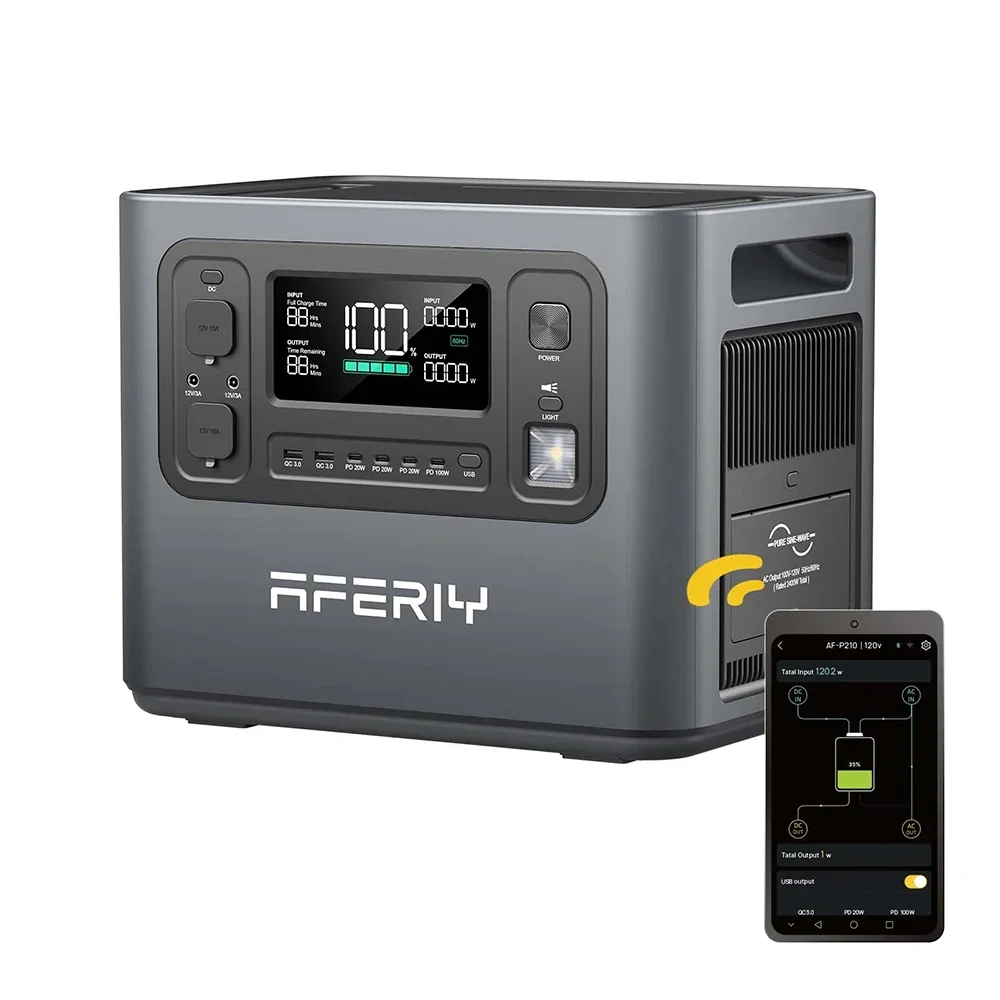
The AFERIY P210 is the kind of portable power station for camping that keeps earning its keep after you get home. It stores 2,048Wh of LiFePO4 energy behind a 2,400W inverter with 4,800W of peak surge, so a campsite morning runs a coffee maker, a laptop, and a phone charger at the same time, and the same rig covers a refrigerator, a router, and room lighting if the grid drops while you are inside. At 54 pounds it is a two-person load rather than a backpack item, which fits how the station is meant to live: rolled to the car for the weekend, parked in the garage for the winter.
On the trail the P210 is generous with connections. Its sixteen ports span six AC outlets, four USB-C sockets (one pushing 100W for a laptop), two USB-A, two DC5521 jacks, a car outlet, and a 300W XT60 DC output, so a camp group spreads out without fighting over a single power strip. Recharging is unglamorous but quick: about two hours from a wall socket, or a slower top-up through up to 800W of solar input on the days the campsite has no outlets. Noise stays under 30 decibels even at full load and around 16 in normal use, quiet enough to sit next to a sleeping bag without earning a complaint.
**Not every portable power station for camping can also act as the home's UPS, and the P210 is one of the few that can.** Its server-grade switchover hands the load to the battery in under 10 milliseconds, fast enough that a desktop computer, a network router, or a CPAP machine never notices the outage at all. Most camping power stations stop being useful the moment you get home, but this one stays on the list. The cells are rated for 3,500-plus cycles with a 10-year design life, and AFERIY backs the unit with a 7-year extended warranty, two years longer than most competitors in this class offer.
One practical note before you decide: the capacity is fixed, so a buyer who expects to bolt on extra battery later should look at an expandable line instead. For everyone else, the combination of sub-10ms UPS speed, a 7-year warranty, and a 16-port spread makes the P210 one of the most complete recreational power on the go setups in its price neighborhood. If your weekends live at a campsite but a home outage keeps you up at night, the P210 is the portable power station for camping to shortlist, and its product page is the right place to confirm the current asking price and stock before the next trip.
Most camping stations turn into closet dust once the tent is packed away, and that is money sitting idle eleven months a year. The P210 was plainly designed to avoid that fate: the same 2,400W inverter that runs a campsite coffee maker will sit in the garage and hand a refrigerator, a router, and a CPAP machine over to battery power in under 10 milliseconds when the outage hits. You get a weekend power plant and an always ready home backup in a single purchase, which is the only way the math on a 2kWh station makes sense for a household with both needs.
The quiet advantage is confidence. Because the UPS transfer is fast enough that a desktop session or a medical device never blinks, you can leave this station plugged in and forget about it until the day you need it. When that day comes, the 2,048Wh reserve and the 4,800W surge handle compressor starts and microwave bursts without the inverter tripping. That is the difference between a backup you have checked and one you are simply hoping about.
The two hour AC recharge is the first time saver. After a weekend of drawdown your station is back to full during a quick errand rather than an overnight wait, so the next trip starts from a full battery instead of a partial one. A 400W solar kit or up to 800W of solar input handles the campsite version of the same job, topping the battery while you are out on the trail.
The 16 port spread removes the daily friction of sharing two outlets. Six AC sockets, four USB-C ports with one at 100W, two DC5521 jacks, a car socket, and a 300W XT60 output mean a camp group or a family room spreads out without a tangle of adapters. Running noise under 30 decibels at full load, closer to 16 in normal use, means nobody has to move the station away from a sleeping area to get some rest.
This is a single fixed size tier, so think of the choice as which 2kWh class you want rather than which capacity steps to climb. Confirm the warranty terms before you buy, since the 7 year extended coverage is a headline differentiator here, and check whether a solar kit is bundled or priced separately. Size for your actual startup loads, because a 4,800W surge covers more compressor starts than most rivals but still will not run a central air conditioner.
This fits a household that wants campsite power and home backup in one box, with the UPS speed and warranty to justify the dual role. It suits CPAP users, home offices, and families who camp with a full kitchen load. It does not fit buyers who want to bolt on extra batteries later, since capacity is fixed at 2,048Wh, or anyone who needs to carry the station a long distance, because 54 pounds is a two person load.
For how long will the 4,800W surge actually matter. It matters every time a compressor motor starts. A refrigerator, a sump pump, or a microwave pulls far more during its first second than its running draw, and the surge ceiling is what lets those starts happen without tripping the inverter. If your load list is only lights and phones, the surge is wasted headroom, but for appliances it is the spec that decides whether the station works.
How quiet is 16 decibels in a real sleeping area. It is quieter than a whisper and far quieter than a tent flap in the wind, so the station can sit inside a large tent or beside a bed without becoming the loudest thing in the room. At full load the level rises to under 30 decibels, which is still a library conversation level. In practice you will hear the cooling fans if you listen for them and forget about them in a minute.
Could the 7 year warranty actually be worth paying for. Yes, because a LiFePO4 pack rated for 3,500 plus cycles is a decade grade component, and the warranty should match that horizon rather than the two or three years most rivals offer. A station that sits ready for outages accumulates very few cycles but a great deal of calendar time, so long coverage protects the exact failure mode this product will actually face.
Against sealed 1kWh stations the P210 trades portability for capacity and keeps the UPS speed, which suits a household that camps and backs up. A 1kWh unit is far lighter and far cheaper to buy, but it cannot run a full camp kitchen and a home essential list at the same time. If weight is the constraint, the smaller class wins, and if capacity with a real UPS is the goal, the P210 and its fixed 2,048Wh hold win on value per watt hour.
Against expandable 2kWh rivals the P210 trades growth for warranty and ports. Modular stations let you add batteries as needs grow, which is the better path if multi day coverage is the plan from the start. This station instead offers a longer warranty, a faster UPS, and a wider port spread at a lower entry price. Choose the growth path when you expect to outgrow 2kWh, and choose this one when the dual camp and home role plus the coverage horizon matter more.
A common mistake is treating the 16 port spread as permission to plug in everything at once. The 2,400W inverter is the real ceiling, not the port count, and running a microwave, a coffee maker, and a space heater together will trip the unit even with sockets to spare. List your simultaneous loads first and run them in sequence instead of in parallel.
A second mistake is storing the station at zero charge and forgetting it. LiFePO4 chemistry tolerates neglect better than older cells, but a battery left empty for a year will not greet you at full capacity. Park the unit around half charge and plug it in twice a year, which keeps the cells in the range the 10 year design expects.
Get the most from this setup by giving it two permanent jobs. Keep it in the garage wired as the home UPS for the router, desktop, and CPAP, and use it as the camp kitchen power on weekends. That dual duty spreads the purchase across two budgets and gives you a reason to test every port quarterly. A station that is only ever a toy gets used hard on the one trip that matters, while a station that works every week stays proven.
A second habit is pre loading the solar path before the season starts. Test the up to 800W solar input at home with a panel on a clear day so the connectors are familiar before you need them at a site without hookups. Stations that are first unboxed during an outage or a storm never get the easy familiarization session, and that is when small mistakes cost the most.
Keep the LiFePO4 pack between roughly 40 and 80 percent charge during long storage, top it up a few times a year, and keep the vents clear of dust so the cooling fans can hold the inverter below its thermal limit. Run a full discharge and recharge cycle once or twice a year to let the battery monitor recalibrate its idea of full, and store the unit somewhere dry and temperate rather than a freezing shed or a sun baked attic.
Links open the official listing. Price, terms, and availability can change, so the live page is the source of truth.
Same situation, different option. Worth comparing before you decide.
Anker 2kWh backup with a decade rated battery, four AC outlets, three USB-C ports, and a dedicated RV outlet. Familiar, quiet, and built to sit ready for a decade.
Full review →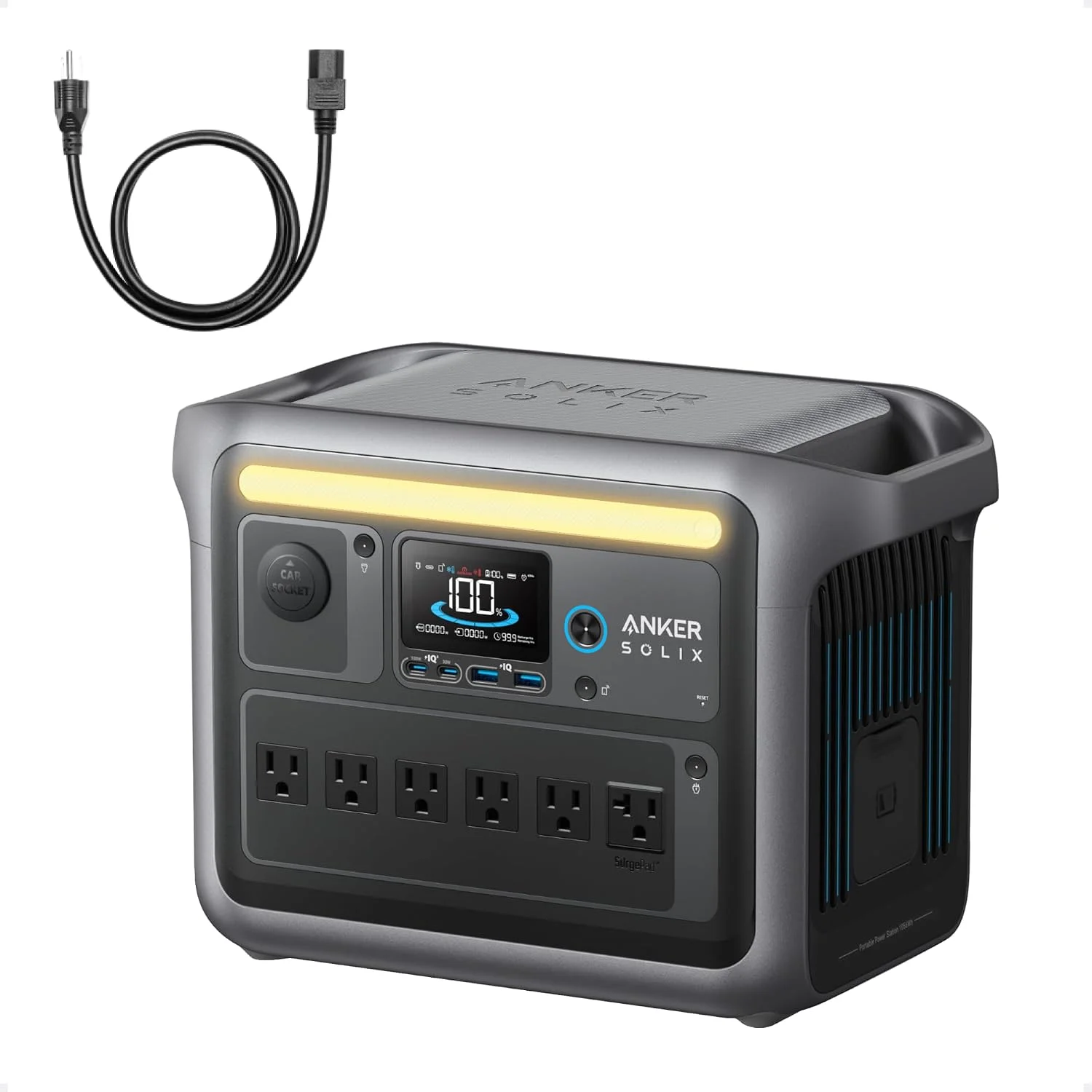
Anker trust with a 15 percent smaller 1kWh body, 80 percent charging in 43 minutes, and a 1,800W inverter. The easy first buy for home backup, camping, and the truck.
Full review →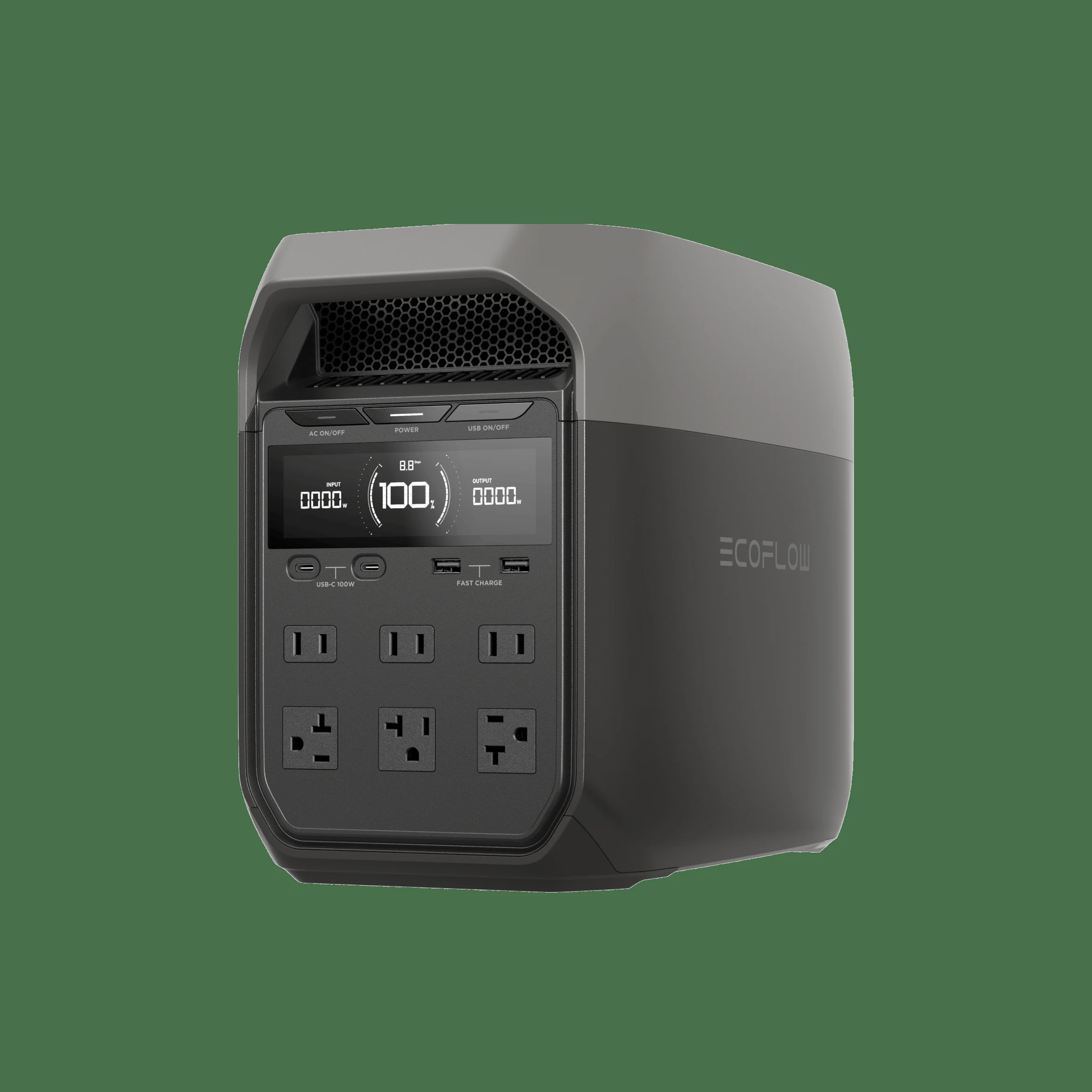
Budget home backup with 1,024Wh, 1,800W output, 50 minute charging, and a path to 3,072Wh. It covers a fridge, router, and lights through a typical outage, then grows later.
Full review →