ecoflow
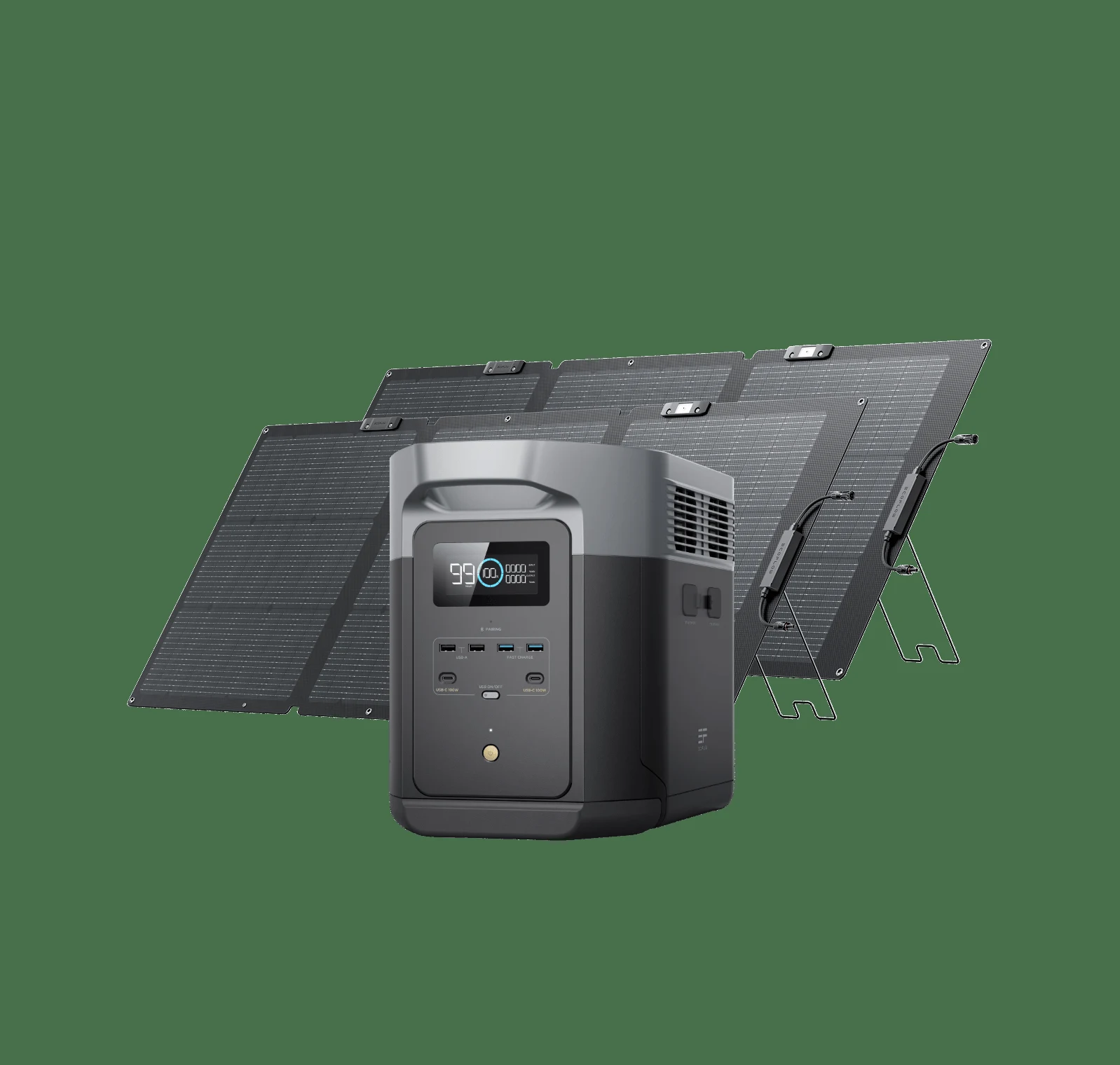
EF ECOFLOW DELTA 2 Max
2,048Wh with 2,400W output, 1,000W solar input, and 80 percent charging in 43 minutes. Built for multi day storms, power tools, and full vehicle RV power.
Full review →
Categories
CampingQuiet electricity for the campsite: lights, phones, a fan, and the coffee maker, without a generator's noiseHome backupWhen the grid drops, essentials stay on: fridge, router, lights in one room, phones charged, medical devicesEvents & on-siteRunning shows, shoots, food stalls, and vendor booths off the grid, with clean power and no fumesEmergency prepThe battery you want charged before the storm: communications, lighting, refrigeration, and medical devicesRV / off-gridHouse power that moves with you: 12-volt ecosystems, solar pairing, and batteries that charge from the12V & jump startThe 12-volt rescue: keeping vehicle accessories, lights, and small 12-volt systems alive when you are the onlyProducts
All power stationsCompare specsAferiyAllpowersAnker SOLIXBLUETTIEcoFlowGeyotoGoal ZeroGrowattJackeryRenogyYEAGULCHArticles
Residential vs Business Portable Power: How to Tell What You Actually NeedPortable Power for a Landscaping Company: Ditching the 200-Foot Extension CordPortable Power for a Food Truck That Wants to Plug In AnywhereRunning Job Site Power Without a GeneratorWhole Home Backup vs Appliance Backup: Pick the Right SizeHow Long Will a Power Station Run: A Practical Planning GuidePairing a Solar Panel for a Power Station: What to MatchPortable Power for Outdoor Events: Weddings and ReceptionsGuides
Portable Power for Camping: The Complete Guide to On-Site ElectricityPortable Power for Home Power Outages: A Real Backup Plan for the GridPortable Power for Events & On-Site Work: Running Shows, Shoots, and Stands Off the GridPortable Power for Emergencies: The Battery You Want Charged Before the StormPortable Power for Jump-Starting a Car & Vehicle PowerPortable Power for RV, Van Life & Off-Grid Living Compare AboutTrust
Affiliate Disclosure Privacy Policy Terms of UsePreparedness That Works in the Dark
Portable Power for Emergencies: The Battery You Want Charged Before the Storm
Preparedness That Works in the Dark
A 800 to 2,000 watt-hour station is the household emergency baseline and covers a 24 to 72-hour window with the fridge running.
Fast AC recharge is the feature to prioritize, because the top-up before the storm is the one that counts.
A small solar array turns a finite emergency reserve into a renewable one for multi-day events.
The phrase emergency power tends to carry more fear than it deserves. The vast majority of the outages a household will face in a decade are short events: a storm cell that drops a transformer for a few hours, an ice event that takes a few days to clear, a maintenance window that takes a single neighborhood down, or a grid event triggered by a piece of equipment failing at the worst hour. The difference between one of these being a mild inconvenience and a real emergency is almost always not how long the outage lasts; it is whether the household has a pre-charged source of power that does not require fuel, does not have to be vented outdoors, and can be running in under a minute.
That is the definition of what a portable power station does in an emergency. It is the piece of gear that has already been bought, already been charged from a normal wall outlet over the past week, and already in the house before the event. The moment the lights go out, there is no trip to the store and no carbon monoxide alarm sounding; there is a battery that is already holding the household's critical load, and it can be running the fridge, the router, the medical device, and a light in the time it takes to flip the switch.
The reason a station is the standard recommendation for household preparedness rather than a generator is the safety and convenience combination. A fuel generator is a real, useful tool, and it has a place in a serious emergency plan, but it does not belong inside the house, and it does not work when the fuel in it has degraded over a few months of sitting. A portable power station is a sealed lithium or LiFePO4 battery with a sealed inverter; it is safe to keep in the hallway, the bedroom, or a child's room, it runs quietly, and it produces no carbon monoxide. It is a normal, part-of-the-household object that the family sees every day, not an emergency appliance in a shed.
The other reason a station is the preparedness tool of choice is that it is genuinely a dual-use device. The same unit that is the emergency reserve on a stormy night is the camping battery on a weekend trip, the home backup during a maintenance window, or the on-site power for a small project. That dual-use nature is what keeps the battery charged: a generator in a shed is unused until the day it is needed, and the fuel in it has likely degraded, whereas a portable station that a family actually uses every couple of weeks is the one that is charged the day the storm hits.
Sizing an emergency station is the same exercise as sizing for a home outage, but with a tighter target. The goal is not to power the whole house; it is to power the household's critical list for a 24 to 72-hour window on a single or a small number of full charges. For most households, the 800 to 2,000 watt-hour band is the right size, because it covers a refrigerator and freezer through a full day and a night, a router, a handful of devices, and several hours of lighting, with margin.
For households with higher critical loads, such as a full medical equipment line or a home office that must keep running, the 2 to 4 kilowatt-hour band is the honest size, and that is where the larger, modular, higher-capacity units from the top brands start to make sense as the actual emergency core rather than a camping battery that happens to double as one. The other key preparedness feature is the recharge speed, because a top-up before the storm is the one that counts. Most mid- and large-capacity stations recharge from a household outlet in two to four hours, and the high-capacity modular models shave that to under two hours with fast AC input, so a family can restore a usable reserve in an hour or two rather than all night long.
The brand choice follows the capacity band. In the 0.5 to 2 kilowatt-hour band, Jackery's mid-range Solar Generator series, Anker SOLIX, and EcoFlow's DELTA line are the common picks, with GEYOTO and ALLPOWERS the value options and Goal Zero the premium rugged one. In the 2 to 4 kilowatt-hour and modular band, EcoFlow's DELTA Pro, Bluetti's AC series, and Jackery's higher-capacity HomePower series are the standard cores. Pair any of them with a small portable solar array and the battery stops being a finite reserve and becomes renewable for a true multi-day event, which is the single most useful preparedness upgrade beyond the core unit.
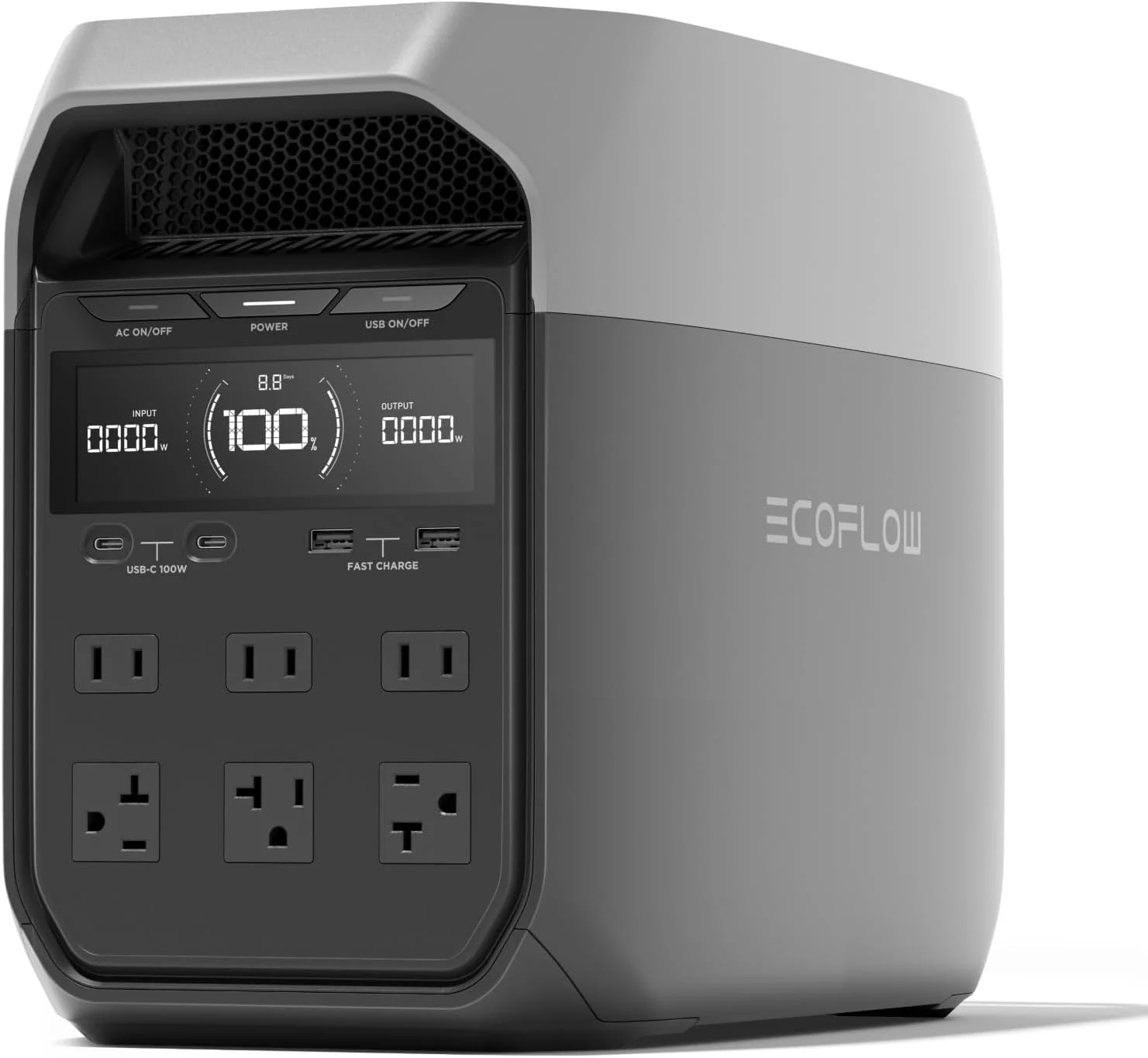
2,048Wh with 2,400W output, 1,000W solar input, and 80 percent charging in 43 minutes. Built for multi day storms, power tools, and full vehicle RV power.
Full review →
Anker 2kWh backup with a decade rated battery, four AC outlets, three USB-C ports, and a dedicated RV outlet. Familiar, quiet, and built to sit ready for a decade.
Full review →
A one person carry 1kWh backup that recharges to 80 percent in about an hour and handles a fridge, router, and lights with ease. Solar input up to 650W keeps it topped up on long off grid days.
Full review →