ecoflow
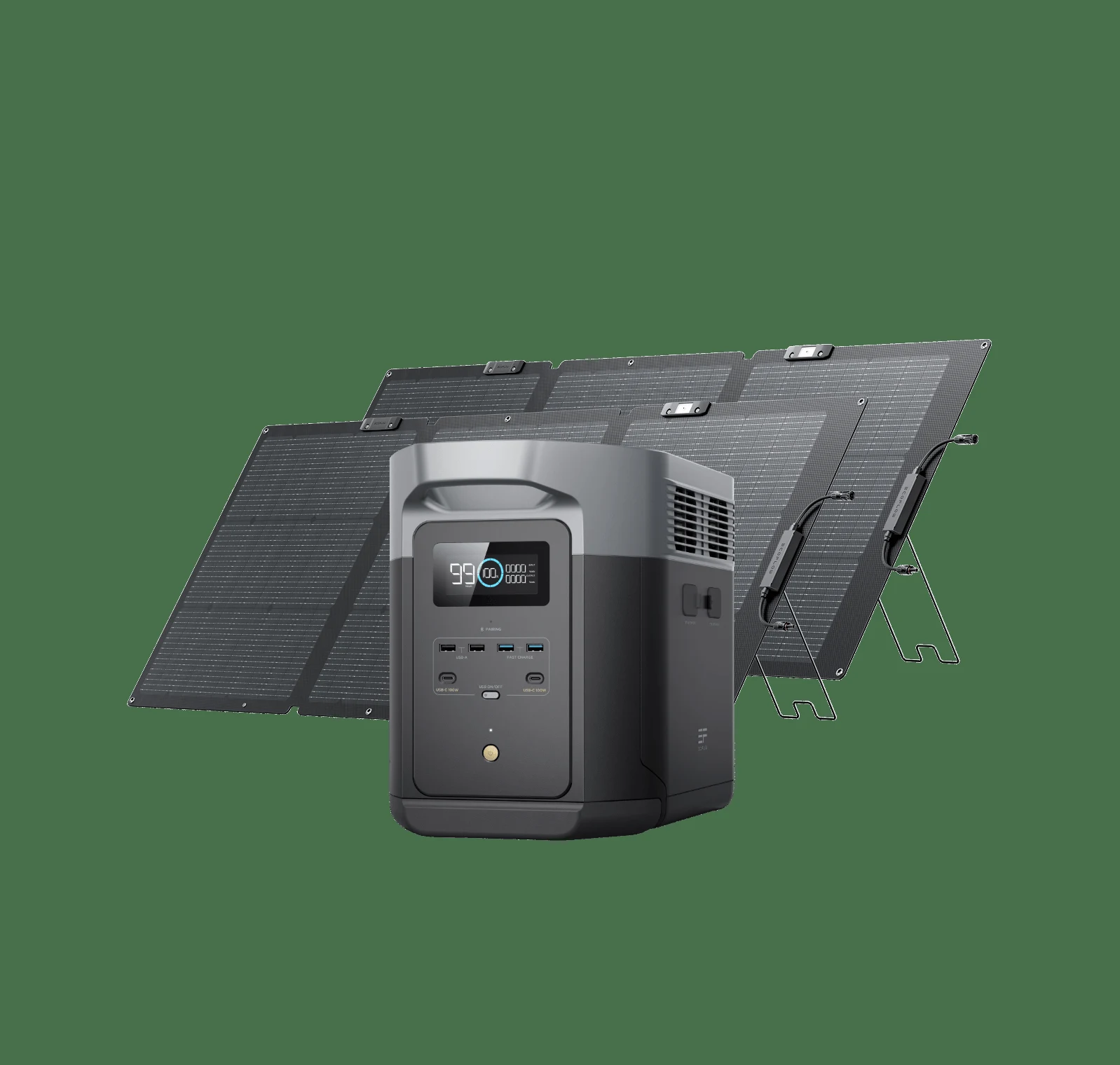
EF ECOFLOW DELTA 2 Max
2,048Wh with 2,400W output, 1,000W solar input, and 80 percent charging in 43 minutes. Built for multi day storms, power tools, and full vehicle RV power.
Full review →
Categories
CampingQuiet electricity for the campsite: lights, phones, a fan, and the coffee maker, without a generator's noiseHome backupWhen the grid drops, essentials stay on: fridge, router, lights in one room, phones charged, medical devicesEvents & on-siteRunning shows, shoots, food stalls, and vendor booths off the grid, with clean power and no fumesEmergency prepThe battery you want charged before the storm: communications, lighting, refrigeration, and medical devicesRV / off-gridHouse power that moves with you: 12-volt ecosystems, solar pairing, and batteries that charge from the12V & jump startThe 12-volt rescue: keeping vehicle accessories, lights, and small 12-volt systems alive when you are the onlyProducts
All power stationsCompare specsAferiyAllpowersAnker SOLIXBLUETTIEcoFlowGeyotoGoal ZeroGrowattJackeryRenogyYEAGULCHArticles
Residential vs Business Portable Power: How to Tell What You Actually NeedPortable Power for a Landscaping Company: Ditching the 200-Foot Extension CordPortable Power for a Food Truck That Wants to Plug In AnywhereRunning Job Site Power Without a GeneratorWhole Home Backup vs Appliance Backup: Pick the Right SizeHow Long Will a Power Station Run: A Practical Planning GuidePairing a Solar Panel for a Power Station: What to MatchPortable Power for Outdoor Events: Weddings and ReceptionsGuides
Portable Power for Camping: The Complete Guide to On-Site ElectricityPortable Power for Home Power Outages: A Real Backup Plan for the GridPortable Power for Events & On-Site Work: Running Shows, Shoots, and Stands Off the GridPortable Power for Emergencies: The Battery You Want Charged Before the StormPortable Power for Jump-Starting a Car & Vehicle PowerPortable Power for RV, Van Life & Off-Grid Living Compare AboutTrust
Affiliate Disclosure Privacy Policy Terms of UseCamping without the Guesswork
Portable Power for Camping: The Complete Guide to On-Site Electricity
Camping without the Guesswork
A 200 to 500 watt-hour unit covers charging devices and small lights for backpacking or short weekends.
An 800 to 2,000 watt-hour unit is the car-camp sweet spot and runs a 12-volt fridge for hours.
Pair the station with a matching solar panel (often 100 to 200 watts) to close the recharge loop.
Jackery, EcoFlow, Anker SOLIX, Goal Zero, GEYOTO, and ALLPOWERS all sell strong camping-specific models.
For a century, camping meant accepting whatever power the site gave you: a single weathered pedestal outlet in an RV park, the car battery for a phone, and the stars for light after dark. That deal is over. A portable power station has quietly changed what is possible at a campsite, because it turns a single, limited, frequently unreliable source of electricity into a personal, portable one that you bring with you, charge wherever you want, and draw from exactly when you want. The question is no longer whether you can run your gear away from a wall, but how much of it you can run, for how long, and without dragging a fuel generator around to do the job.
This guide walks through what a portable power station actually does at a campsite, how to size one correctly for the kind of camping you do, and where the solar-charging loop turns a weekend gadget into a genuinely off-grid system. The brands and numbers referenced throughout come from the major portable power manufacturers currently running affiliate programs, including Jackery, EcoFlow, Bluetti, Goal Zero, Anker SOLIX, and a range of value and premium players such as GEYOTO and ALLPOWERS, so this is a working purchasing guide, not a generic overview.
What a portable power station gives you on a site begins with the basic building block: a bank of lithium-ion or LiFePO4 cells that stores energy in watt-hours, paired with a set of outputs that let you draw on that energy in the forms your gear actually uses. Most modern units give you one or more AC outlets (the standard 120-volt wall outlet, usable for lamps, small appliances, and anything you would normally plug into a house), one or more USB-A and USB-C ports for phones, cameras, laptops, and drones, a 12-volt DC port for car accessories and 12-volt camp gear such as a portable fridge, and on many models an AC fast-charge input for topping up in an hour or two from a wall or a car. The AC output, not the battery, is the part that unlocks almost everything, because it is what lets you treat the unit as a small, self-contained power system you can hook up to the entire range of gear you were otherwise rationing to the car battery.
The second thing a station gives you that the pedestal outlet does not is independence. A campsite outlet is fixed, shared, and frequently underpowered or unreliable. A portable station is wherever you want it to be: on the table, at the tent, in the shade, by the fire. It also lets you charge and use power during the hours the site power is not useful, which in most camps means overnight. Set it up before you turn in, draw from it through the evening, and let the sun top it up while you are gone, and the outlet you once depended on becomes a convenience rather than a requirement.
Sizing a station for camping comes down to three numbers: the wattage of the heaviest single device you will run, the total watt-hours of energy you expect to consume in a day, and the number of days you want one full charge to carry you. The heaviest device matters first, because most stations can handle several hundred watts of continuous AC draw, but a few high-draw items such as an induction cooktop, a large space heater, or a hair dryer will exceed a small, budget unit and even strain a mid-size one. For typical camp gear, the realistic continuous loads are modest: a 12-volt fridge draws around 50 watts on average and is the single biggest continuous consumer on most sites, a camp light and a laptop each draw tens of watts, and a phone or camera draws very little. Add those up and a typical car camp day lands somewhere between 400 and 800 watt-hours of consumption, which is why the 800 to 2,000 watt-hour band is the camping sweet spot for most people.
The day-count is where the sizing decision actually lands. If you want one full charge to comfortably cover a two-night car camp with a 12-volt fridge running, you are looking at roughly 1,000 to 1,600 watt-hours. If you are backpacking and only need to charge a phone, a light, and a camera, a 240 to 300 watt-hour unit is enough. If you are running a serious overlanding setup with a full-size fridge, a portable induction burner, a drone, and a laptop, you want either a large 2,000 watt-hour unit or, more sensibly, a mid-size unit paired with enough solar to replenish it daily so you are not carrying several kilowatt-hours of battery on the roof for two people.
This leads to the point that makes the solar loop the defining camping advantage: a folding solar panel that matches the station in wattage can replace the wall outlet entirely. A 200 watt panel, for example, can add several hundred watt-hours on a sunny day, which is roughly what a typical car camp consumes, so the system becomes a closed loop you top up in the sun and draw from at night. That closed loop is what moves a portable power station from being a convenient camping battery into a genuinely off-grid system, and it is the reason the mid-size station plus matching solar panel combination is the single recommendation to start from in this category.
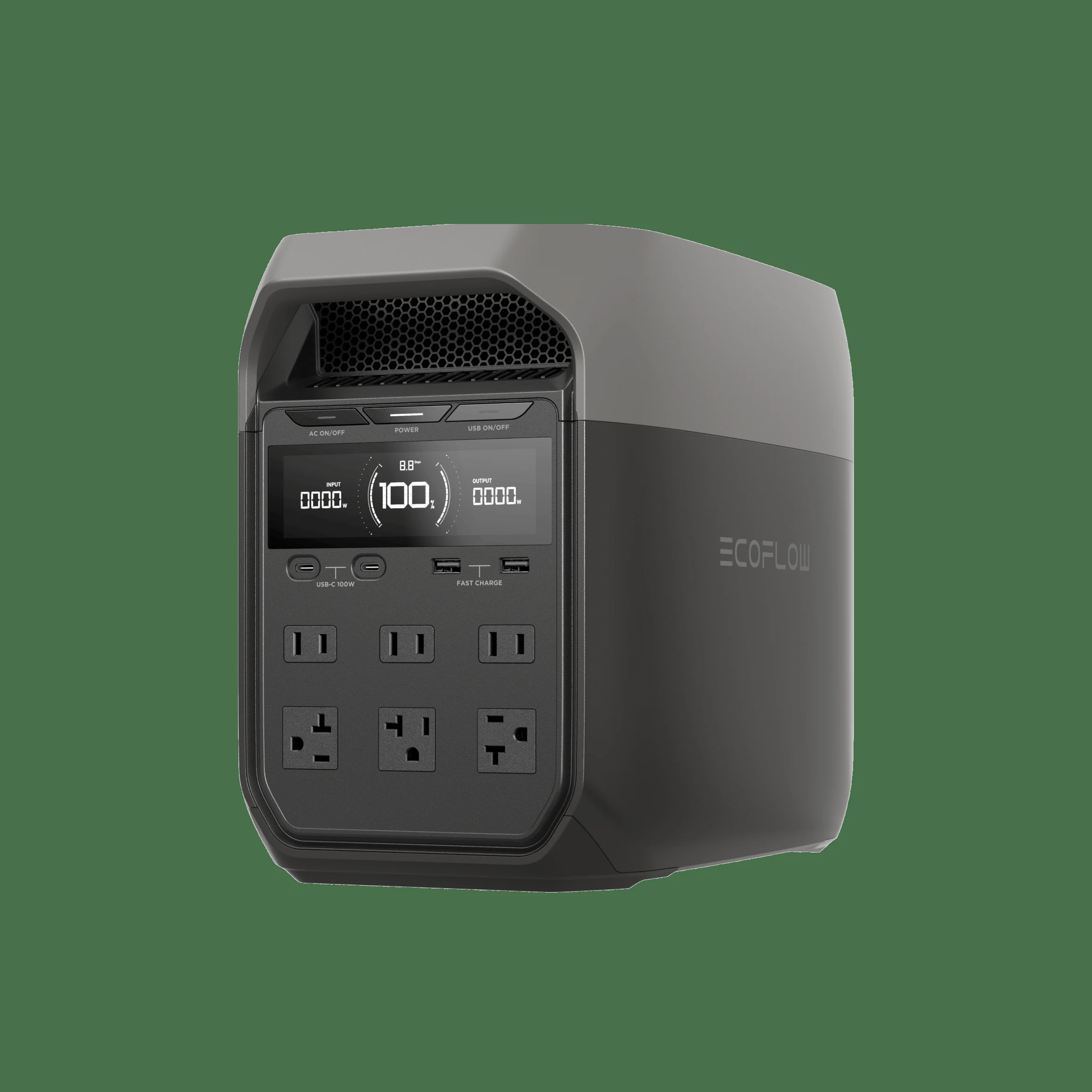
2,048Wh with 2,400W output, 1,000W solar input, and 80 percent charging in 43 minutes. Built for multi day storms, power tools, and full vehicle RV power.
Full review →
Anker 2kWh backup with a decade rated battery, four AC outlets, three USB-C ports, and a dedicated RV outlet. Familiar, quiet, and built to sit ready for a decade.
Full review →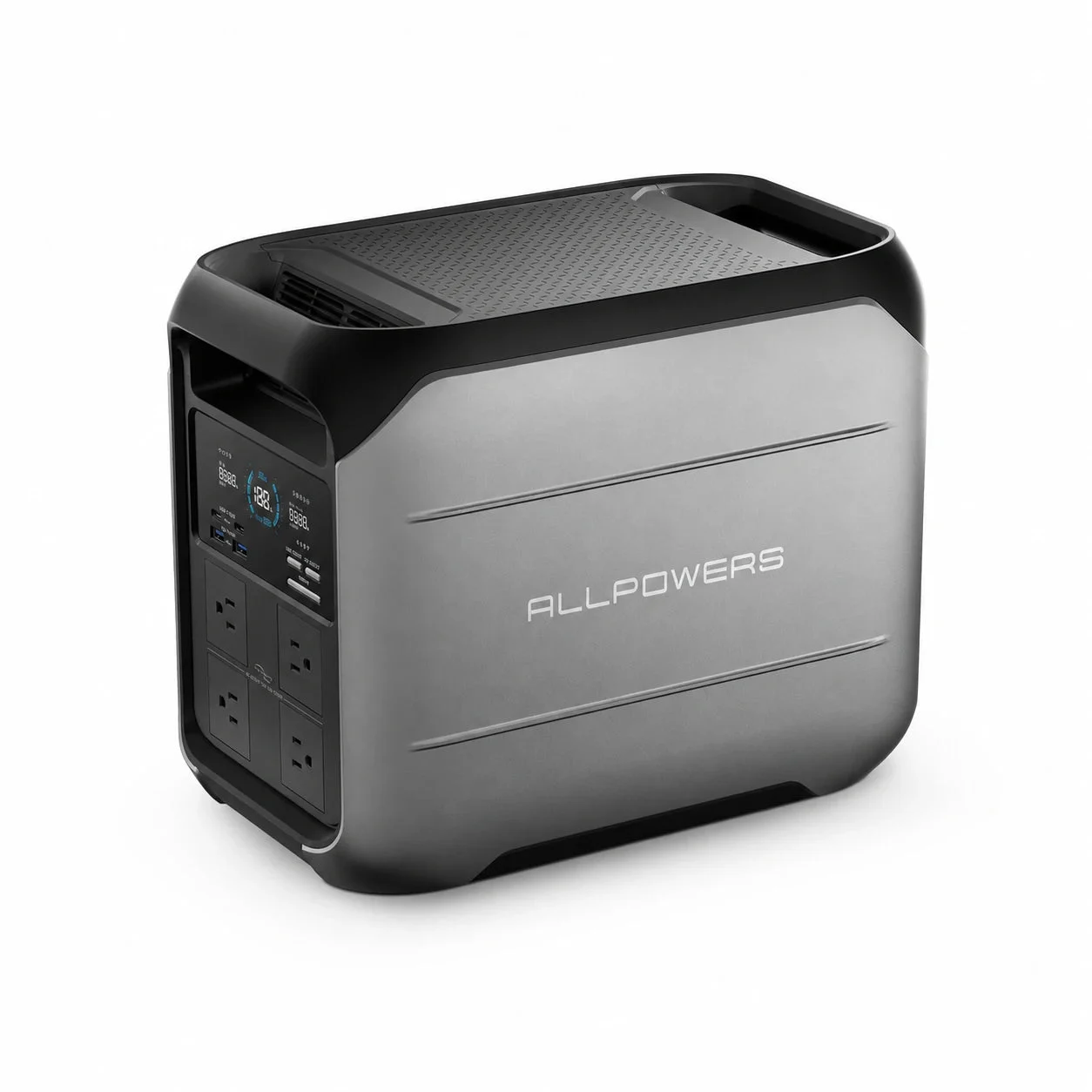
A one person carry 1kWh backup that recharges to 80 percent in about an hour and handles a fridge, router, and lights with ease. Solar input up to 650W keeps it topped up on long off grid days.
Full review →