
anker-solix
Anker SOLIX F2000 (PowerHouse 767)
Anker 2kWh backup with a decade rated battery, four AC outlets, three USB-C ports, and a dedicated RV outlet. Familiar, quiet, and built to sit ready for a decade.
Full review →
Categories
CampingQuiet electricity for the campsite: lights, phones, a fan, and the coffee maker, without a generator's noiseHome backupWhen the grid drops, essentials stay on: fridge, router, lights in one room, phones charged, medical devicesEvents & on-siteRunning shows, shoots, food stalls, and vendor booths off the grid, with clean power and no fumesEmergency prepThe battery you want charged before the storm: communications, lighting, refrigeration, and medical devicesRV / off-gridHouse power that moves with you: 12-volt ecosystems, solar pairing, and batteries that charge from the12V & jump startThe 12-volt rescue: keeping vehicle accessories, lights, and small 12-volt systems alive when you are the onlyProducts
All power stationsCompare specsAferiyAllpowersAnker SOLIXBLUETTIEcoFlowGeyotoGoal ZeroGrowattJackeryRenogyYEAGULCHArticles
Residential vs Business Portable Power: How to Tell What You Actually NeedPortable Power for a Landscaping Company: Ditching the 200-Foot Extension CordPortable Power for a Food Truck That Wants to Plug In AnywhereRunning Job Site Power Without a GeneratorWhole Home Backup vs Appliance Backup: Pick the Right SizeHow Long Will a Power Station Run: A Practical Planning GuidePairing a Solar Panel for a Power Station: What to MatchPortable Power for Outdoor Events: Weddings and ReceptionsGuides
Portable Power for Camping: The Complete Guide to On-Site ElectricityPortable Power for Home Power Outages: A Real Backup Plan for the GridPortable Power for Events & On-Site Work: Running Shows, Shoots, and Stands Off the GridPortable Power for Emergencies: The Battery You Want Charged Before the StormPortable Power for Jump-Starting a Car & Vehicle PowerPortable Power for RV, Van Life & Off-Grid Living Compare AboutTrust
Affiliate Disclosure Privacy Policy Terms of UseIf you know and trust the Anker name from chargers and cables and you want that same confidence in a midsize station, the Anker SOLIX C1000 is the entry point that makes sense. It stores 1,056Wh of lithium iron phosphate energy in a body Anker describes as about 15 percent smaller than comparable 1kWh units, and at 27.6 pounds the whole station stays manageable for one person moving it between a closet, a car boot, and a campsite. A 1,800W inverter with 2,400W of surge handles the usual first purchase load, namely a fridge, a router, several phones, a laptop, and a small work light, without the hesitation that smaller inverters show during a compressor start. Speed is where this model pulls ahead of older 1kWh designs. Using the UltraFast mode in the Anker app, the battery moves from empty to 80 percent in 43 minutes and reaches full in 58 minutes, which turns a rolling outage from a worry into a managed interval. Solar input up to 600W fills the same battery in about 1.8 hours under strong sun, so a single midsize panel on a camping table can keep the station topped up across a bright day. The cells carry a 3,000 cycle rating across a ten year design life, a decade grade expectation that suits a unit bought to sit ready. Eleven outlets across household AC, USB-C, USB-A, and 12V give a travelling group enough sockets to avoid a cable pile, and a vehicle charging cable in the box removes one more friction point for road use. There is no socket for an external expansion pack, so 1,056Wh is the ceiling while a 600W solar ceiling is the growth path instead. It suits first time buyers, campers, and truck based travellers who value a familiar badge, compact dimensions, and fast refilling over expandable capacity for whole home duty. Read the full review below, then check the current offer.
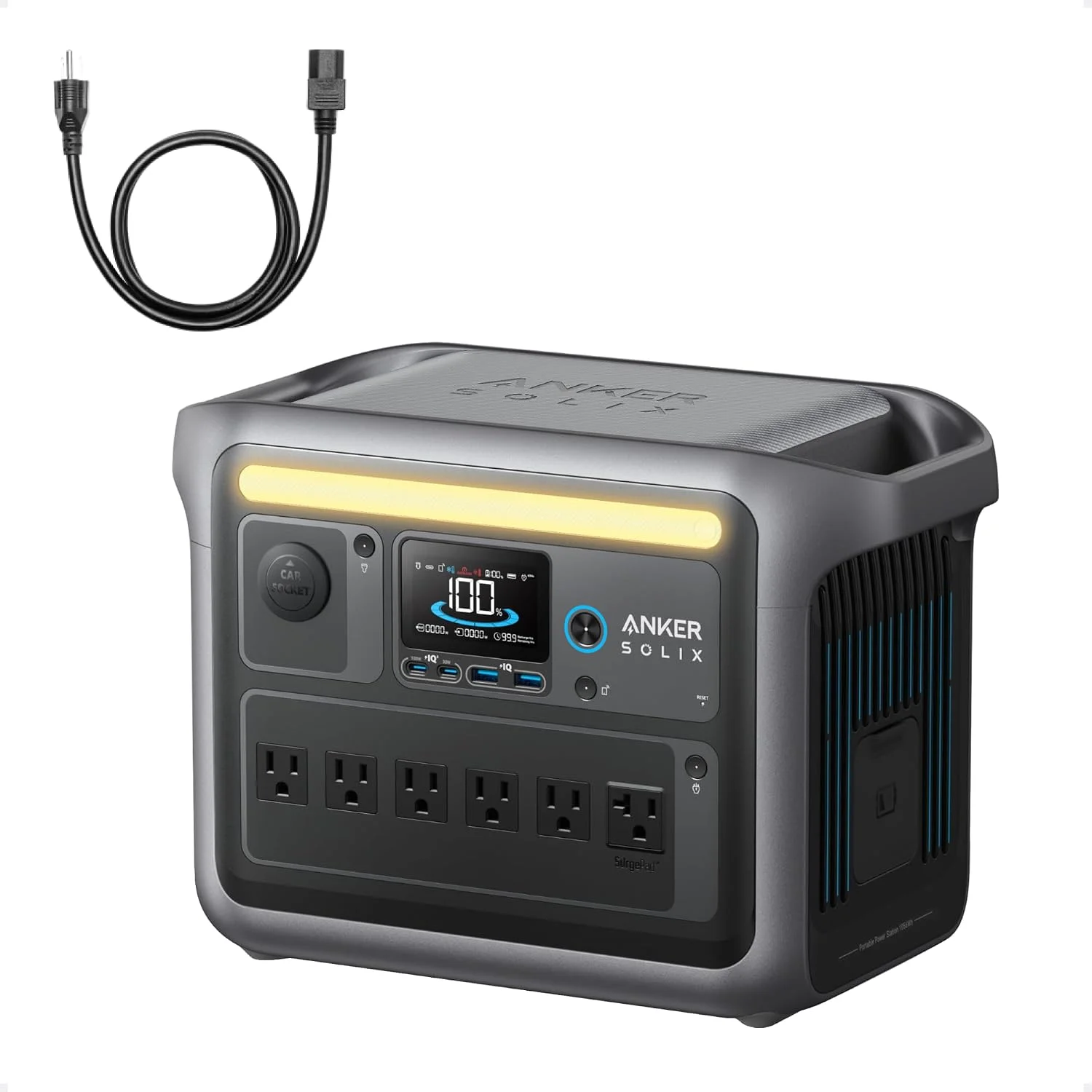
Anker has spent a decade building the name that first-time buyers trust, and the C1000 is where that brand trust lands in a portable power station for travel. It holds 1,056Wh of LiFePO4 in a body Anker rates 15 percent smaller than comparable 1kWh units, pushes a 1,800W inverter with 2,400W of surge, and weighs 27.6 lb, which is a one-hand-and-a-half lift rather than a cart. For a reader who wants the Anker name at a 1kWh price, this is the unit.
**As a portable power station for travel, the recharge story is the headline.** UltraFast AC recharging, enabled through the Anker app, takes the battery from 0 to 80 percent in 43 minutes and full in 58, which is the speed profile that makes a backup feel like a backup during a rolling outage. Solar is the second path: up to 600W of solar input fills the battery in about 1.8 hours, so a single mid-size panel on a campsite keeps the unit topped through a full day.
The LiFePO4 cells are rated for 3,000 cycles over a 10-year lifespan, which is a decade-grade component and the chemistry that keeps the unit safe for indoor home use. Port-wise it is generous for the class: 11 outlets across AC, USB-C, USB-A, and 12V, enough to run a router, a few phones, a laptop, and a small appliance at once, and a car charging cable is included in the box, a small thing that removes a friction point for vehicle-power buyers.
Who is this for, and how does it sit against the 2kWh class? It is for the mainstream first-time buyer, the camping and RV all-rounder, and the reader who values a known brand over raw spec. It is not for the reader who needs whole-home backup capacity or a window air-conditioner load, because there is no external expansion battery and 1,056Wh is the ceiling. Anyone planning that load should step up to the F2000 at 2,048Wh or a modular line. For the reader whose use case is a small fridge, a router, a laptop, and a day of camping, the C1000 is the reliable portable power that does not ask for a premium.
Priced in the mid-$400s, it is the portable power station for travel that pairs a trusted name with a footprint you actually carry; check the Amazon listing for the number on it today.
First time buyers usually trust a brand they already know, and Anker has earned that trust across a decade of chargers and cables. The C1000 brings that familiarity into portable power with a compact 1,056Wh body, a 1,800W inverter, and 11 ports that cover the small device pile in any household. For a reader who wants a known name at a 1kWh price instead of a bargain label, this station removes the worry that the battery is the weak link.
The small footprint is the practical version of build quality. A unit that is 15 percent smaller and lighter at 27.6 pounds ends up in the car for the weekend and in the closet for the outage, while a heavier 1kWh brick stays in the garage and gets used for neither. The LiFePO4 cells are rated for 3,000 cycles over a 10 year lifespan, so the station earns its place in a hallway instead of a storage unit.
UltraFast AC charging through the Anker app is the headline time saver. Zero to 80 percent takes 43 minutes and full takes 58, which is fast enough to recover between short restorations in a rolling outage. A backup that refills in under an hour gets used again and again instead of guarding one night and then waiting days to be useful.
Solar is the second path, with up to 600W of input and a full charge in about 1.8 hours. A single mid size panel on a campsite can keep the unit topped through a full day of use, and the included car charging cable removes a friction point for vehicle power buyers. Two refill paths means the station is rarely stuck waiting on a single source.
This is a fixed capacity tier with no external battery expansion, so the decision is whether 1,056Wh covers your list. Check the warranty and the bundle contents before you buy, since a solar panel kit can change the effective price a great deal, and confirm whether the UltraFast mode is enabled by default or needs the app. Size for the fridge, lights, and router, and accept that the ceiling is fixed rather than expandable.
This fits a first time buyer, a camping and RV all rounder, and anyone who values a known brand over maximum specs. It handles a small fridge, a router, a laptop, and a day of camping with room to spare. It does not fit whole home backup, a window air conditioner, or an expandable multi day system, because there is no external battery and 1,056Wh is the ceiling.
How does UltraFast charging actually work. You enable it in the Anker app, and the station pulls higher AC current to reach 80 percent in 43 minutes and full in 58. It is a real speed mode rather than a label, and it suits a rolling outage where the grid returns briefly between failures. Use it when the clock matters and standard charging when it does not.
Will 1,056Wh run a refrigerator through the night. Yes, with room for the router and lights alongside it, because a fridge draws roughly 150W once the compressor settles. The running load of essentials sits comfortably inside the 1,800W inverter, so the battery is the limit rather than the outlet. A picker who wants day after day of coverage should add solar rather than expecting a single charge to last.
Why does the smaller footprint matter enough to pay for. Because a station you can carry is a station you actually use, and a 15 percent smaller body means it fits the car trunk, the RV storage bay, and the hallway closet without a fight. The same capacity in a larger shell tends to live in one spot. Size matters less than the habit of reaching for the unit.
Against unbranded 1kWh stations the C1000 trades a low price for brand trust, app polish, and a compact shell. Bargain rivals can undercut it on the shelf, but they rarely match the 43 minute charge, the 10 year cell rating, or the included car cable. If the purchase is your first, the trusted name and the documented speed are worth more than a discount that comes with unknown cells.
Against 2kWh flagships the C1000 trades capacity for carryability and price. A 2,048Wh unit doubles the runtime and costs far more, but it weighs much more and lives as a garage appliance. This station wins when the job is essentials through the night and a weekend of camping, and it loses only when the load list grows into whole home territory.
A common mistake is leaving UltraFast mode off and wondering why the charge takes longer than the headline. The 43 minute figure is an app enabled setting, so pair the phone and switch it on at setup. A backup that is ready in an hour is the whole point of this model, and it only happens when the mode is active.
A second mistake is assuming 1,056Wh means every appliance can run at once. The inverter ceiling of 1,800W is generous but real, and a microwave plus a space heater will exceed it. Run high draw appliances one at a time and keep the fridge, router, and lights as the always on list.
Get the most from this setup by making the app part of the routine. Check the charge level and battery health from the phone before every trip and every storm season, and let the app reminders replace the mental note to top up the battery. A station with a trusted app gets attention, and attention is how a backup stays a backup.
A second habit is keeping the car charging cable in the vehicle rather than in a drawer. Vehicle charging is the slowest refill path, but it is the one that works on a road trip with no hookups. A cable that lives in the trunk turns a forgotten outlet into a working plan instead of a missing piece.
Store the station at a mid range charge, wake it with a full cycle a couple of times a year, and keep the vents clear so the fast charging mode does not hit a thermal limit. The 10 year LiFePO4 design rewards a temperate spot and a regular top up, and punishes a battery left empty in a hot garage until the morning of the storm.
Links open the official listing. Price, terms, and availability can change, so the live page is the source of truth.
Same situation, different option. Worth comparing before you decide.
Anker 2kWh backup with a decade rated battery, four AC outlets, three USB-C ports, and a dedicated RV outlet. Familiar, quiet, and built to sit ready for a decade.
Full review →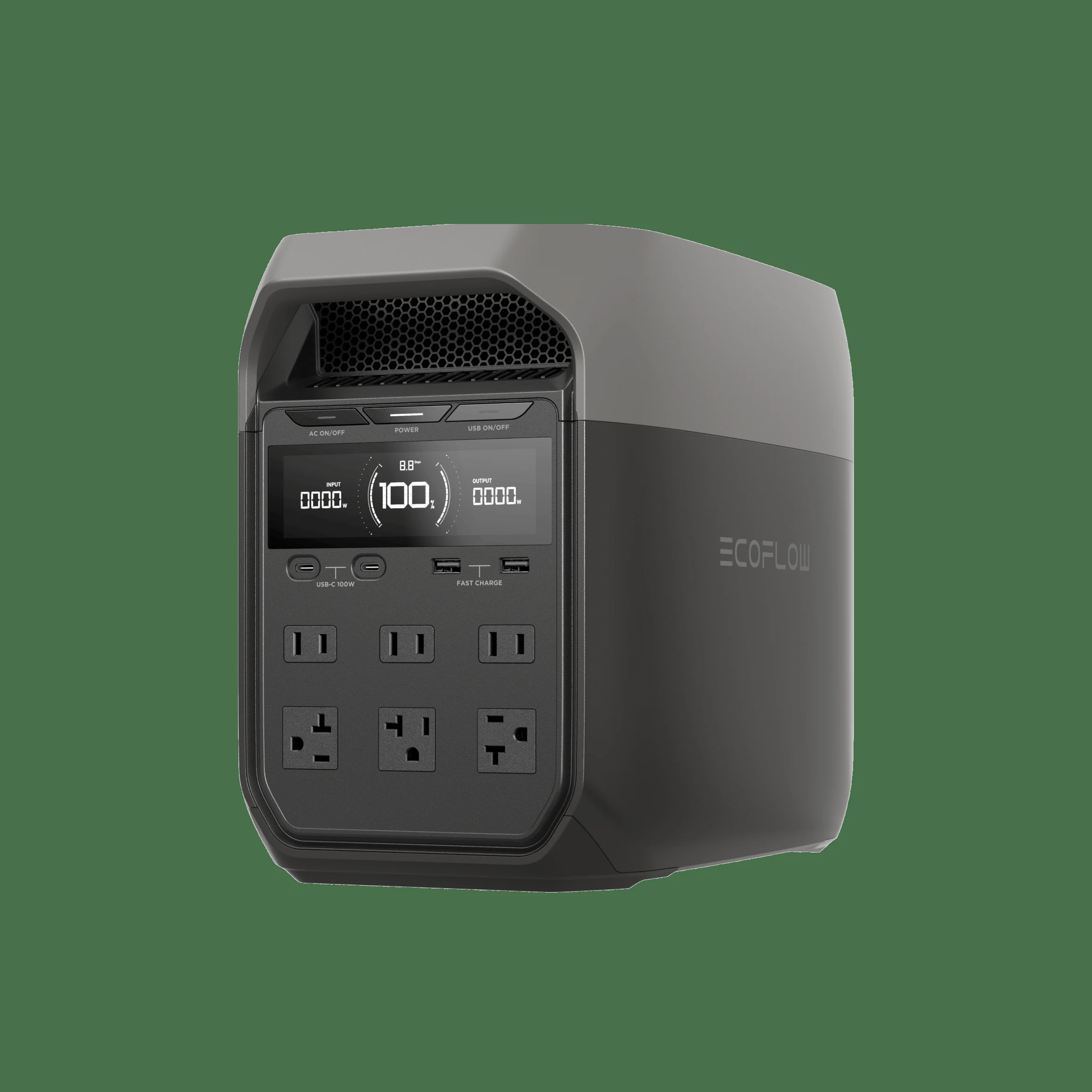
Budget home backup with 1,024Wh, 1,800W output, 50 minute charging, and a path to 3,072Wh. It covers a fridge, router, and lights through a typical outage, then grows later.
Full review →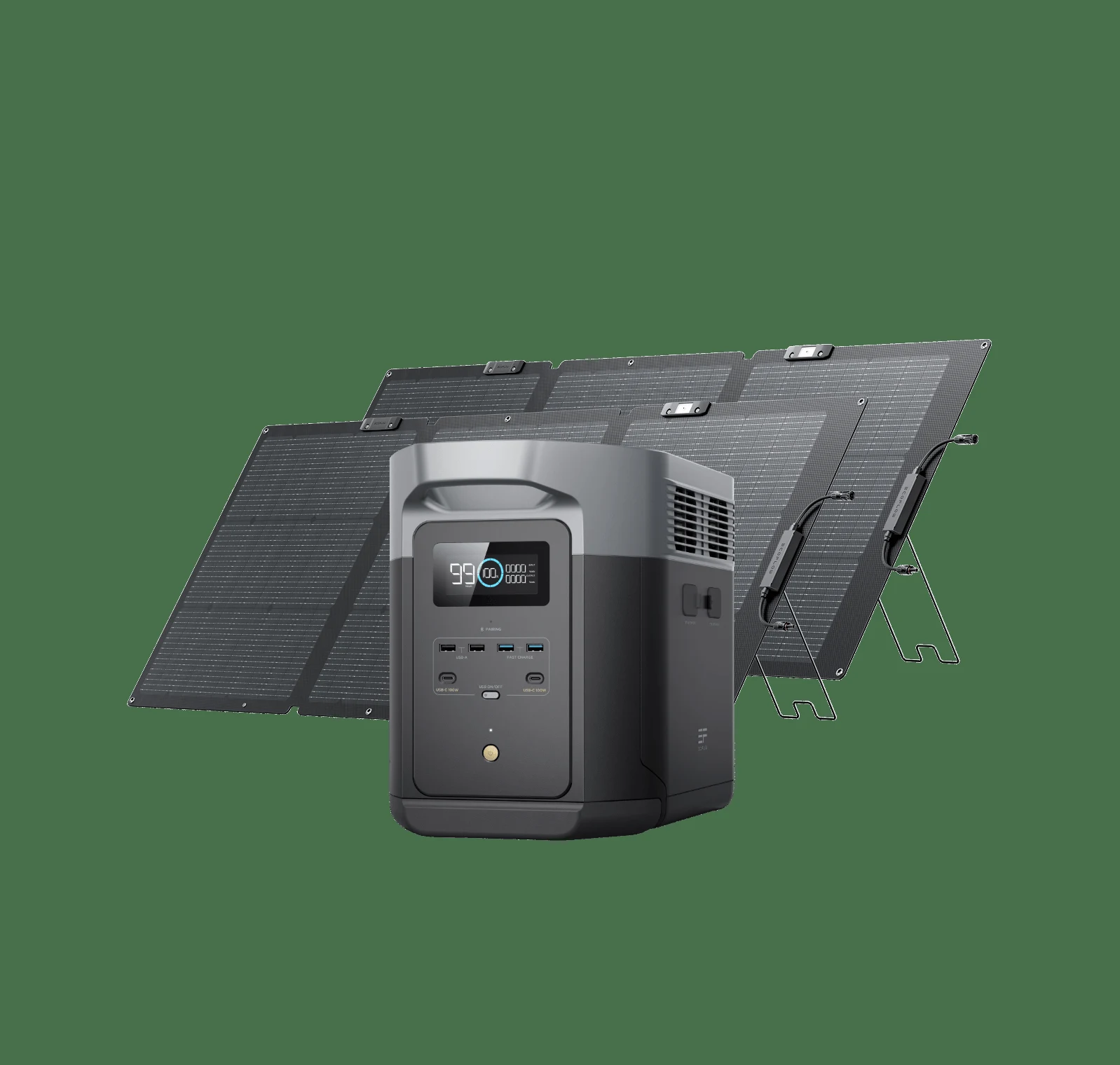
2,048Wh with 2,400W output, 1,000W solar input, and 80 percent charging in 43 minutes. Built for multi day storms, power tools, and full vehicle RV power.
Full review →