ecoflow
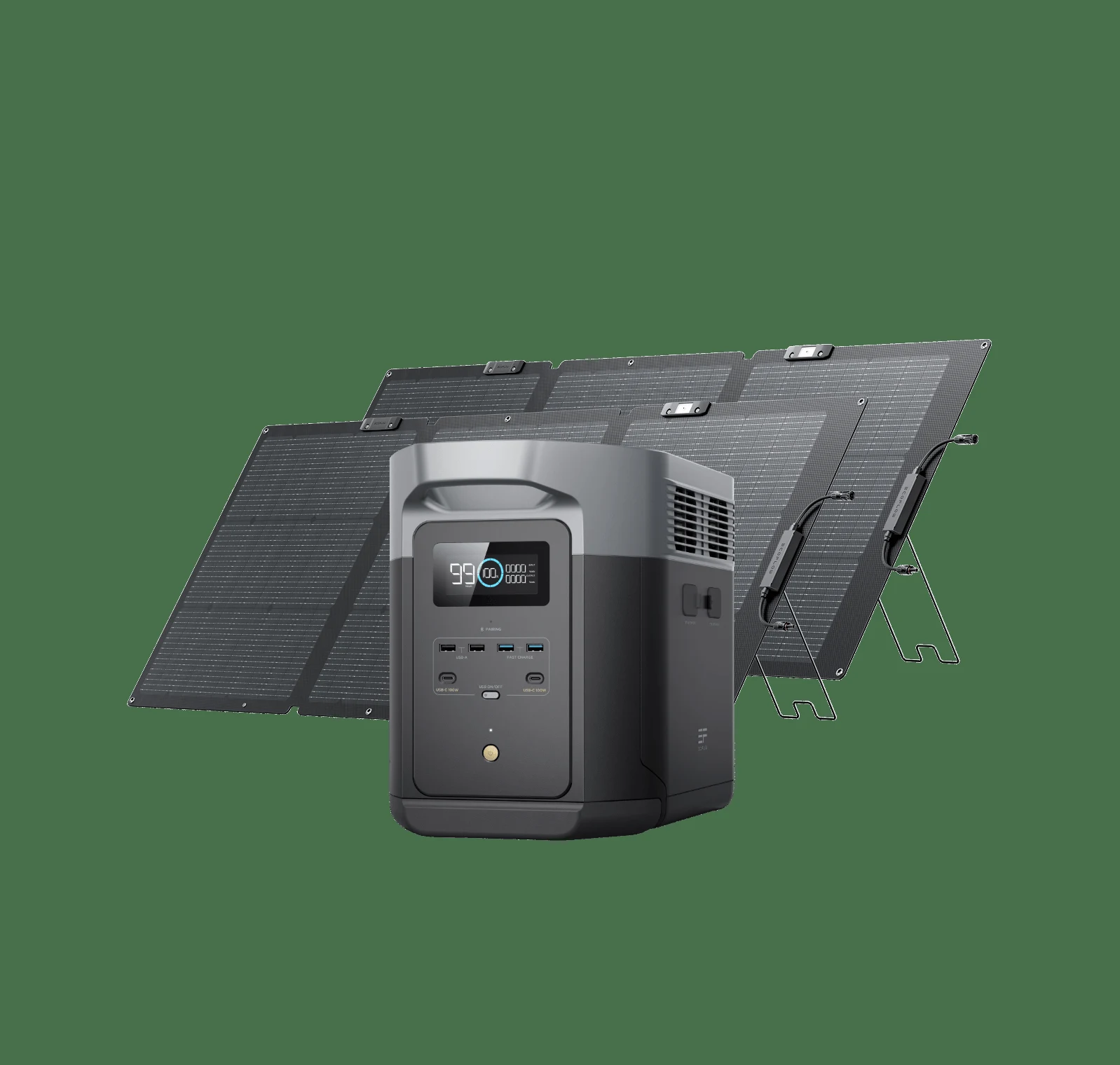
EF ECOFLOW DELTA 2 Max
2,048Wh with 2,400W output, 1,000W solar input, and 80 percent charging in 43 minutes. Built for multi day storms, power tools, and full vehicle RV power.
Full review →
Categories
CampingQuiet electricity for the campsite: lights, phones, a fan, and the coffee maker, without a generator's noiseHome backupWhen the grid drops, essentials stay on: fridge, router, lights in one room, phones charged, medical devicesEvents & on-siteRunning shows, shoots, food stalls, and vendor booths off the grid, with clean power and no fumesEmergency prepThe battery you want charged before the storm: communications, lighting, refrigeration, and medical devicesRV / off-gridHouse power that moves with you: 12-volt ecosystems, solar pairing, and batteries that charge from the12V & jump startThe 12-volt rescue: keeping vehicle accessories, lights, and small 12-volt systems alive when you are the onlyProducts
All power stationsCompare specsAferiyAllpowersAnker SOLIXBLUETTIEcoFlowGeyotoGoal ZeroGrowattJackeryRenogyYEAGULCHArticles
Residential vs Business Portable Power: How to Tell What You Actually NeedPortable Power for a Landscaping Company: Ditching the 200-Foot Extension CordPortable Power for a Food Truck That Wants to Plug In AnywhereRunning Job Site Power Without a GeneratorWhole Home Backup vs Appliance Backup: Pick the Right SizeHow Long Will a Power Station Run: A Practical Planning GuidePairing a Solar Panel for a Power Station: What to MatchPortable Power for Outdoor Events: Weddings and ReceptionsGuides
Portable Power for Camping: The Complete Guide to On-Site ElectricityPortable Power for Home Power Outages: A Real Backup Plan for the GridPortable Power for Events & On-Site Work: Running Shows, Shoots, and Stands Off the GridPortable Power for Emergencies: The Battery You Want Charged Before the StormPortable Power for Jump-Starting a Car & Vehicle PowerPortable Power for RV, Van Life & Off-Grid Living Compare AboutTrust
Affiliate Disclosure Privacy Policy Terms of UseWhy a Power Station Beats a Generator for Most Homes

Portable Power for Home Power Outages: A Real Backup Plan for the Grid
Why a Power Station Beats a Generator for Most Homes
A 1 to 2 kilowatt-hour station is the home-backup baseline and covers most one-to-two-day outages with the fridge running.
Modular high-capacity systems (EcoFlow DELTA Pro, Bluetti AC series, Jackery HomePower) carry multi-day whole-home loads.
Pair with a 400 to 800 watt solar array to make the backup renewable through a long outage.
Keep it indoors and running silently: no fuel, no carbon monoxide, no venting.
Home power outages are not exotic events; they are part of normal residential life. A summer storm knocks a transformer, a winter ice storm brings a downed line, a utility maintenance window rolls through a neighborhood, or an aging panel trips and will not reset. In every case the immediate question is the same: what in the house actually needs power, and how can you keep it on without a fuel generator, a carbon monoxide alarm, and a refueling run to the store? A portable power station is the cleanest answer to that question, and it is increasingly the default choice for household backup, for three reasons that matter to a home: it is safe to run indoors, it is ready before you go anywhere, and it scales to real household loads.
The indoor-safe advantage is the one that most changes a household's behavior. A fuel generator, even when used carefully, must be operated outdoors and vented away from windows and doors, which means a long, weatherproof cord running into the house, a generator parked in the rain, and a fumes-and-carbon-monoxide risk that is real and not hypothetical. A portable power station is a sealed battery with sealed inverter electronics; it emits nothing, produces no fuel or exhaust, and can sit quietly in the hallway, the garage, or the bedroom while it runs the fridge, the router, and a CPAP machine. That single difference is why a household is far more likely to actually run the backup it bought when the backup is a battery it can keep at arm's length from the window and the weather.
The second advantage is readiness. A power station is charged on a normal household outlet, just like a power bank, and when the grid drops the backup is already there, already on, already holding every critical load. There is no fuel to top up, no priming, no waiting for it to warm up. In a short outage, the station covers the entire event with zero friction; in a long one, it holds the critical loads until a solar array or a recharged wall outlet can take over. That is a fundamentally different failure model than a generator, which requires a full, careful, weather-exposed setup the moment the power goes.
The third advantage is that the capacity range now reaches real household loads. The mainstream high-capacity units in a 2026 lineup hold between 1 and 4 kilowatt-hours of energy with AC output in the 1,200 to 3,000 watt range, which is plenty for a refrigerator, a router, medical equipment, and a handful of lights and household outlets, and more than enough for a household's true critical load. The larger, modular systems can add expansion batteries to double or triple the stored energy for multi-day outages, and some of them can integrate with a whole-home transfer switch to bring a full critical panel back on. That is the full spectrum of what a home actually needs, in one product family, at a range of price points.
Sizing for a home outage starts with a list, not a feeling. Write down the devices that must stay on: the refrigerator and freezer (a modern fridge averages around 100 to 200 watts of steady draw, with a brief compressor inrush a few hundred watts higher when it kicks on), the router and any modem or office gear, a medical device if the household has one, a small handful of lights and outlets, and, if available, a sump pump. Add the wattages, multiply by the number of hours you expect to run them in a day, and you get a daily energy budget. For a typical household critical list, that budget lands between 600 and 1,500 watt-hours per day, which is why a 1,000 to 2,000 watt-hour station is the home-backup baseline for most buyers: it covers a full day and a night with the fridge running the whole way through, and two or three days for lighter loads.
Once the daily budget is in hand, the second decision is the runtime target. A one-to-two-day outage is where the baseline units live; a full week of off-grid capability means either the larger 3 to 4 kilowatt-hour capacity band or, more sensibly, the modular systems that accept expansion batteries so you can buy the station now and add capacity later as the budget allows. The solar question is the same as in camping but at a higher scale: a 400 to 800 watt portable array can replenish most of what a household draws in a sunny day, which is the combination that turns a station from a finite battery into a renewable reserve for the long, multi-day outages that used to be a generator-and-fuel situation alone.
The brand choice for a home tracks the capacity band. In the 1 to 2 kilowatt-hour band, Jackery's Solar Generator and HomePower series and EcoFlow's DELTA line are the most common household choices, with Anker SOLIX a trustworthy mainstream option and GEYOTO and ALLPOWERS strong value options. In the 3 to 4 kilowatt-hour and modular band, EcoFlow's DELTA Pro, Bluetti's AC-series modular systems, and Jackery's higher-capacity HomePower units are the ones that actually move real household loads for days, and several of them can tie into a whole-home transfer switch for a full critical-panel backup. Whichever band a household is in, the same three buying rules apply: size to the daily budget with margin, pick the runtime band that fits the expected outage profile, and add a matching solar array if the household wants the backup to last through a multi-day event without a fuel run.
2,048Wh with 2,400W output, 1,000W solar input, and 80 percent charging in 43 minutes. Built for multi day storms, power tools, and full vehicle RV power.
Full review →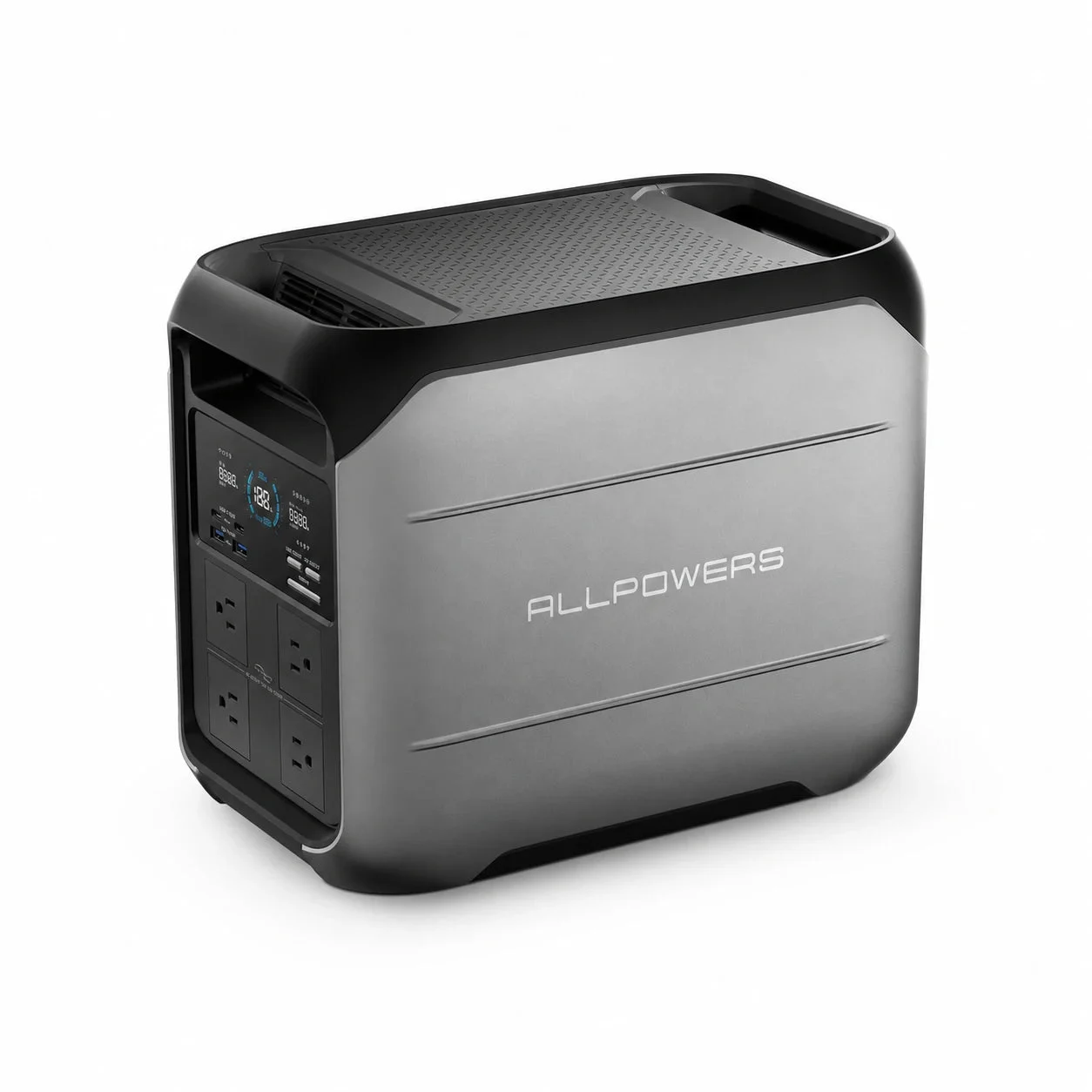
A one person carry 1kWh backup that recharges to 80 percent in about an hour and handles a fridge, router, and lights with ease. Solar input up to 650W keeps it topped up on long off grid days.
Full review →