allpowers
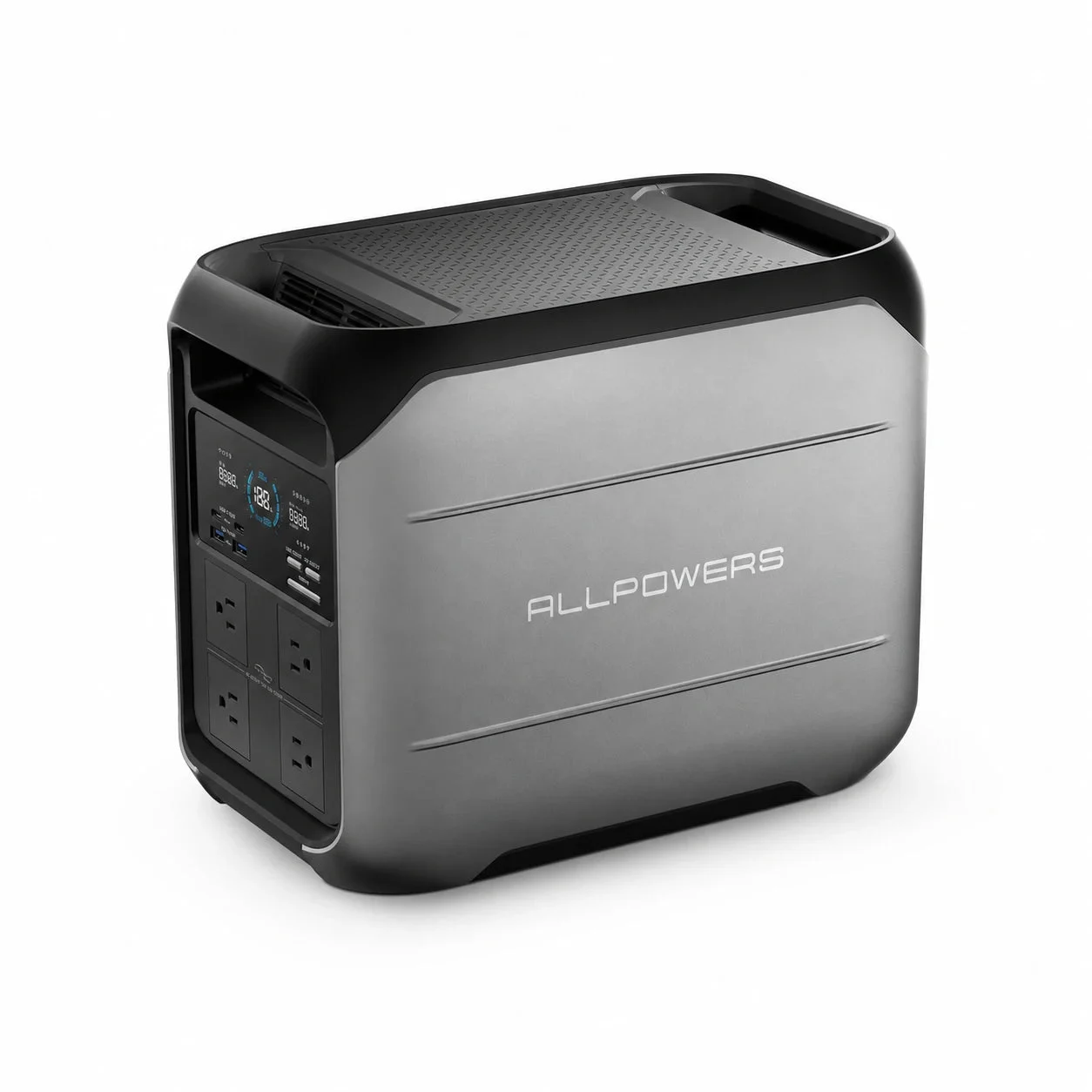
ALLPOWERS P1800
A one person carry 1kWh backup that recharges to 80 percent in about an hour and handles a fridge, router, and lights with ease. Solar input up to 650W keeps it topped up on long off grid days.
Full review →
Categories
CampingQuiet electricity for the campsite: lights, phones, a fan, and the coffee maker, without a generator's noiseHome backupWhen the grid drops, essentials stay on: fridge, router, lights in one room, phones charged, medical devicesEvents & on-siteRunning shows, shoots, food stalls, and vendor booths off the grid, with clean power and no fumesEmergency prepThe battery you want charged before the storm: communications, lighting, refrigeration, and medical devicesRV / off-gridHouse power that moves with you: 12-volt ecosystems, solar pairing, and batteries that charge from the12V & jump startThe 12-volt rescue: keeping vehicle accessories, lights, and small 12-volt systems alive when you are the onlyProducts
All power stationsCompare specsAferiyAllpowersAnker SOLIXBLUETTIEcoFlowGeyotoGoal ZeroGrowattJackeryRenogyYEAGULCHArticles
Residential vs Business Portable Power: How to Tell What You Actually NeedPortable Power for a Landscaping Company: Ditching the 200-Foot Extension CordPortable Power for a Food Truck That Wants to Plug In AnywhereRunning Job Site Power Without a GeneratorWhole Home Backup vs Appliance Backup: Pick the Right SizeHow Long Will a Power Station Run: A Practical Planning GuidePairing a Solar Panel for a Power Station: What to MatchPortable Power for Outdoor Events: Weddings and ReceptionsGuides
Portable Power for Camping: The Complete Guide to On-Site ElectricityPortable Power for Home Power Outages: A Real Backup Plan for the GridPortable Power for Events & On-Site Work: Running Shows, Shoots, and Stands Off the GridPortable Power for Emergencies: The Battery You Want Charged Before the StormPortable Power for Jump-Starting a Car & Vehicle PowerPortable Power for RV, Van Life & Off-Grid Living Compare AboutTrust
Affiliate Disclosure Privacy Policy Terms of UseThe Growatt INFINITY 2000 Pro is the 2kWh station that undercuts established flagships by hundreds of dollars while matching the numbers that matter for home backup. It stores 2,048Wh of lithium iron phosphate energy and feeds a 2,400W inverter, with a path to 6,144Wh using dedicated Growatt expansion batteries. Growatt has spent two decades building inverters and storage for commercial solar installers, and the portable line borrows that industrial background, so the value comes from the supply chain rather than from shortcuts in the cells. The feature set reads like a spec sheet written by people who do commercial work. An emergency power function switches the load in about fifteen milliseconds, which keeps a desktop, a security system, and a router running through an outage without a restart. Cold start capability down to minus 22 degrees Fahrenheit covers northern homes where a winter outage and a frozen battery would otherwise be the same event. The battery management system guards against overcharge, over discharge, and short circuits, and the unit carries up to fifteen outlets for a crowded load. Certification and cover round out the case, with UN38.3, ETL, FCC, and DOE markings and a five year warranty behind the station. At about 51 pounds and 17.99 by 9.72 by 12.20 inches, this is a garage appliance that moves on a cart rather than by hand. Solar input is supported for off grid top ups, though the manufacturer lists the recharge schedule less prominently than rivals, so confirm input limits for your panel plan. It suits value focused households, northern buyers, and anyone who wants a scaleable 2kWh system without flagship pricing. For crews leaving early for a cold job site, for a garage workshop that needs lights and chargers through a winter outage, and for a household that wants to add expansion batteries next year instead of replacing the station, the combination of price, cold tolerance, and growth room makes a clear case. Confirm your solar panel watts against the listed input before you buy extra panels. Read the full review below, then check the current offer.
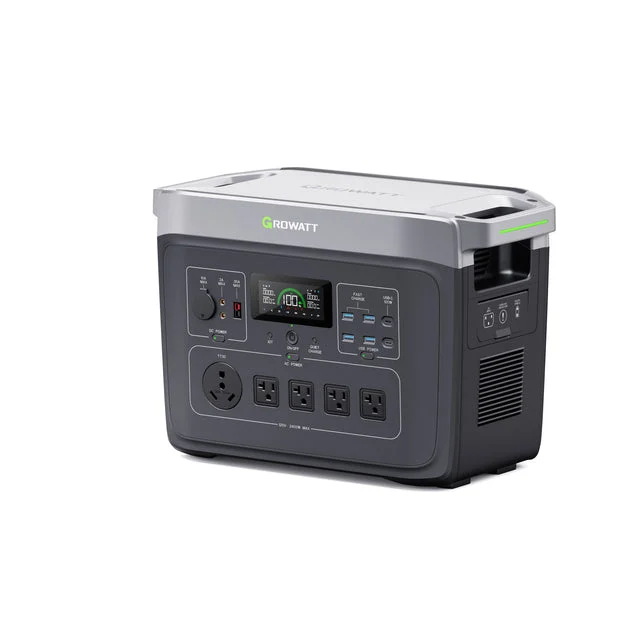
The Growatt INFINITY 2000 Pro is the affordable 2kWh power station that undercuts the established flagships by hundreds of dollars while matching them on the numbers that matter: 2,048Wh of LiFePO4 storage, 2,400W of AC output, and a path to 6,144Wh with dedicated expansion batteries. The discount is not a mystery. Growatt has spent two decades building inverters and storage for commercial solar installers, and the portable line borrows that industrial DNA, so the value comes from a supply chain rather than from corners cut in the cells. That is the difference between a discount that feels risky and one that simply reflects where the components come from.
The feature set reads like a spec sheet written by someone who has done commercial work. The EPS emergency function switches the load to the battery in about 15 milliseconds, which keeps a desktop, a security system, and a router running through an outage without a restart. Cold-start capability down to minus 22 degrees Fahrenheit covers northern climates where a winter outage and a frozen battery would otherwise be the same event. The BMS guards against overcharge, over-discharge, and short circuits, the unit carries up to 15 outlets, and the package is certified to UN38.3, ETL, FCC, and DOE standards, with a 5-year warranty behind it. None of that is corner-cutting to hit a price, which is what you want to see from an affordable 2kWh power station before you commit.
**For the value home power station buyer, the expansion path is the reason to stay with this model instead of a sealed-capacity rival.** Two of Growatt's dedicated expansion batteries lift the system from 2,048Wh to 6,144Wh, which moves it from covering the refrigerator and the Wi-Fi through a night into multi-day coverage for the essentials of a whole home. A buyer who starts with the base unit is not locked in when the next storm lasts longer than expected. At about 51 pounds the main unit is a two-hand carry that settles into a garage or basement, not a backpack item.
One practical note: the Amazon listing at verification carried copy for the companion expansion battery inside the same page, so it is worth confirming the item being ordered is the main station. The INFINITY 2000 Pro is the affordable 2kWh power station for a buyer who wants whole-essentials backup without paying the premium-brand tax, and the Growatt store page is where the current price and availability are posted.
The Growatt INFINITY 2000 Pro is the affordable 2kWh power station that undercuts the established flagships while matching them on the numbers that matter: 2,048Wh of LiFePO4 storage, 2,400W of AC output, and a path to 6,144Wh with dedicated expansion batteries. The discount is not a mystery. Growatt has spent two decades building inverters for commercial solar installers, and the portable line borrows that industrial DNA, so the value comes from a supply chain rather than from corners cut in the cells.
The feature set reads like a spec sheet written by someone who has done commercial work. The EPS emergency function switches the load in about 15 milliseconds, cold start capability down to minus 22 degrees covers northern winters, and the BMS guards against overcharge, over discharge, and short circuits. The unit carries up to 15 outlets, is certified to UN38.3, ETL, FCC, and DOE standards, and holds a 5 year warranty. None of that is corner cutting to hit a price, which is what a value buyer should demand before committing.
The 15 millisecond switchover saves the machines that cannot reboot. A desktop, a security system, and a router stay running through an outage without a restart, so the station protects work and home safety rather than just lights. That speed is the difference between a backup and an interruption, and it is the first thing to check for a home office.
Cold start to minus 22 degrees saves the winter outage. A station that refuses to start in a frozen garage is useless in January, while this unit is rated to begin charging in deep cold. Northern households get a backup that works on the night it matters instead of waiting for a thaw.
Think in tiers: the base station covers the fridge and Wi-Fi through a night, and two dedicated expansion batteries lift the system to 6,144Wh for multi day whole essentials coverage. Confirm the warranty on the station and each expansion battery before you buy, and confirm the exact item being ordered, since the retail listing can carry copy for the companion battery. Size for the fridge, router, desktop, and lights, and keep the expansion path in mind.
This fits a value buyer who wants whole essentials backup after a winter outage, plus camping and RV use. It suits a desktop, a security system, a router, and a fridge together. It does not fit a backpacker at about 51 pounds, and a buyer who wants a sealed simple unit without expansion parts should look at a fixed capacity rival instead. The 2kWh class ceiling still applies to central heating and full kitchen loads.
How does the EPS function differ from a basic UPS. It switches the load to the battery in under 15 milliseconds, which is fast enough that a desktop, a router, and a security system never restart. A basic station may switch slower or offer no automatic transfer at all. Plug the critical gear into the EPS sockets so the transfer is automatic.
What does minus 22 degree cold start actually mean. It means the station can begin operation in deep winter cold where lithium batteries often refuse to charge. A northern household with a frozen garage gets a backup that works on the coldest night instead of waiting for a thaw. Store the unit in the coldest spot you still want it to work, and it will.
Could the expansion path really reach 6,144Wh. Yes, two dedicated Growatt expansion batteries lift the system from 2,048Wh to 6,144Wh, which moves it from covering the fridge and Wi-Fi through a night into multi day coverage for the essentials. A buyer who starts with the base unit is not locked in when the next storm lasts longer than expected. Confirm the expansion battery model before ordering.
Against premium 2kWh flagships the INFINITY 2000 Pro trades brand prestige for a lower price with similar numbers. Flagships cost far more for the same 2,048Wh and 2,400W, while this station adds a 5 year warranty, cold start, and fast EPS switching. A value buyer who wants whole essentials backup without the premium tax is buying the industrial supply chain rather than the badge.
Against sealed 2kWh rivals the Pro trades a closed system for expansion and certifications. Sealed units are simpler and often lighter, but they cannot grow past 2,048Wh and rarely carry the same certification list. The expansion path to 6,144Wh is the reason to stay with this model when multi day coverage is the plan.
A common mistake is ordering without confirming the item being ordered. The retail listing can carry copy for the companion expansion battery inside the same page, so verify that the main station is the item in the cart. A buyer who needs the 2,048Wh core and accidentally orders the battery has bought the wrong half of the system.
A second mistake is treating 51 pounds as a campsite carry. The main unit settles into a garage or basement as an install, and it should be given a permanent spot with short cable runs. Plan the install before it arrives rather than discovering the weight when the storm is already here.
Get the most from this setup by staging the capacity in the right order. Start with the base station covering the fridge, router, and desktop through a night, add expansion batteries after the first long outage teaches you the real load, and grow toward 6,144Wh as the budget allows. That staged path spreads the cost across the years the system actually serves.
A second habit is testing the EPS switchover once on a calm day. Unplug the desktop and the router from the wall, confirm they stay running, and walk the household through the setup. A station that has been proven in daylight works in the dark, while one first tested during a storm teaches lessons at the worst time.
Store the battery at a mid range charge, run a full cycle a couple of times a year, and keep the vents clear of dust so the cooling system holds up under sustained load. The BMS guards against overcharge and short circuits, but a hot attic or a freezing shed still shortens the honest life of any battery, so a dry, temperate corner is the right home for a decade of service.
Links open the official listing. Price, terms, and availability can change, so the live page is the source of truth.
Same situation, different option. Worth comparing before you decide.
A one person carry 1kWh backup that recharges to 80 percent in about an hour and handles a fridge, router, and lights with ease. Solar input up to 650W keeps it topped up on long off grid days.
Full review →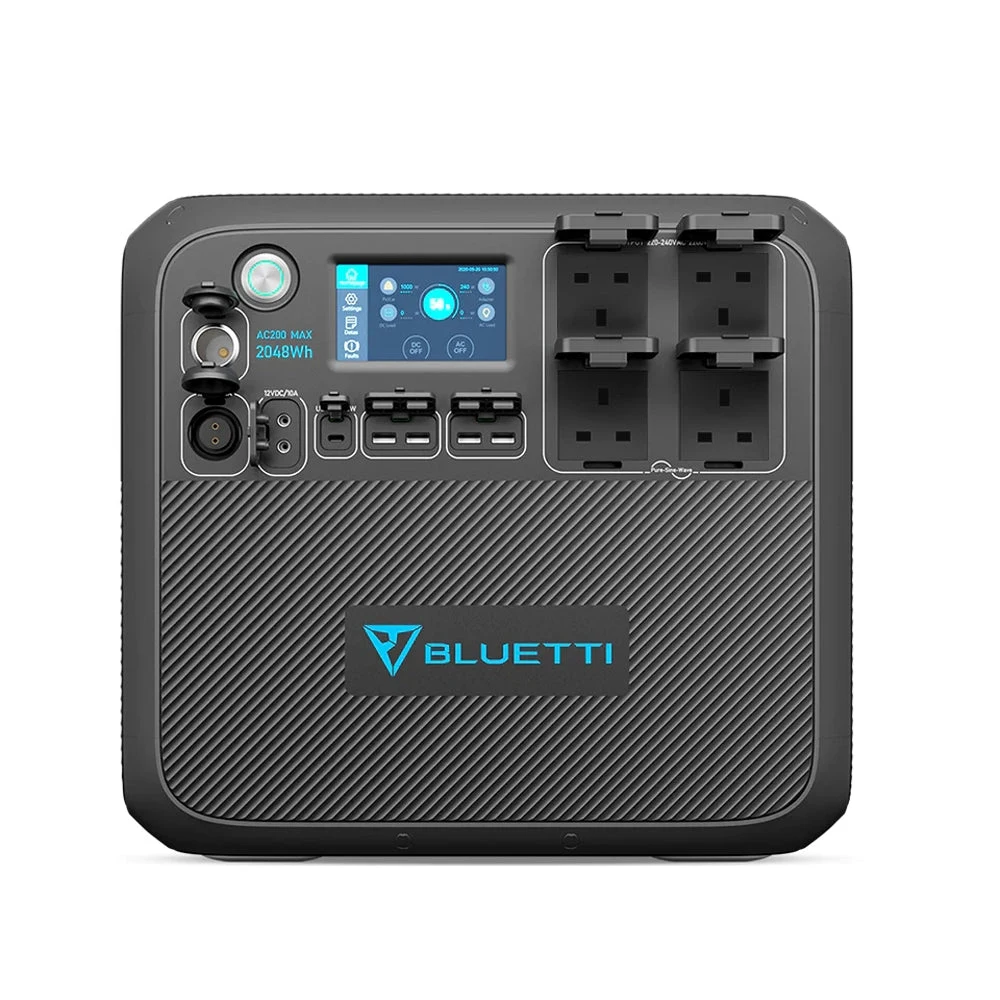
Solar first backup with 900W input, 4,800W surge, and a path to 8,192Wh with three add on batteries. Built for multi day outages, RV shore power, and off grid cabins.
Full review →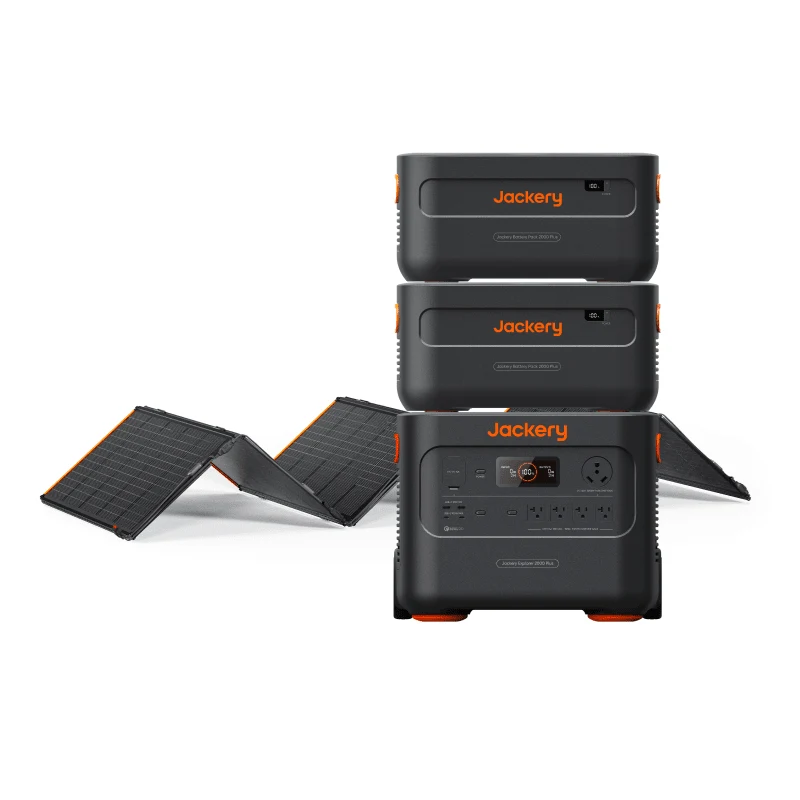
2,042Wh with 3,000W output and a 6,000W surge that runs a fridge, sump pump, router, and lights together. It scales toward 12kWh and is built for the worst case outage.
Full review →