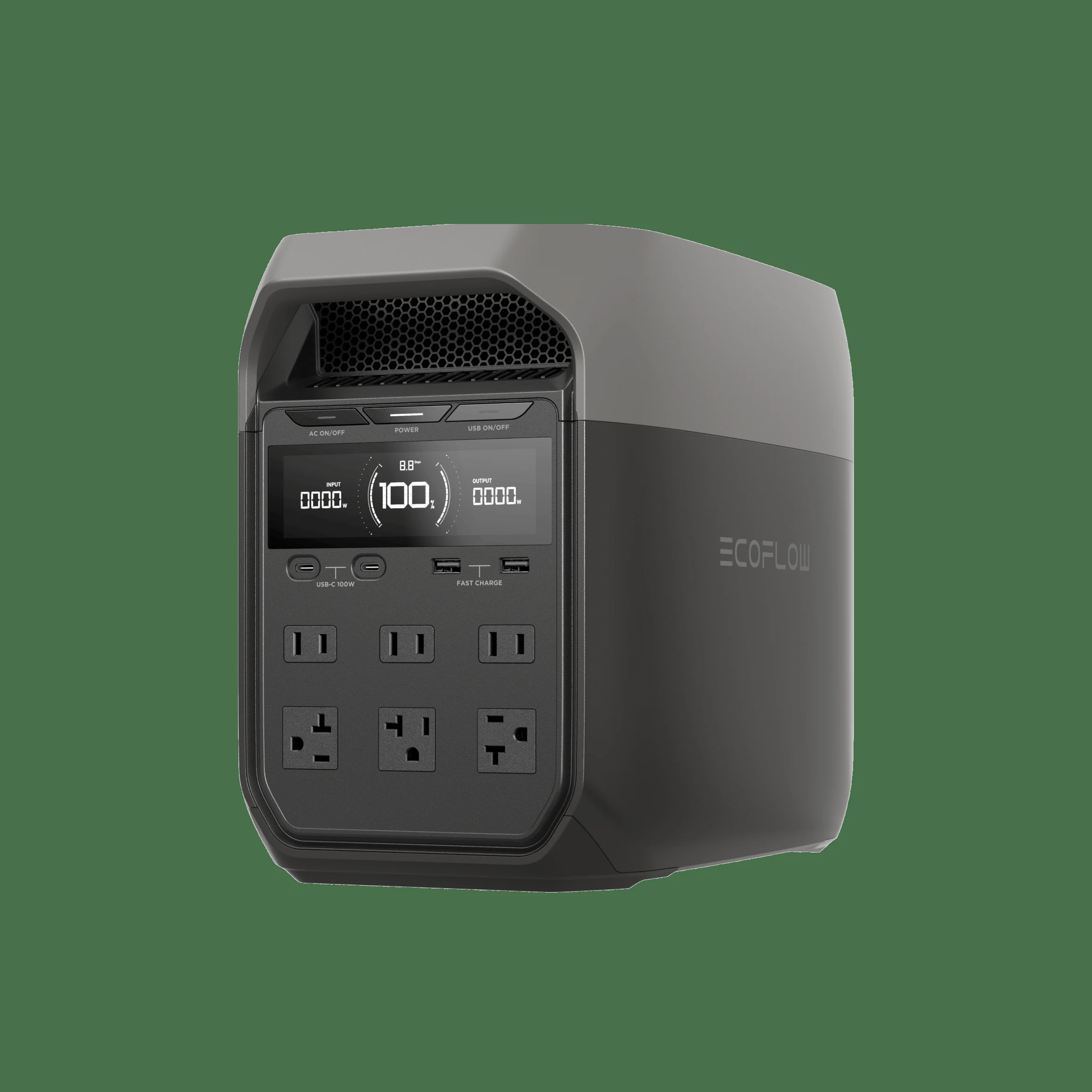
ecoflow
EF ECOFLOW DELTA 2
Budget home backup with 1,024Wh, 1,800W output, 50 minute charging, and a path to 3,072Wh. It covers a fridge, router, and lights through a typical outage, then grows later.
Full review →
Categories
CampingQuiet electricity for the campsite: lights, phones, a fan, and the coffee maker, without a generator's noiseHome backupWhen the grid drops, essentials stay on: fridge, router, lights in one room, phones charged, medical devicesEvents & on-siteRunning shows, shoots, food stalls, and vendor booths off the grid, with clean power and no fumesEmergency prepThe battery you want charged before the storm: communications, lighting, refrigeration, and medical devicesRV / off-gridHouse power that moves with you: 12-volt ecosystems, solar pairing, and batteries that charge from the12V & jump startThe 12-volt rescue: keeping vehicle accessories, lights, and small 12-volt systems alive when you are the onlyProducts
All power stationsCompare specsAferiyAllpowersAnker SOLIXBLUETTIEcoFlowGeyotoGoal ZeroGrowattJackeryRenogyYEAGULCHArticles
Residential vs Business Portable Power: How to Tell What You Actually NeedPortable Power for a Landscaping Company: Ditching the 200-Foot Extension CordPortable Power for a Food Truck That Wants to Plug In AnywhereRunning Job Site Power Without a GeneratorWhole Home Backup vs Appliance Backup: Pick the Right SizeHow Long Will a Power Station Run: A Practical Planning GuidePairing a Solar Panel for a Power Station: What to MatchPortable Power for Outdoor Events: Weddings and ReceptionsGuides
Portable Power for Camping: The Complete Guide to On-Site ElectricityPortable Power for Home Power Outages: A Real Backup Plan for the GridPortable Power for Events & On-Site Work: Running Shows, Shoots, and Stands Off the GridPortable Power for Emergencies: The Battery You Want Charged Before the StormPortable Power for Jump-Starting a Car & Vehicle PowerPortable Power for RV, Van Life & Off-Grid Living Compare AboutTrust
Affiliate Disclosure Privacy Policy Terms of UseIf your essential list runs longer than a fridge and a Wi-Fi box and you plan for the worst outage rather than the average one, the Jackery Explorer 2000 Plus is the station that covers the long list without a second unit beside it. It stores 2,042Wh of lithium iron phosphate energy behind a 3,000W inverter with a 6,000W surge ceiling, the highest sustained output in this comparison group. That headroom lets a full size refrigerator, a sump pump, a router, and several lights run together without the inverter flinching at a compressor start. Runtime follows the same logic. A single charge carries a refrigerator through a full day or more, and a week of smaller essentials when the household stays disciplined about what stays plugged in. The cells are rated for more than 4,000 cycles to 80 percent, so a station that mostly waits for a bad day still holds most of its capacity after years of occasional use. A wall charge reaches 80 percent in about 1.7 hours, and solar input up to 800W tops the battery up on a clear day, which is how off grid and extended outage users keep a system alive between wall charges. Expansion is the feature that sets this model apart from sealed capacity rivals. Two additional Jackery battery packs scale the system toward 12kWh, turning a portable station into a multi day house battery without any permanent wiring. The outlet layout includes four NEMA 5-15R AC sockets, two 100W USB-C delivery ports, two USB-A, a 12V vehicle port, and two 12V 20 amp DC lines. At 98.5 pounds with a 21.7 inch footprint this is a garage appliance that stays put. It suits households planning for long failures and buyers who expect capacity to grow over time. Read the full review below, then check the current offer.
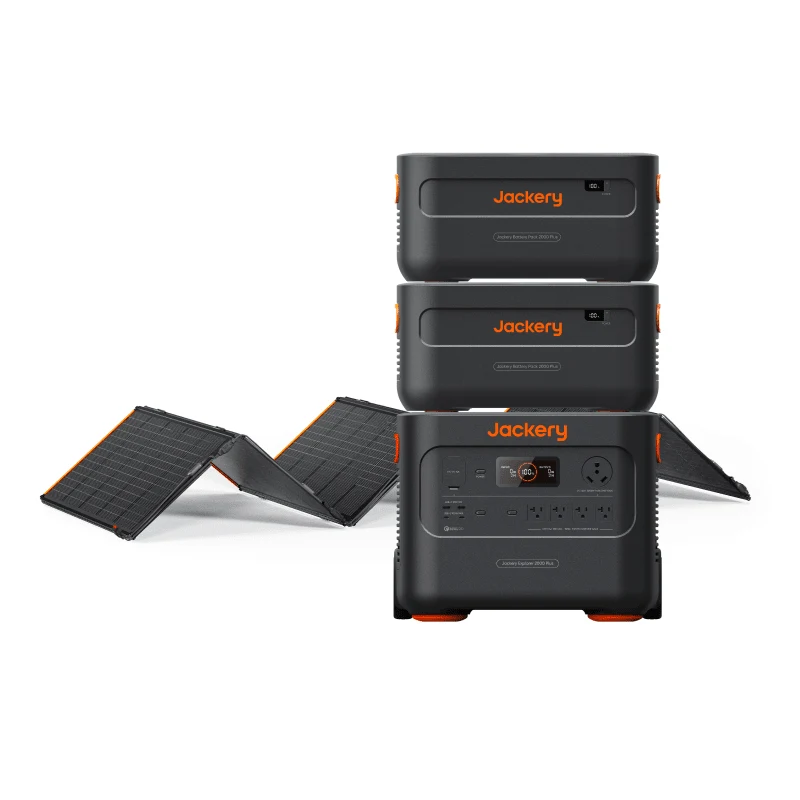
The Jackery Explorer 2000 Plus is the portable power station for home buyers who plan around the worst-case outage, not the average one. Its 2,042Wh LiFePO4 battery sits behind a 3,000W inverter with a 6,000W surge ceiling, the highest sustained output in this comparison, which is what lets a full-size refrigerator, a sump pump, a router, and a few lights run together without the inverter flinching at a compressor start. For a reader whose list of essentials is longer than a fridge and a Wi-Fi box, the Explorer 2000 Plus is the portable power station for home that covers the long list without a second unit beside it.
The numbers translate to plain run-time: a single charge carries a refrigerator through a full day or more, and a week of smaller-essential coverage if the household stays disciplined about what stays plugged in. The cells are rated for 4,000-plus cycles to 80 percent, so a station that mostly sits waiting for a bad day still holds most of its capacity after years of the occasional use. A wall charge reaches 80 percent in roughly 1.7 hours, and 800W of solar input tops the battery up from the sun on a clear day, which is how off-grid and extended-outage users actually keep a system alive between wall charges.
**Expandable home backup is the feature that sets this model apart from every sealed-capacity rival.** Two additional Jackery battery packs scale the system toward 12kWh, which is the difference between covering one circuit and covering a real slice of the house for days at a time. A buyer who starts with the base unit today is not locked out when needs grow, and that future-proofing is worth more than it looks when outages keep getting longer. The port layout is equally serious: four NEMA 5-15R AC outlets, two 100W USB-C PD sockets, two USB-A, a 12V car port, and two 12V/20A DC outputs.
The honest trade is size. At 98.5 pounds and a 21.7-inch footprint, this is a garage or basement appliance that stays put once installed, and a buyer who needs to move the unit regularly should consider a lighter class. For a reader whose priority is a reliable portable power station for home that runs the fridge and the internet through a multi-day failure and can grow with the household, the Explorer 2000 Plus is the Jackery-class portable power answer to lead with, and the current pricing is posted on the Jackery product page.
The Jackery Explorer 2000 Plus is the power station for home buyers who plan around the worst case outage, not the average one. Its 2,042Wh LiFePO4 battery sits behind a 3,000W inverter with a 6,000W surge ceiling, the highest sustained output in its comparison group, which is what lets a full size refrigerator, a sump pump, a router, and a few lights run together without the inverter flinching at a compressor start. For a reader whose list of essentials is longer than a fridge and a Wi-Fi box, that is the whole argument.
The expansion path is the second reason to plan with this model. Two additional Jackery battery packs scale the system toward 12kWh, which is the difference between covering one circuit and covering a real slice of the house for days at a time. A buyer who starts with the base unit today is not locked out when needs grow, and that future proofing is worth more than it looks when outages keep getting longer.
The 1.7 hour wall charge saves the recovery between storms. A station back to 80 percent in under two hours is ready for the next failure in the same evening rather than the next day. During a rolling outage that speed keeps the reserve in play instead of guarding one night and then waiting.
The 800W solar input saves the multi day wait. A clear day of solar tops the battery up while the household draws from it, which is how off grid and extended outage users actually keep a system alive between wall charges. Wall speed for the storm and solar endurance for the stretch are the two halves of a complete system.
Think in tiers: the base station covers a long essential list through a multi day failure, and two extra battery packs scale toward 12kWh for a real slice of the house. Confirm the warranty on the station and each pack before you buy, and check whether a solar panel is bundled or priced separately. Size for the fridge, sump pump, router, and lights, and accept that 98.5 pounds means a permanent spot rather than a carry.
This fits a household that wants a reliable power station for home through a multi day failure, plus RV full vehicle power and an off grid cabin. It suits a fridge, sump pump, router, and lights together with high draw appliance runs. It does not fit anyone who needs to move the unit regularly at 98.5 pounds, and a buyer who wants a lighter carry should consider a smaller class instead.
Will the 6,000W surge really start a sump pump. Yes, because the surge ceiling is what lets a sump pump or a fridge compressor start without tripping the inverter, and 6,000W is the highest in its group. The running limit of 3,000W sustains the loads once they start. That combination is the reason this station suits the long essential list rather than a short one.
How far does one charge go with a long essential list. A single charge carries a refrigerator through a full day or more, and a week of smaller essential coverage if the household stays disciplined about what stays plugged in. Run time depends on exactly what is plugged in, so a disciplined list buys far more coverage than a careless one. Solar input stretches it through longer events.
What does scaling toward 12kWh actually change. It changes the station from covering essential circuits to covering a real slice of the house for days at a time. Two extra packs more than quintuple the base reserve, which is whole home battery territory without any wall installation. A buyer who expects outages to keep getting longer is buying the path rather than the single unit.
Against sealed 2kWh rivals the Explorer 2000 Plus trades lightness for the highest output and the largest expansion path. Sealed units are far lighter and cheaper at the start, but they cannot sustain 3,000W or grow toward 12kWh. If the essential list includes a sump pump and a full fridge running together, the output ceiling is the whole argument, and this station wins it.
Against generator based backup the Explorer trades fuel for instant quiet power. A combustion generator runs longer on a tank but needs fuel, ventilation, and a manual start after the outage. This station starts instantly, runs silently, and refills from solar without a gas run. The trade favors the station for essentials and the generator for whole house loads, and many households end up wanting the station first.
A common mistake is plugging in a careless load list and draining 2,042Wh in hours. A space heater, a kettle, and a hair dryer on top of the fridge will empty the battery quickly, no matter how large the inverter is. Keep the always on list to fridge, sump pump, router, and lights, and run high draw appliances in shifts.
A second mistake is treating 98.5 pounds as portable enough for regular moves. This is a garage or basement appliance that should be given a permanent spot with short cable runs. Plan the install, test the load list on a calm day, and keep the unit where you can reach it rather than discovering the weight during a storm.
Get the most from this setup by staging the expansion in the right order. Start with the base unit covering the fridge, sump pump, router, and lights, add one battery pack after the first long outage, and add the second as the household needs grow toward 12kWh. That staged path spreads the cost across the years the system actually serves.
A second habit is letting the 800W solar input do the daytime work. A panel array that tops the battery during a bright outage day turns a one day reserve into a system that waits out the weather. Test the layout at home so the storm day is execution rather than learning.
Store the battery and any extra packs at a mid range charge, top them up a few times a year, and keep the vents clear of dust so the cooling system holds up under sustained load. The 4,000 plus cycle design rewards a dry, temperate garage and a regular top up, and a pack left empty in a hot shed until the storm is the fastest way to shorten a decade of service.
Links open the official listing. Price, terms, and availability can change, so the live page is the source of truth.
Same situation, different option. Worth comparing before you decide.
Budget home backup with 1,024Wh, 1,800W output, 50 minute charging, and a path to 3,072Wh. It covers a fridge, router, and lights through a typical outage, then grows later.
Full review →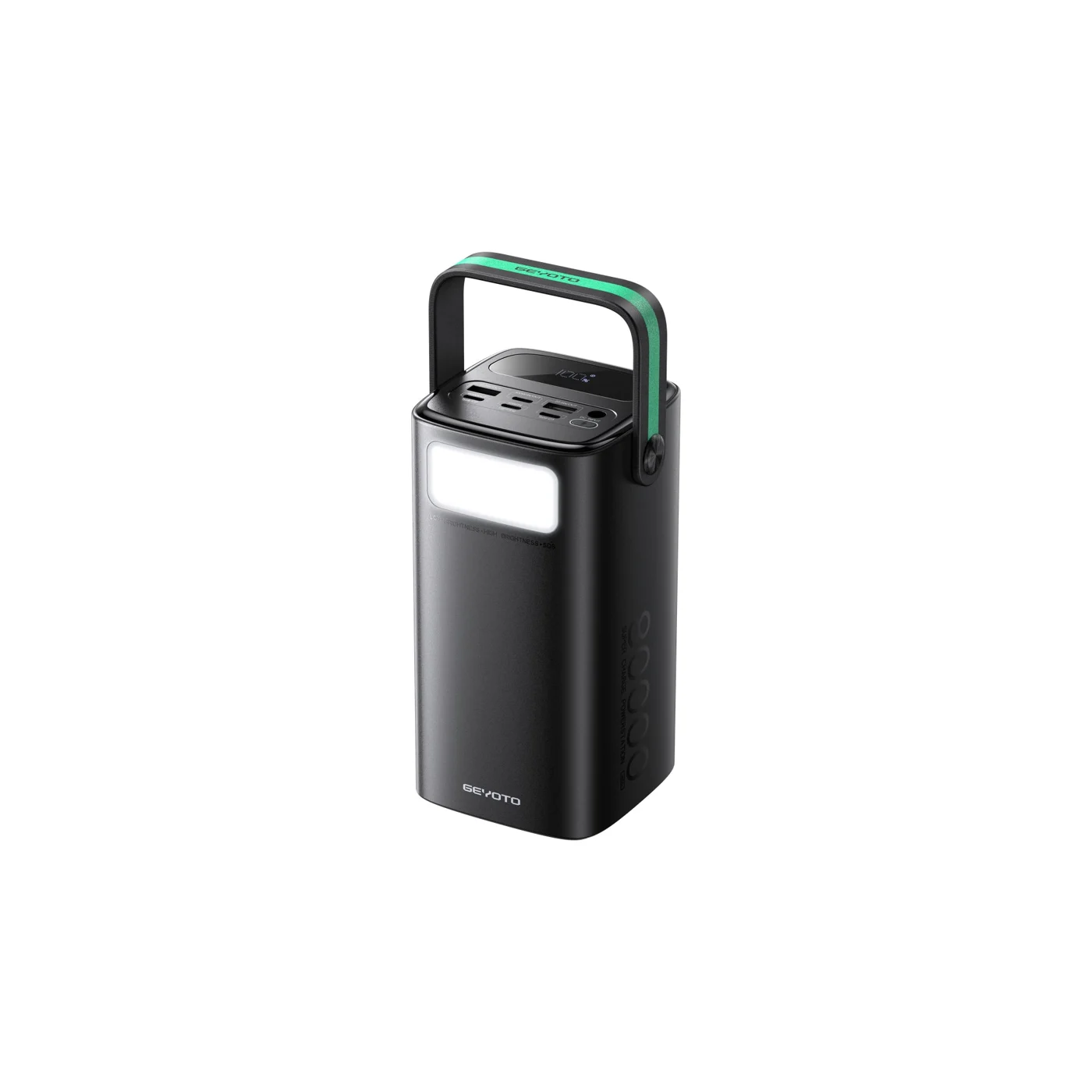
256Wh of DC power in 3.64 pounds, with a 100W USB-C port that fills a laptop or recharges the unit itself. No AC outlets, no inverter overhead, just pocket sized USB power.
Full review →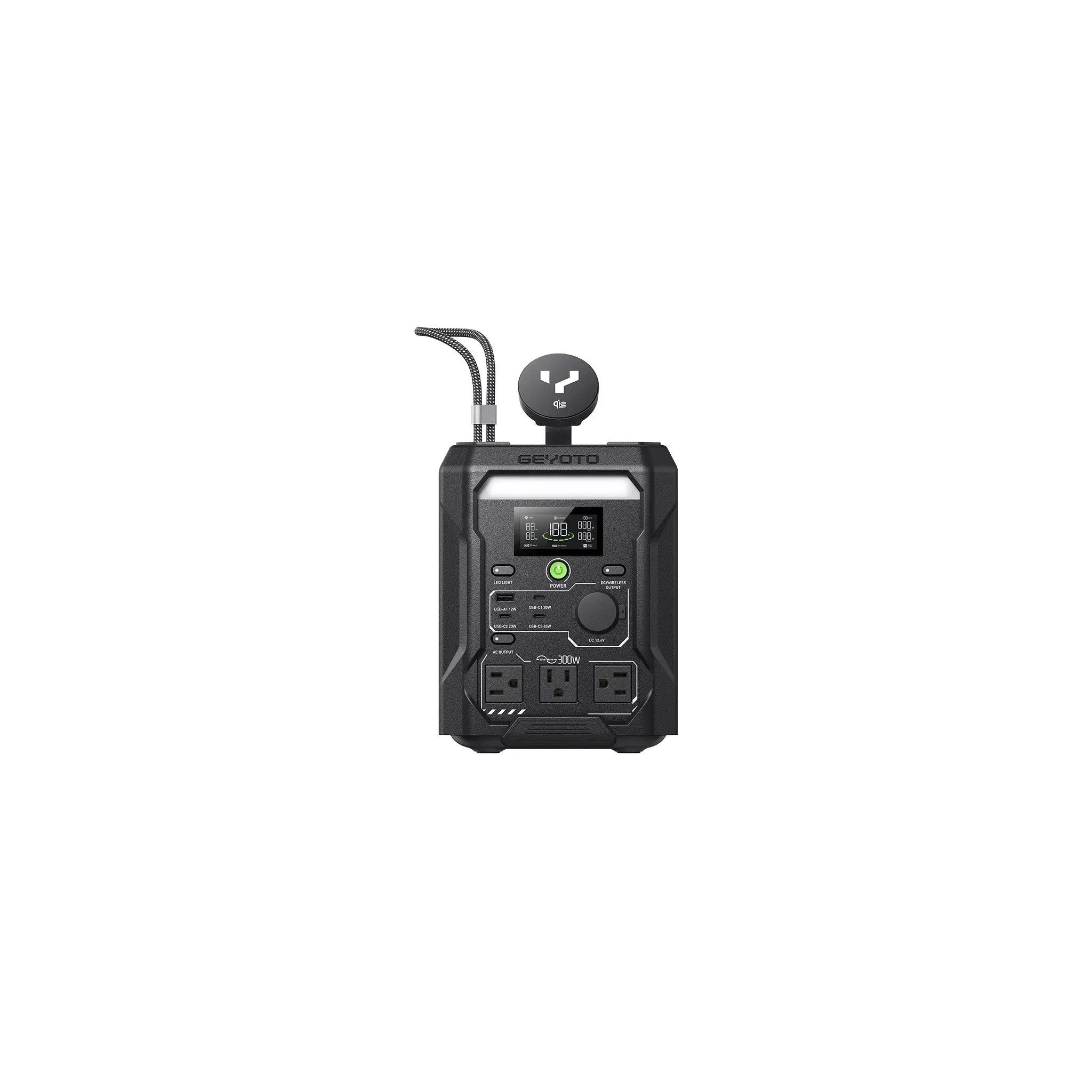
256Wh in 7.72 pounds with nine ports, a 300W inverter, and a wireless charging pad. A one bag travel station for laptops, phones, cameras, and a router through the night.
Full review →