
anker-solix
Anker SOLIX F2000 (PowerHouse 767)
Anker 2kWh backup with a decade rated battery, four AC outlets, three USB-C ports, and a dedicated RV outlet. Familiar, quiet, and built to sit ready for a decade.
Full review →
Categories
CampingQuiet electricity for the campsite: lights, phones, a fan, and the coffee maker, without a generator's noiseHome backupWhen the grid drops, essentials stay on: fridge, router, lights in one room, phones charged, medical devicesEvents & on-siteRunning shows, shoots, food stalls, and vendor booths off the grid, with clean power and no fumesEmergency prepThe battery you want charged before the storm: communications, lighting, refrigeration, and medical devicesRV / off-gridHouse power that moves with you: 12-volt ecosystems, solar pairing, and batteries that charge from the12V & jump startThe 12-volt rescue: keeping vehicle accessories, lights, and small 12-volt systems alive when you are the onlyProducts
All power stationsCompare specsAferiyAllpowersAnker SOLIXBLUETTIEcoFlowGeyotoGoal ZeroGrowattJackeryRenogyYEAGULCHArticles
Residential vs Business Portable Power: How to Tell What You Actually NeedPortable Power for a Landscaping Company: Ditching the 200-Foot Extension CordPortable Power for a Food Truck That Wants to Plug In AnywhereRunning Job Site Power Without a GeneratorWhole Home Backup vs Appliance Backup: Pick the Right SizeHow Long Will a Power Station Run: A Practical Planning GuidePairing a Solar Panel for a Power Station: What to MatchPortable Power for Outdoor Events: Weddings and ReceptionsGuides
Portable Power for Camping: The Complete Guide to On-Site ElectricityPortable Power for Home Power Outages: A Real Backup Plan for the GridPortable Power for Events & On-Site Work: Running Shows, Shoots, and Stands Off the GridPortable Power for Emergencies: The Battery You Want Charged Before the StormPortable Power for Jump-Starting a Car & Vehicle PowerPortable Power for RV, Van Life & Off-Grid Living Compare AboutTrust
Affiliate Disclosure Privacy Policy Terms of UseFor a household or motorhome that wants backup power to sustain itself through a long outage, the BLUETTI AC200MAX starts from solar first thinking. The base unit stores 2,048Wh of lithium iron phosphate energy and feeds it through a 2,200W inverter with a 4,800W surge, one of the stronger mains motors in this group, so a sump pump or a larger compressor can start without tripping the output. The cells are rated for more than 3,500 cycles down to 80 percent, which sets the expectation of a decade of standby use rather than a short lived purchase. The defining spec is the solar ceiling. The station accepts up to 900W of solar input and can run that alongside a 500W wall charge, so a deep discharge recovers in the space of an evening rather than a full day. A pair of folding panels can hold the battery near full across a cloudy stretch, which is the difference between a backup that fades by the second night and one that keeps going. Wall charging alone reaches 80 percent in about 1.4 hours, giving a useful reset when shore power is available. The port spread leans toward recreational vehicle and off grid work. You get four AC outlets, a 100W USB-C socket, two USB-A ports, two wireless charging pads, a 12V vehicle port, a 12V 30 amp super DC line, and a NEMA TT-30 outlet at 30 amps for an RV shore or auxiliary feed. Up to three external B230 battery modules can lift total capacity to 8,192Wh, turning the portable unit into a scaleable battery system without any permanent wall installation. At 67.2 pounds the station is a two person move, so it suits off grid cabins, motorhome owners, and households planning to add panels and batteries over time. Read the full review below, then check the current offer.
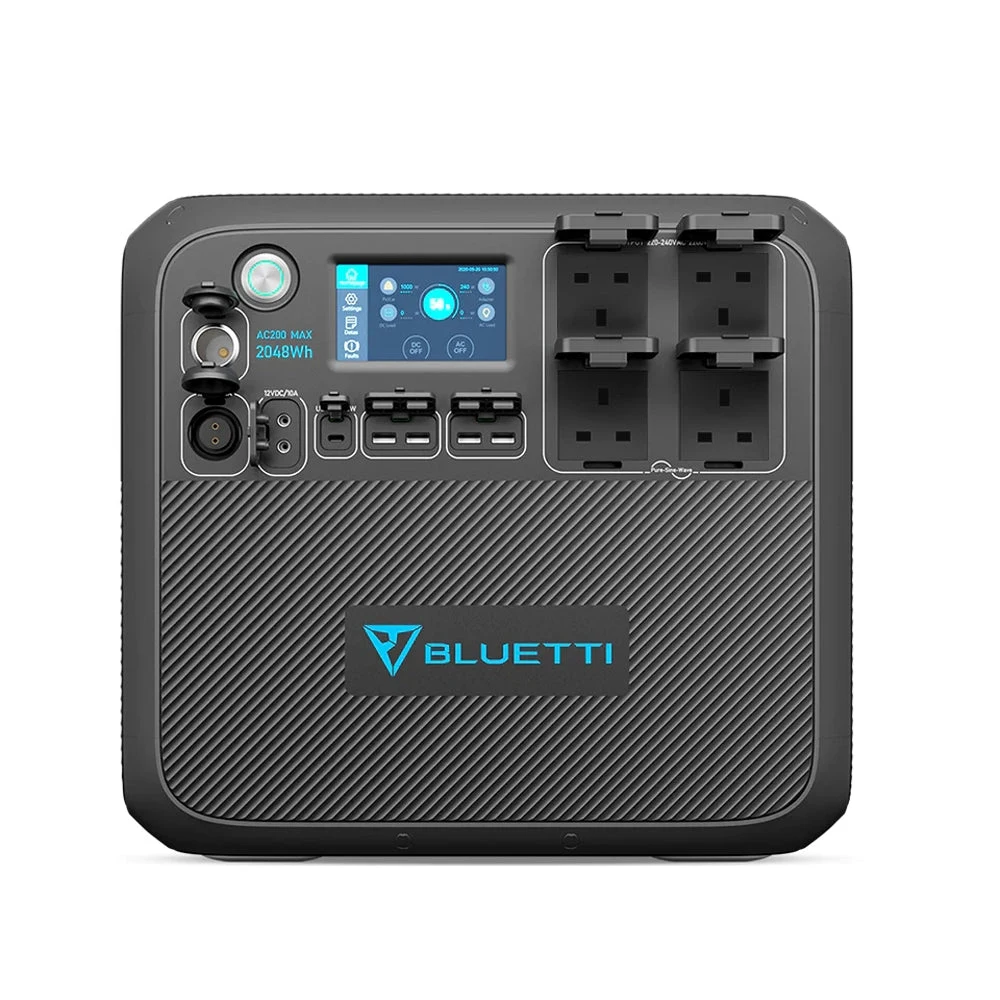
The BLUETTI AC200MAX is the solar-first answer in the home backup power station category, and the numbers back that up better than most. It accepts up to 900W of solar input on its own, pairs with a 500W wall charge, and runs the two sources together to recover from a deep discharge in the time it takes to cook dinner. For a home backup power station that is meant to keep itself full during a multi-day outage, that solar ceiling is the spec to check first, because wall power is the one source that disappears along with the grid. A pair of mid-size folding panels can hold the battery near-full through a cloudy stretch, which is the difference between a backup that lasts and one that fades.
The base unit stores 2,048Wh of LiFePO4 energy behind a 2,200W inverter with a 4,800W surge rating, one of the highest in this group, so larger inductive loads like a sump pump or a bigger compressor can start without tripping the inverter. The cells are rated for 3,500-plus cycles to 80 percent, which is decade-grade storage for a device you buy once and keep ready. The port spread leans hard toward the off-grid and RV world: four AC outlets, a 100W USB-C socket, two USB-A, a 12V/30A super DC output, a 12V car port, two wireless charging pads, and a NEMA TT-30 30A RV connector, so a motorhome can shore-power or feed a 12V load with no adapter between them.
**What makes the AC200MAX more than a big solar power bank is the room to grow.** BLUETTI sells B230 external battery modules that plug directly into the unit, and up to three of them lift the system to 8,192Wh, turning one portable station into a whole-home battery system without any wall installation, the kind of home backup power station a household can scale as the budget allows. Start with the base unit covering the fridge, the Wi-Fi, and the lights, then add modules as needs grow. The 67-pound weight and 16.5-inch footprint make this a basement or garage resident rather than a carry-around, which is fair to say plainly.
Window air conditioners and full kitchen loads are still beyond any single unit in this class, and a buyer whose primary job is cooling a hot bedroom should look elsewhere. For everyone else, the solar ceiling, the 4,800W surge, and the path to 8kWh make the AC200MAX the off-grid power station to build around when the goal is long, self-sustaining outages. Current pricing shifts with the market, and the brand's listing is the fastest place to see the latest bundles.
Most home backup advice assumes the grid returns by morning, and this station was designed for the households where it does not. Up to 900W of solar input, the highest ceiling in this group, means a pair of mid size folding panels can hold the battery near full through a cloudy stretch instead of watching it fade. For a home backup power station that is meant to keep itself alive during a multi day outage, that solar ceiling is the spec to check first, because wall power is the one source that disappears along with the grid.
The surge rating is the second reason this station suits a serious load list. A 4,800W surge lets larger inductive loads like a sump pump or a bigger refrigerator compressor start without tripping the inverter, which is where many 2kWh units fail in practice. The 3,500 plus cycle LiFePO4 cells make the battery a decade grade component, so the station is a build once and keep ready purchase rather than a two year throwaway.
The combined charging is the first time saver. A 500W wall charge and up to 900W of solar can run together, recovering a deep discharge in the time it takes to cook dinner. During a rolling outage the station is back to useful capacity before the next failure arrives instead of lagging a full day behind.
The 0 to 80 percent wall recharge in about 1.4 hours is the second path. A full charge from a wall outlet alone lands in well under two hours, which suits a household that tops up between storms. Two independent refill paths mean the station is rarely waiting on a single source when the weather turns.
Think in tiers: the base station covers the fridge, Wi-Fi, and lights; one B230 module extends a work day; three modules build a whole home battery system. Confirm each tier carefully before you buy, including the warranty on both the station and the modules, because the capacity steps change the price a great deal. Size the solar array to the 900W ceiling, since wall power is the source that vanishes during the outages that matter.
This fits a household that wants long, self sustaining outages, an RV that needs 30 amp shore power, or an off grid cabin with a real load list. It suits sump pump, fridge, and lighting duty through multi day events. It does not fit a backpacker or a carry on traveler at 67 pounds, and no single 2kWh unit will run a window air conditioner or a full kitchen, so a cooling heavy household should look at fixed install options.
How does 900W of solar actually change an outage. A pair of mid size folding panels can put 700 to 900W into the battery on a clear day, which refills most of the base battery while you use it. That turns a one day reserve into a system that can run for the length of the storm. Wall charging is faster but disappears with the grid, so solar is the path that keeps the station alive on day three.
What does three B230 modules do to the runtime. Each module adds roughly 2,048Wh, taking the system from 2,048Wh to 8,192Wh, which is whole home battery territory without any wall installation. A household can start with the base unit covering essentials and add modules as the budget allows. That staged path is the reason this station suits a growing off grid build.
Will the TT 30 outlet really replace shore power. Yes, the NEMA TT 30 30 amp connector feeds an RV shore power load directly with no adapter between the station and the vehicle. Pair it with the 12V 30 amp super DC output and the motorhome can run both AC and DC loads from one box. It is the port that turns a home backup into a travel power plant.
Against sealed 2kWh rivals the AC200MAX trades lightness for solar and expansion. Units that stop at 2,048Wh are lighter and cheaper at the start, but they cannot accept 900W of solar or grow toward 8kWh. If the outage history is multi day, the ceiling and the modules are the whole argument, and if the job is a single night, the sealed station is the lighter buy.
Against generator based backup the AC200MAX trades fuel for silence and speed. A combustion generator runs longer on a tank but needs fuel, ventilation, and maintenance, and it starts after the outage rather than before it. This station starts instantly, runs silently indoors, and refills from solar without a gas run. The trade favors the station for essentials and the generator for whole house loads, and many households end up wanting the station first.
A common mistake is undersizing the solar array and then wondering why the battery faded. A single small panel cannot hold a 2kWh battery through a cloudy stretch, so pair the station with panels that approach the 900W ceiling. Solar is the self sustainment path here, and a token panel makes the headline number meaningless.
A second mistake is treating 67 pounds as a carry around. This is a basement or garage resident that should be given a permanent spot with short cable runs. Plan the install, route the solar leads, and test the full load list on a calm day so the outage night is execution rather than assembly.
Get the most from this setup by staging the capacity in the right order. Start with the base station covering fridge, lights, and Wi-Fi, add one B230 module when the first long outage teaches you the real load, and add the second and third as the build grows. That staged path spreads the cost across the years the system actually serves and prevents buying capacity you never needed.
A second habit is pre positioning the solar array. Test the panel layout at home on a clear day, note the sun angles, and label the cables before the season starts. A station that is first unboxed during a storm never gets the easy familiarization session, and small mistakes at that point cost the most.
Keep the battery and any B230 modules at a mid range charge during storage, top them up a few times a year, and keep the vents clear of dust so the cooling system holds up in summer heat. Run a full cycle once or twice a year to let the monitor recalibrate, and store the system in a dry, temperate space rather than a freezing shed or a sun baked attic.
Links open the official listing. Price, terms, and availability can change, so the live page is the source of truth.
Same situation, different option. Worth comparing before you decide.
Anker 2kWh backup with a decade rated battery, four AC outlets, three USB-C ports, and a dedicated RV outlet. Familiar, quiet, and built to sit ready for a decade.
Full review →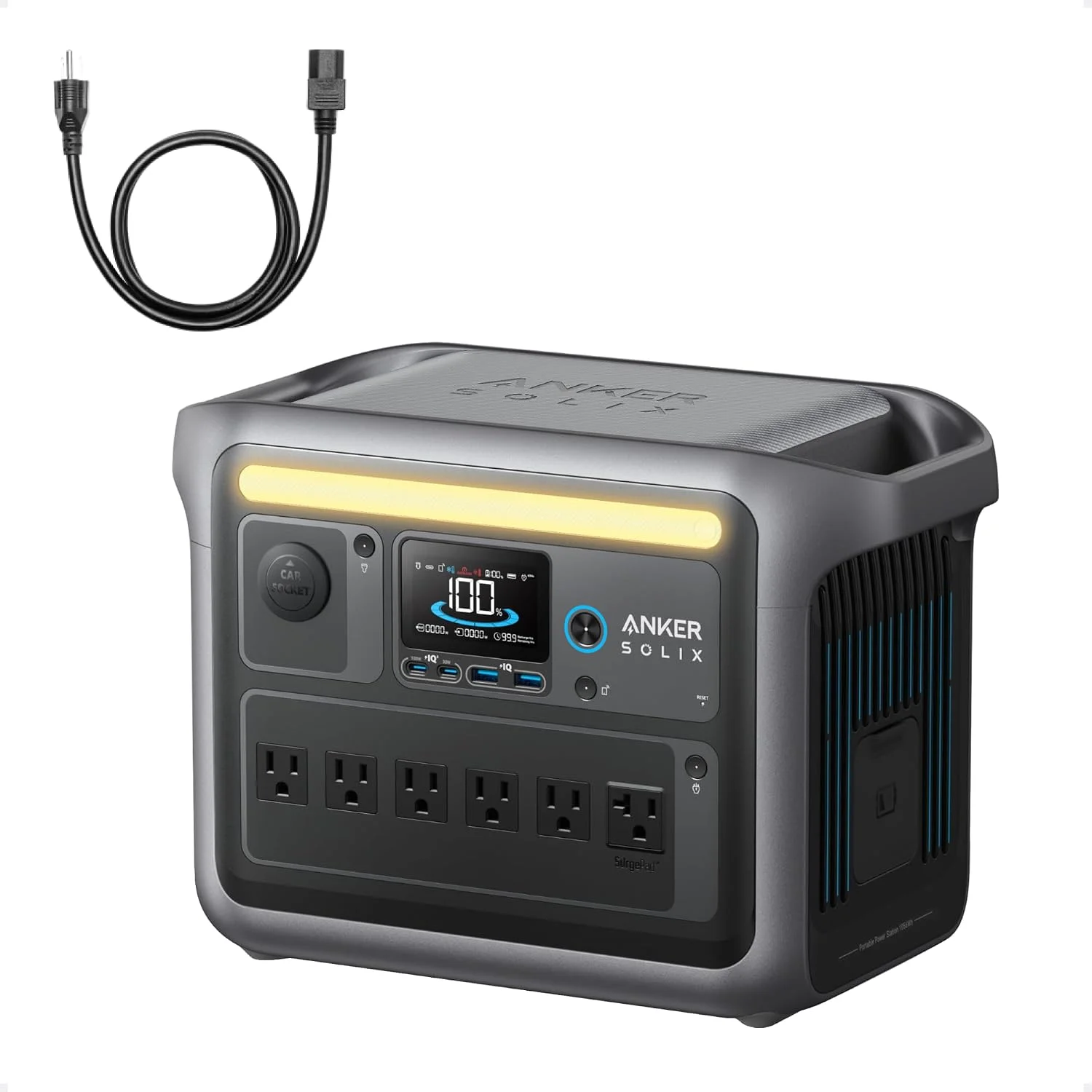
Anker trust with a 15 percent smaller 1kWh body, 80 percent charging in 43 minutes, and a 1,800W inverter. The easy first buy for home backup, camping, and the truck.
Full review →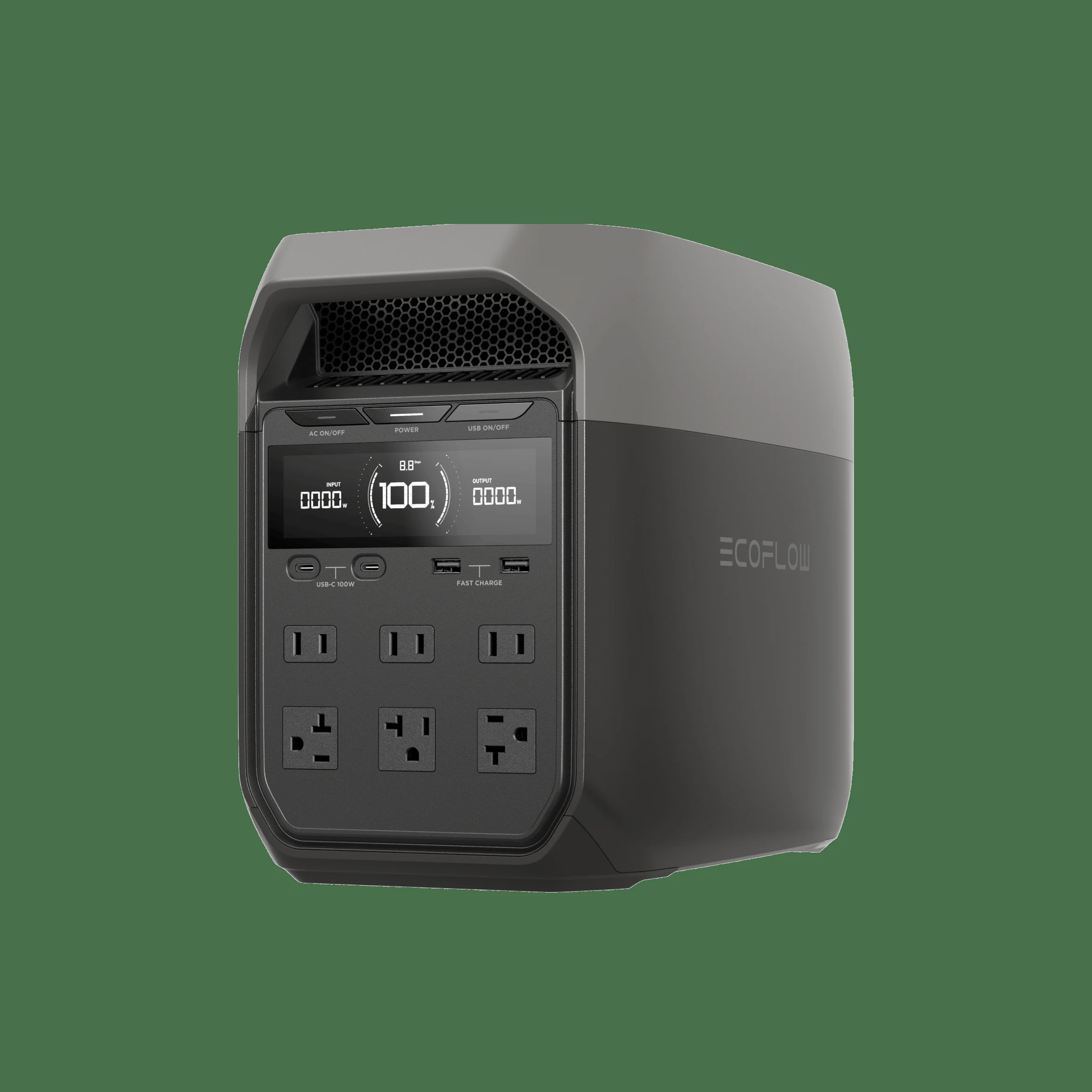
Budget home backup with 1,024Wh, 1,800W output, 50 minute charging, and a path to 3,072Wh. It covers a fridge, router, and lights through a typical outage, then grows later.
Full review →