
anker-solix
Anker SOLIX F2000 (PowerHouse 767)
Anker 2kWh backup with a decade rated battery, four AC outlets, three USB-C ports, and a dedicated RV outlet. Familiar, quiet, and built to sit ready for a decade.
Full review →
Categories
CampingQuiet electricity for the campsite: lights, phones, a fan, and the coffee maker, without a generator's noiseHome backupWhen the grid drops, essentials stay on: fridge, router, lights in one room, phones charged, medical devicesEvents & on-siteRunning shows, shoots, food stalls, and vendor booths off the grid, with clean power and no fumesEmergency prepThe battery you want charged before the storm: communications, lighting, refrigeration, and medical devicesRV / off-gridHouse power that moves with you: 12-volt ecosystems, solar pairing, and batteries that charge from the12V & jump startThe 12-volt rescue: keeping vehicle accessories, lights, and small 12-volt systems alive when you are the onlyProducts
All power stationsCompare specsAferiyAllpowersAnker SOLIXBLUETTIEcoFlowGeyotoGoal ZeroGrowattJackeryRenogyYEAGULCHArticles
Residential vs Business Portable Power: How to Tell What You Actually NeedPortable Power for a Landscaping Company: Ditching the 200-Foot Extension CordPortable Power for a Food Truck That Wants to Plug In AnywhereRunning Job Site Power Without a GeneratorWhole Home Backup vs Appliance Backup: Pick the Right SizeHow Long Will a Power Station Run: A Practical Planning GuidePairing a Solar Panel for a Power Station: What to MatchPortable Power for Outdoor Events: Weddings and ReceptionsGuides
Portable Power for Camping: The Complete Guide to On-Site ElectricityPortable Power for Home Power Outages: A Real Backup Plan for the GridPortable Power for Events & On-Site Work: Running Shows, Shoots, and Stands Off the GridPortable Power for Emergencies: The Battery You Want Charged Before the StormPortable Power for Jump-Starting a Car & Vehicle PowerPortable Power for RV, Van Life & Off-Grid Living Compare AboutTrust
Affiliate Disclosure Privacy Policy Terms of UseLong duration home backup is a different purchase from overnight backup, and the Jackery HomePower 2000 Plus v2 is built around that distinction. It stores 2,048Wh of lithium iron phosphate energy behind a 2,400W inverter, but the deciding feature is Priority Routing, Jackery smart energy management that keeps circuits you designate as essential running through a shortage by giving them power first. That turns the station from a large battery into a small utility that behaves like a transfer switch, which is what a whole home backup system is for when the grid stays quiet for a long stretch. The battery carries the long horizon story. The cells hold a 6,000 plus cycle rating that Jackery frames as roughly sixteen years of daily use, the longest life figure in this group. For a device whose job is to sit ready for the bad day, a battery that outlasts many household purchases matters more than anything on the port list. A full wall charge takes about 1.5 hours, which keeps the station usable through a rolling series of short outages. At 40.6 pounds the v2 is about a third lighter than the previous generation of expandable 2kWh systems, light enough to move between a garage and a basement with one person. Jackery test estimates put a refrigerator near three and a half hours of runtime per charge under their test load, with room for a day or more of lights, a router, and small appliances on a realistic household load, plus about twenty four laptop charges from a full battery. Expansion packs scale the system toward 12kWh when needs grow. The 140W USB-C port with adaptive voltage protocol fast charges laptops and tablets, and roughly thirty decibel operation lets the unit sit in a bedroom or office. A window air conditioner sits beyond this output level, so cooling led households should shop higher. Read the full review below, then check the current offer.
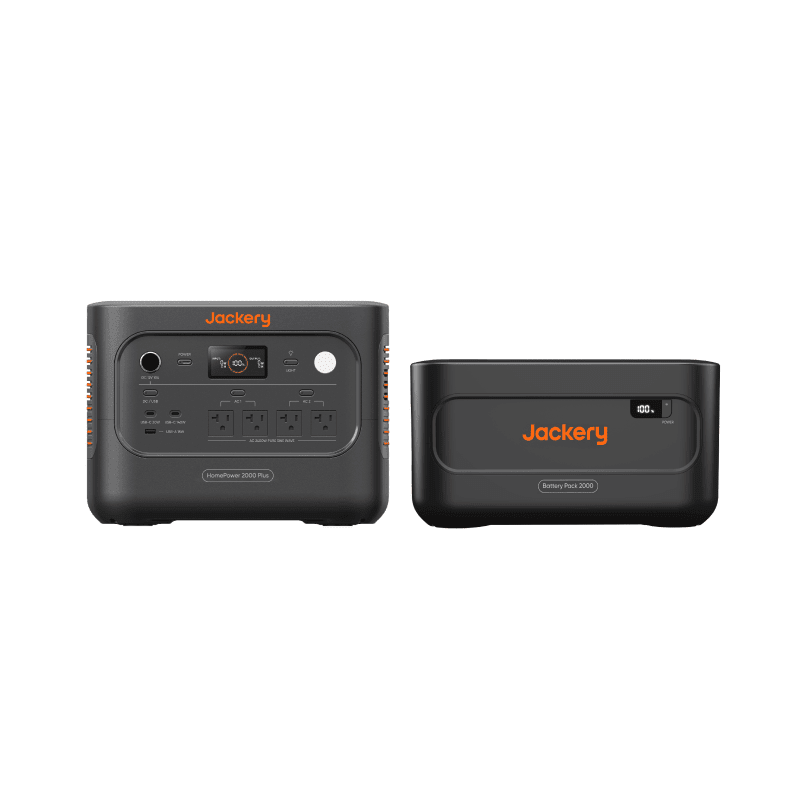
Long-duration home backup is a different purchase from overnight backup, and the Jackery HomePower 2000 Plus v2 is built around that distinction. It stores 2,048Wh of LiFePO4 energy behind a 2,400W inverter, but the feature that changes the decision is Priority Routing, Jackery's smart energy management that keeps the circuits you designate as essential running through a shortage by routing power to them first. That turns the station from a big battery into a small utility that behaves the way a transfer switch does, which is what a whole-home backup power system is actually for when the grid goes quiet for a long stretch.
The battery is where the long-horizon story lives. The cells carry a 6,000-plus cycle rating, which Jackery rates at roughly 16 years of daily use, the longest life of any station in this group. For a device whose job is to sit ready for the bad day, a battery that outlasts the mortgage is the spec that matters more than anything on the port list. A full wall charge takes about 1.5 hours, which keeps the station usable through a rolling series of short outages, and at 40.6 pounds the v2 is about a third lighter than the previous generation of expandable 2kWh systems, light enough to move between a garage and a basement without a second person.
**The run-time arithmetic is the reason this unit shows up in whole-home backup power discussions.** Jackery's own comparison estimates put a refrigerator at roughly three and a half hours of runtime per charge in their test load, with room for a day or more of lights, a router, and small appliances on a realistic household load, and about 24 laptop charges from a single full battery. Real numbers vary with what is actually plugged in, but the point is that the v2 covers the essential circuits of a house through a long evening into the next morning, and expands toward 12kWh with additional battery packs when the need outgrows the base unit.
A few honest limits keep this an accurate picture: 2,400W of output will not run a window air conditioner, and a household whose main job is cooling should shop higher-output or fixed-install solutions. The 140W USB-C port with AVS protocol fast-charges laptops and tablets, and the roughly 30-decibel operation lets the unit sit in a bedroom or office without becoming the noise in the room. For a reader who wants long-duration whole-home backup power that stays light enough to move, the v2 is the Jackery model to point to, with the current price listed on the official Jackery page.
Long duration home backup is a different purchase from overnight backup, and the Jackery HomePower 2000 Plus v2 is built around that distinction. It stores 2,048Wh of LiFePO4 behind a 2,400W inverter, but the feature that changes the decision is Priority Routing, smart energy management that keeps the circuits you designate as essential running through a shortage by routing power to them first. That turns the station from a big battery into a small utility, which is what a whole home backup power system is actually for when the grid goes quiet.
The battery is the long horizon story. The cells carry a 6,000 plus cycle rating, which Jackery rates at roughly 16 years of daily use, the longest life of any station in its group. For a device whose job is to sit ready for the bad day, a battery that outlasts the mortgage is the spec that matters more than anything on the port list, and the 40.6 pound weight makes it about a third lighter than the previous generation of expandable 2kWh systems.
The 1.5 hour wall charge saves the rolling outage. A full charge in about 90 minutes keeps the station usable through a series of short failures in one evening rather than serving only the first. A backup that refills that fast is ready for the second outage while a slower unit is still catching up from the first.
Priority Routing saves the argument about what stays on. The circuits you designate as essential keep running first through a shortage, so the fridge and the router are protected while the television can wait. That automatic triage saves the household the spreadsheet of what to unplug in the dark.
Think in tiers: the base station covers essential circuits through a long evening into the next morning, and expansion packs scale toward 12kWh for a whole home slice. Confirm the warranty before you buy, and check whether the expansion packs are bundled or priced separately. Size for the refrigerator, router, lights, and small appliances, and accept that a window air conditioner means a higher output or fixed install system.
This fits a household that wants long duration backup that stays light enough to move, plus RV use and everyday outage resilience. It suits essential circuits running through a long evening and the next morning. It does not fit a household whose main job is cooling, because 2,400W will not run a window air conditioner, and those buyers should shop a higher output or fixed install solution instead.
How does Priority Routing actually work. You designate the circuits that matter, and the station routes power to them first through a shortage while the rest wait. That automatic triage keeps the fridge and the router alive without a household debate in the dark. It is the difference between a battery with outlets and a small utility that behaves like a transfer switch.
How long will it run a refrigerator. Jackery's own comparison estimates put a refrigerator at roughly three and a half hours of runtime per charge in their test load, with room for a day or more of lights, a router, and small appliances on a realistic household load. Real numbers vary with what is actually plugged in, but the essential circuits are covered through a long evening.
Why does 6,000 cycles matter more than capacity. Because a station that sits ready accumulates calendar time faster than it accumulates cycles, and a battery rated for 16 years of daily use outlasts the years between bad storms. Capacity decides how long one outage lasts, while cycle life decides how many outages the station survives. Both matter, and this model leads on the one most buyers forget.
Against the Explorer 2000 Plus the v2 trades peak output for lightness and cycle life. The Explorer sustains 3,000W with a 6,000W surge for a sump pump and high draw loads, while the v2 at 40.6 pounds is far easier to move and carries 6,000 plus cycles with Priority Routing. Choose this model for long duration essentials that move and the Explorer for a heavy long list that stays put.
Against sealed 2kWh rivals the v2 trades simplicity for cycle life and routing. Sealed stations are lighter in cost and simpler to buy, but they rarely match the 16 year battery rating or the essential circuit triage. Long duration buyers who plan for a decade of storms are buying the horizon rather than the single unit.
A common mistake is designating too many circuits as essential and defeating Priority Routing. When every plug is essential, the triage protects nothing and the battery drains like any station. Keep the essential list short, fridge, router, lights, and a laptop, and let the routing do its actual job through a shortage.
A second mistake is expecting 2,400W to run a window air conditioner. The output ceiling is honest, and a household whose main job is cooling should shop a higher output or fixed install solution. The v2 covers essential circuits through a long evening, not a hot bedroom, and choosing it for cooling is choosing the wrong tool.
Get the most from this setup by setting up the Priority Routing on a calm day and testing it. Unplug the wall, confirm the essential circuits stay running, and walk the household through what the station protects. A station that has been proven in daylight works in the dark, while one first tested during a storm teaches lessons at the worst time.
A second habit is letting the 1.5 hour charge do its work after every short restoration. Plug in and let the station refill to full before doing anything else, because 90 minutes buys the whole next outage. A household that treats the refill as automatic will always have a backup.
Store the battery at a mid range charge, run a full cycle a couple of times a year, and keep the vents clear of dust so the fans hold up under sustained load. The 6,000 plus cycle design rewards a dry, temperate spot and a regular top up, and a battery left empty in a hot garage until the storm is the fastest way to shorten a 16 year rating.
Links open the official listing. Price, terms, and availability can change, so the live page is the source of truth.
Same situation, different option. Worth comparing before you decide.
Anker 2kWh backup with a decade rated battery, four AC outlets, three USB-C ports, and a dedicated RV outlet. Familiar, quiet, and built to sit ready for a decade.
Full review →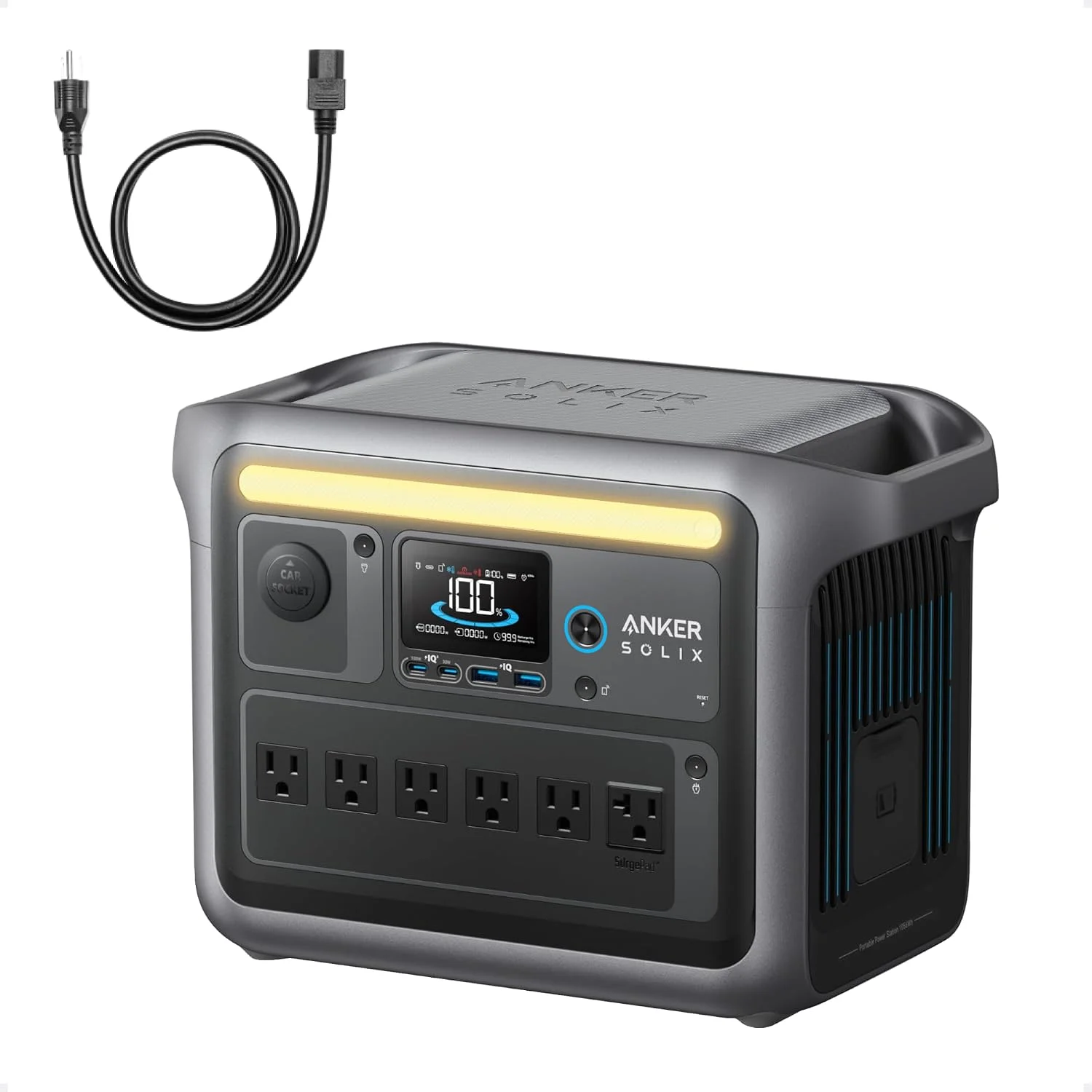
Anker trust with a 15 percent smaller 1kWh body, 80 percent charging in 43 minutes, and a 1,800W inverter. The easy first buy for home backup, camping, and the truck.
Full review →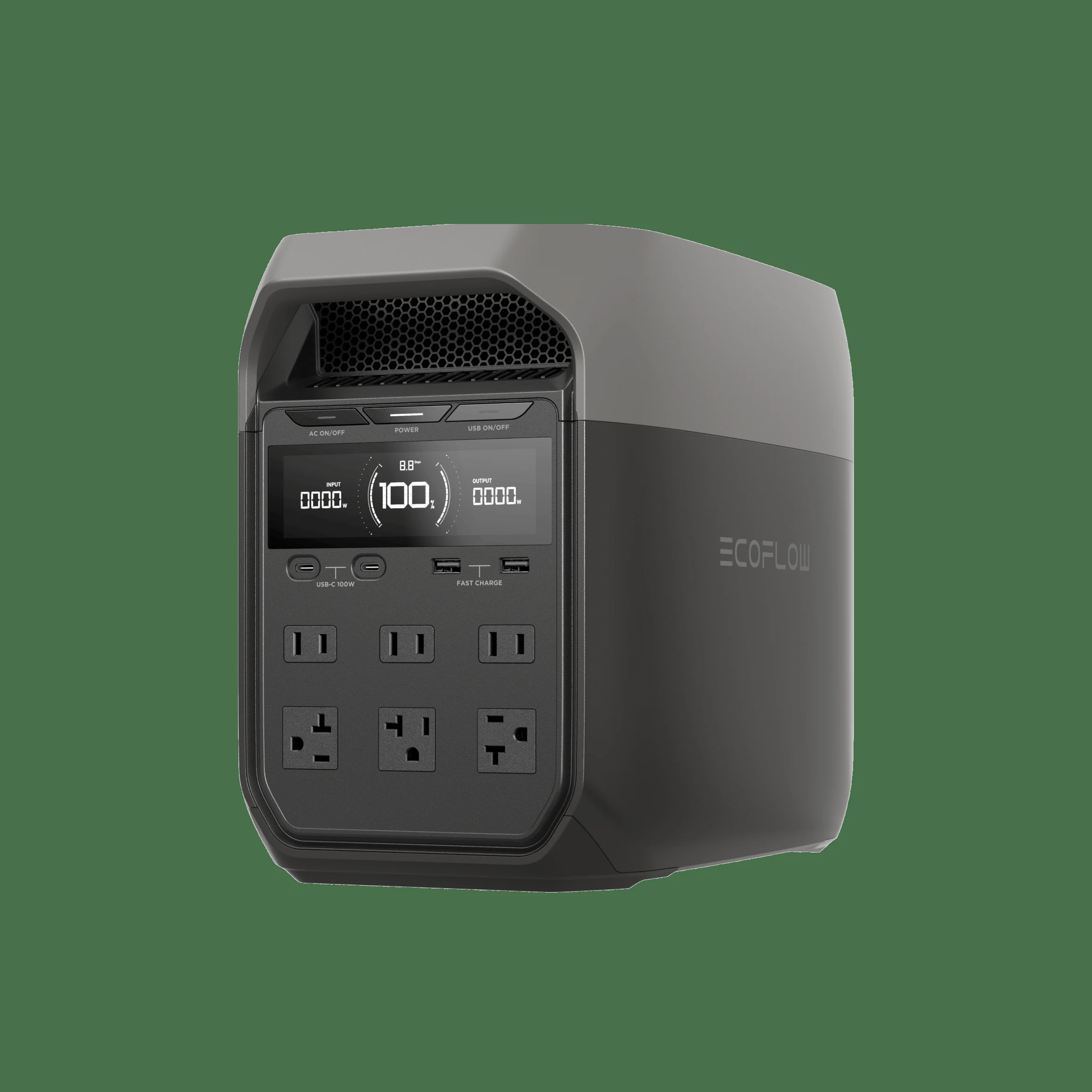
Budget home backup with 1,024Wh, 1,800W output, 50 minute charging, and a path to 3,072Wh. It covers a fridge, router, and lights through a typical outage, then grows later.
Full review →