
anker-solix
Anker SOLIX F2000 (PowerHouse 767)
Anker 2kWh backup with a decade rated battery, four AC outlets, three USB-C ports, and a dedicated RV outlet. Familiar, quiet, and built to sit ready for a decade.
Full review →
Categories
CampingQuiet electricity for the campsite: lights, phones, a fan, and the coffee maker, without a generator's noiseHome backupWhen the grid drops, essentials stay on: fridge, router, lights in one room, phones charged, medical devicesEvents & on-siteRunning shows, shoots, food stalls, and vendor booths off the grid, with clean power and no fumesEmergency prepThe battery you want charged before the storm: communications, lighting, refrigeration, and medical devicesRV / off-gridHouse power that moves with you: 12-volt ecosystems, solar pairing, and batteries that charge from the12V & jump startThe 12-volt rescue: keeping vehicle accessories, lights, and small 12-volt systems alive when you are the onlyProducts
All power stationsCompare specsAferiyAllpowersAnker SOLIXBLUETTIEcoFlowGeyotoGoal ZeroGrowattJackeryRenogyYEAGULCHArticles
Residential vs Business Portable Power: How to Tell What You Actually NeedPortable Power for a Landscaping Company: Ditching the 200-Foot Extension CordPortable Power for a Food Truck That Wants to Plug In AnywhereRunning Job Site Power Without a GeneratorWhole Home Backup vs Appliance Backup: Pick the Right SizeHow Long Will a Power Station Run: A Practical Planning GuidePairing a Solar Panel for a Power Station: What to MatchPortable Power for Outdoor Events: Weddings and ReceptionsGuides
Portable Power for Camping: The Complete Guide to On-Site ElectricityPortable Power for Home Power Outages: A Real Backup Plan for the GridPortable Power for Events & On-Site Work: Running Shows, Shoots, and Stands Off the GridPortable Power for Emergencies: The Battery You Want Charged Before the StormPortable Power for Jump-Starting a Car & Vehicle PowerPortable Power for RV, Van Life & Off-Grid Living Compare AboutTrust
Affiliate Disclosure Privacy Policy Terms of UseThe EF ECOFLOW DELTA 3 is the pick for buyers who want the fastest refilling 1kWh station in the EcoFlow portable range without giving up a long life battery. It stores 1,024Wh of lithium iron phosphate energy and feeds a 1,800W inverter with 3,600W of surge, while an X-Boost mode stretches usable output to 2,600W for resistive loads such as heaters and kettles. A wall charge reaches 80 percent in 30 minutes and full in 56 minutes when combined with up to 500W of solar input, a tempo that turns a short outage into a brief pause rather than a planning exercise. Battery engineering is the other reason this model punches above its price. The cells are rated for 4,000 cycles to 80 percent, the longest life figure in the EcoFlow portable line, and the pack carries an IP65 rating that resists dust, splashes, and oil film. That sealing matters for a unit that will live in a garage, a van, or on a boat, where weather and spills are routine. At 27.6 pounds the station is a one person carry between rooms and vehicles, a clear step lighter than the heavier 2kWh class. Thirteen outlets, including six AC sockets plus 100W USB-C, USB-A, and DC lines, spread power across a household load without a power strip. The X-Port connection accepts extra packs from related DELTA lines, scaling the system as high as 5,000Wh. EcoFlow app monitoring shows charge and output remotely, which helps during outages. It suits households that want the same fridge, router, and lighting load as the DELTA 2 at a lower entry cost, plus campers and boat owners who value sealed construction and decade grade cell life. Read the full review below, then check the current offer.
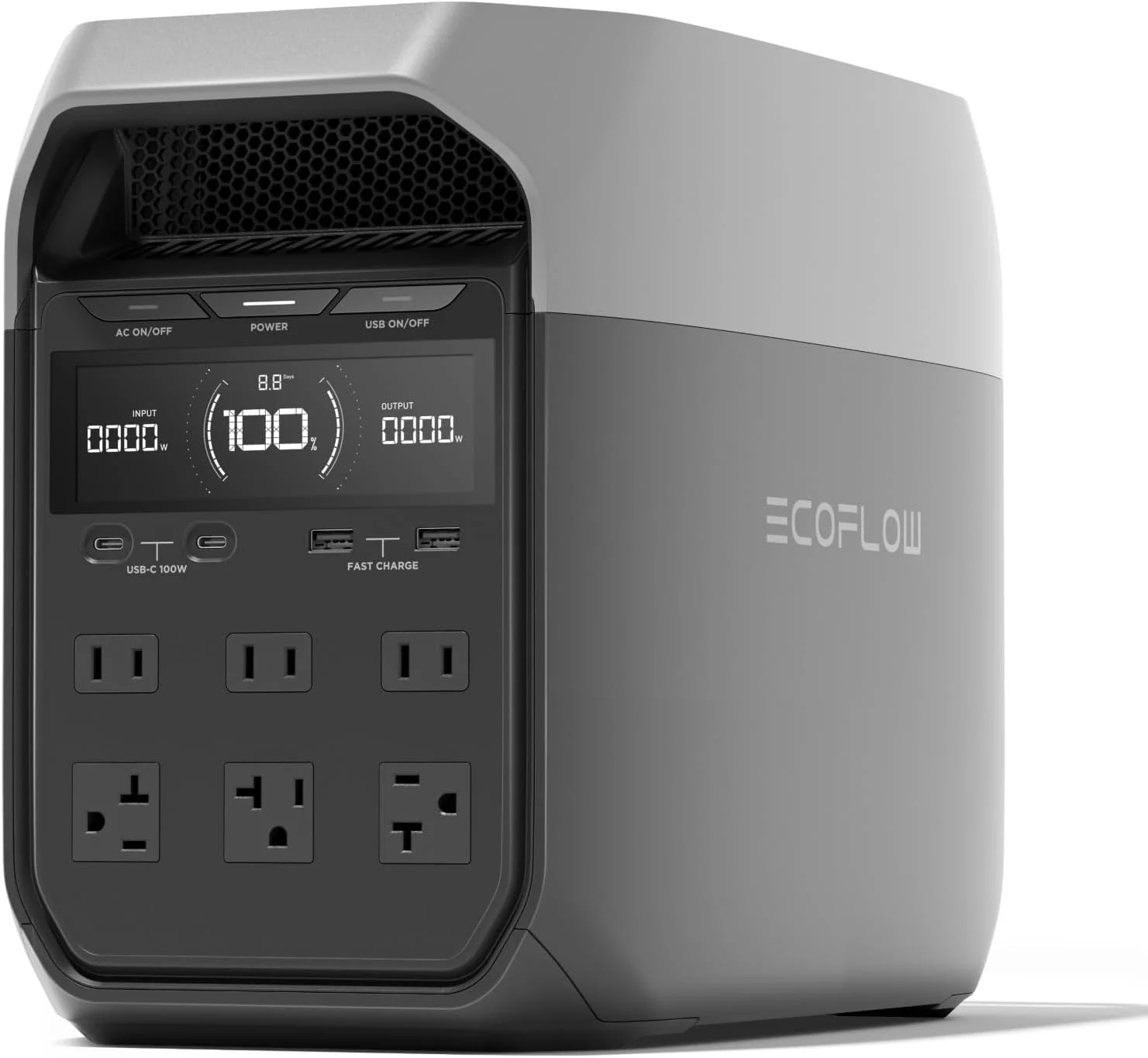
The DELTA 3 is the whole-home backup power station to look at first when the budget is real and the ambition is high, because it packs the line's fastest charging and longest-rated battery into a unit that weighs less than its predecessor at the same 1,024Wh capacity. It pairs that battery with a 1,800W inverter (3,600W surge) and an X-Boost ceiling of 2,600W for resistive loads, and the 0-80 percent wall recharge lands in 30 minutes, with a full charge in 56. For a reader shopping for a whole-home backup power station that refills faster than an outage lasts, that speed is the headline, and the rest of the design serves it.
The battery engineering is the other reason the DELTA 3 punches above its price. The LiFePO4 cells are rated to 4,000 cycles at 80 percent capacity, the longest life in EcoFlow's portable line, and the battery pack itself is IP65-rated for splash, dust, and oil resistance. That rating matters for a unit that will live in a garage, a van, or on a boat, where weather and spills are normal rather than exceptional. At 27.6 pounds the station is a one-hand-and-a-half carry, which the heavier 2kWh class units in this comparison cannot claim.
**Choosing among EcoFlow's three stations comes down to what the household actually draws, and the DELTA 3 wins the middle question.** It runs the same fridge, router, and lights load as the DELTA 2 at a lower entry price, charges in half the time, and its X-Port expansion accepts extra packs from the DELTA 3, DELTA Pro 3, and DELTA 2 Max lines, scaling to 5,000Wh. That is the whole-home backup power station that grows with the household instead of getting replaced. A buyer who starts with camping power and later wants serious home coverage can grow the system instead of replacing it. The 13-outlet spread, including a 100W USB-C socket and DC ports, keeps a full household of small devices plugged in at once.
The honest boundary: 1,800W of continuous output will not run a window air conditioner or a full kitchen, so a cooling-heavy household should step to the DELTA 2 Max. For a reader who wants fast home backup that refills before the next outage, carries a decade-rated battery, and can grow to 5kWh later, the DELTA 3 is the home power station with X-Stream charging to lead with, and its current street price is worth confirming on the EcoFlow store page before ordering.
The DELTA 3 punches above its price for two reasons that are easy to verify on the spec sheet. The LiFePO4 cells are rated to 4,000 cycles at 80 percent capacity, the longest life in EcoFlow's portable line, and the battery pack itself is IP65 rated for splash, dust, and oil resistance. For a reader shopping for home backup that will live in a garage, a van, or on a boat, where weather and spills are normal rather than exceptional, that rating is what separates a promise from a paragraph.
The speed is the other headline. Zero to 80 percent in 30 minutes with a full charge in 56 means a station that drained overnight is ready again before breakfast is over. For a household with rolling outages, where the grid returns briefly between failures, that refill time is the difference between a backup that serves every failure and one that serves only the first. The 1,500W AC plus 500W solar input is what buys that speed.
The 30 minute recharge saves the exact hours that matter in a storm. A station that is back to 80 percent in half an hour does not need a full night to recover, so short restorations become usable rather than wasted. Wall charging at 1,500W does the work, and solar input up to 500W can run alongside it to add charge while the wall does its share.
The 2,600W X Boost ceiling saves time on the kitchen side. Resistive loads like a kettle or a toaster that would trip a smaller inverter can run in bursts without drama, which means the morning coffee does not wait for the grid. Output you can use is time you do not spend rationing, and the boost mode extends that window for exactly the appliances that draw hard.
Think in tiers: the base station covers essentials through a typical outage, and expansion batteries take the system to 5,000Wh for a growing household. Confirm the warranty before you buy, and check whether the Plus tier or a solar bundle changes the math on capacity. Size for the fridge, router, and lights first, and accept that a window air conditioner means stepping to the DELTA 2 Max rather than pushing this inverter.
This fits a household that wants fast home backup at a value price, plus camping power that outlives the season. It suits fridge, router, and lights duty, a laptop, and a microwave in bursts, all in a 27.6 pound carry. It does not fit a window air conditioner or a full kitchen at 1,800W continuous, and a cooling heavy household should step to a 2kWh class instead.
How does X Boost change what you can plug in. It lifts the ceiling for resistive loads to 2,600W, so a kettle or a toaster can run in bursts that a straight 1,800W limit would refuse. The boost is for heating elements rather than motors, so a fridge compressor still lives inside the standard surge. Use it for the kitchen jobs that draw hard and short.
What does the IP65 rating actually protect against. It resists splash, dust, and oil on the battery pack, which matters for a station that lives in a garage, a van, or a boat. It does not make the unit submersible or a candidate for standing water. Keep the outlets dry and treat the rating as protection against real world grime rather than an invitation to test it.
Will expansion batteries from other lines really work. Yes, the X Port accepts extra packs from the DELTA 3, DELTA Pro 3, and DELTA 2 Max lines, taking capacity to 5,000Wh. That cross breed path means a buyer can grow the system instead of replacing it as the household needs change. Confirm the exact battery model before ordering so the expansion matches the line.
Against the DELTA 2 the DELTA 3 trades a higher price for faster charging and a longer rated battery. The older model is the budget entry and covers the same essential load, but it charges slower and carries fewer rated cycles. For a reader who values speed and a decade rated pack over the lowest entry price, the DELTA 3 wins the middle question cleanly.
Against 2kWh rivals the DELTA 3 trades capacity for weight and speed. A 2,048Wh station doubles the runtime but weighs far more and charges slower, while this unit refills in 30 minutes and weighs 27.6 pounds. Choose the larger class for multi day coverage and this one for a fast refilling everyday backup that can expand later.
A common mistake is running a window air conditioner or a full kitchen on the 1,800W inverter and blaming the station when it trips. The continuous limit is honest, and the X Boost ceiling only helps resistive loads. Keep the load list to fridge, router, lights, and laptop, with a microwave in bursts, and the station will serve faithfully.
A second mistake is assuming IP65 means the whole unit can be soaked. The rating covers the battery pack against splash and dust, not the outlets or the inverter. Keep the unit out of standing water, dry the ports after a wet trip, and let the rating do its actual job in a garage or a boat.
Get the most from this setup by using the 30 minute charge as the storm plan. After a short restoration, plug in and let the station refill to 80 percent before doing anything else, because that half hour buys the whole next outage. A household that treats the refill as automatic will always have a backup, while one that checks the level afterward may not.
A second habit is planning the expansion path while the base unit is new. Test the essential load list on a calm day, note the runtime, and decide which extra battery fits the gap. A system that grows instead of being replaced is cheaper over ten years, and the 5,000Wh ceiling gives the household room to grow.
Store the battery at a mid range charge, cycle it fully a couple of times a year, and keep the vents clear so the 1,500W charging mode does not hit a thermal limit. The IP65 pack forgives garage dust and splashes, but a hot attic or a freezing shed still shortens the honest life of any battery, so a dry, temperate corner is the right home.
Links open the official listing. Price, terms, and availability can change, so the live page is the source of truth.
Same situation, different option. Worth comparing before you decide.
Anker 2kWh backup with a decade rated battery, four AC outlets, three USB-C ports, and a dedicated RV outlet. Familiar, quiet, and built to sit ready for a decade.
Full review →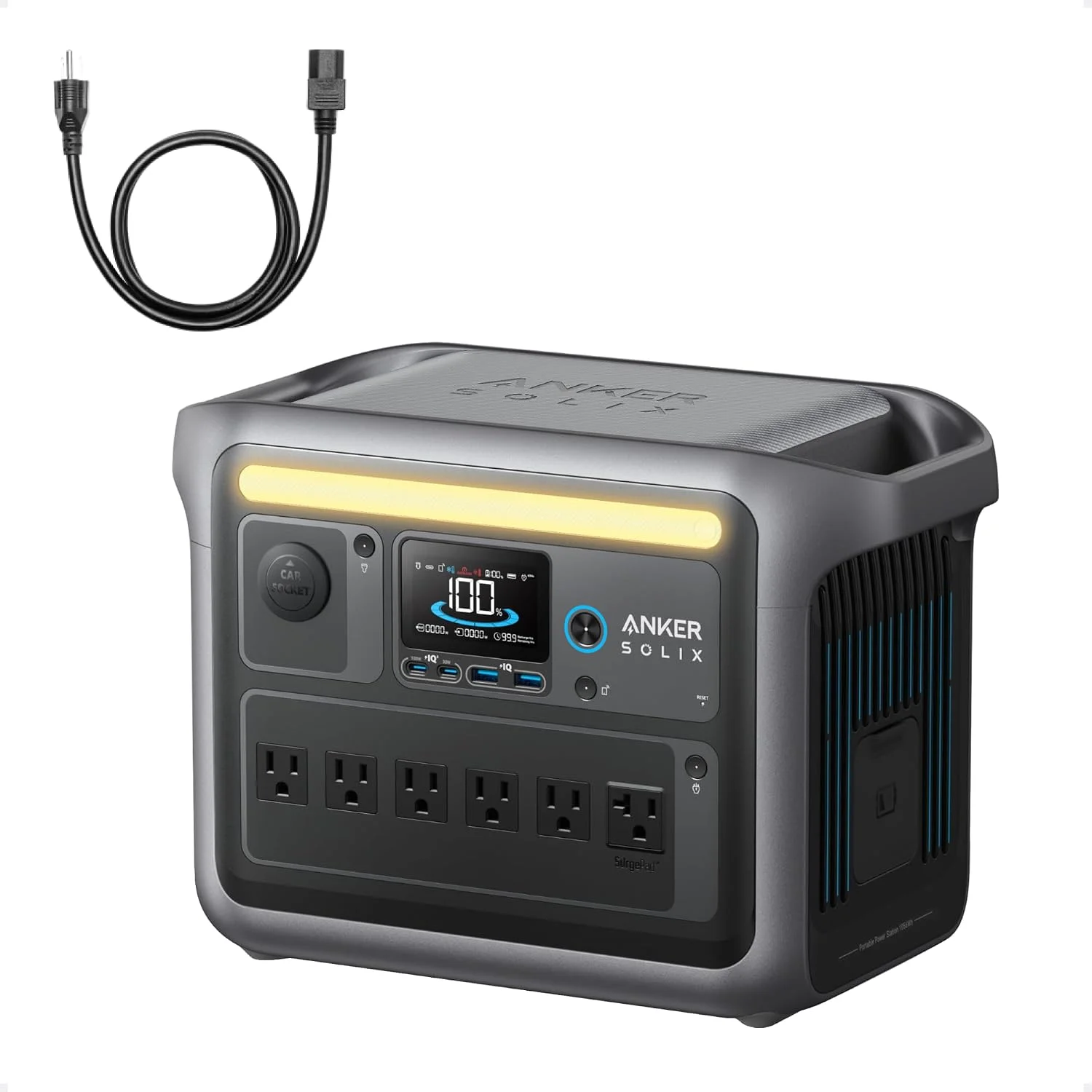
Anker trust with a 15 percent smaller 1kWh body, 80 percent charging in 43 minutes, and a 1,800W inverter. The easy first buy for home backup, camping, and the truck.
Full review →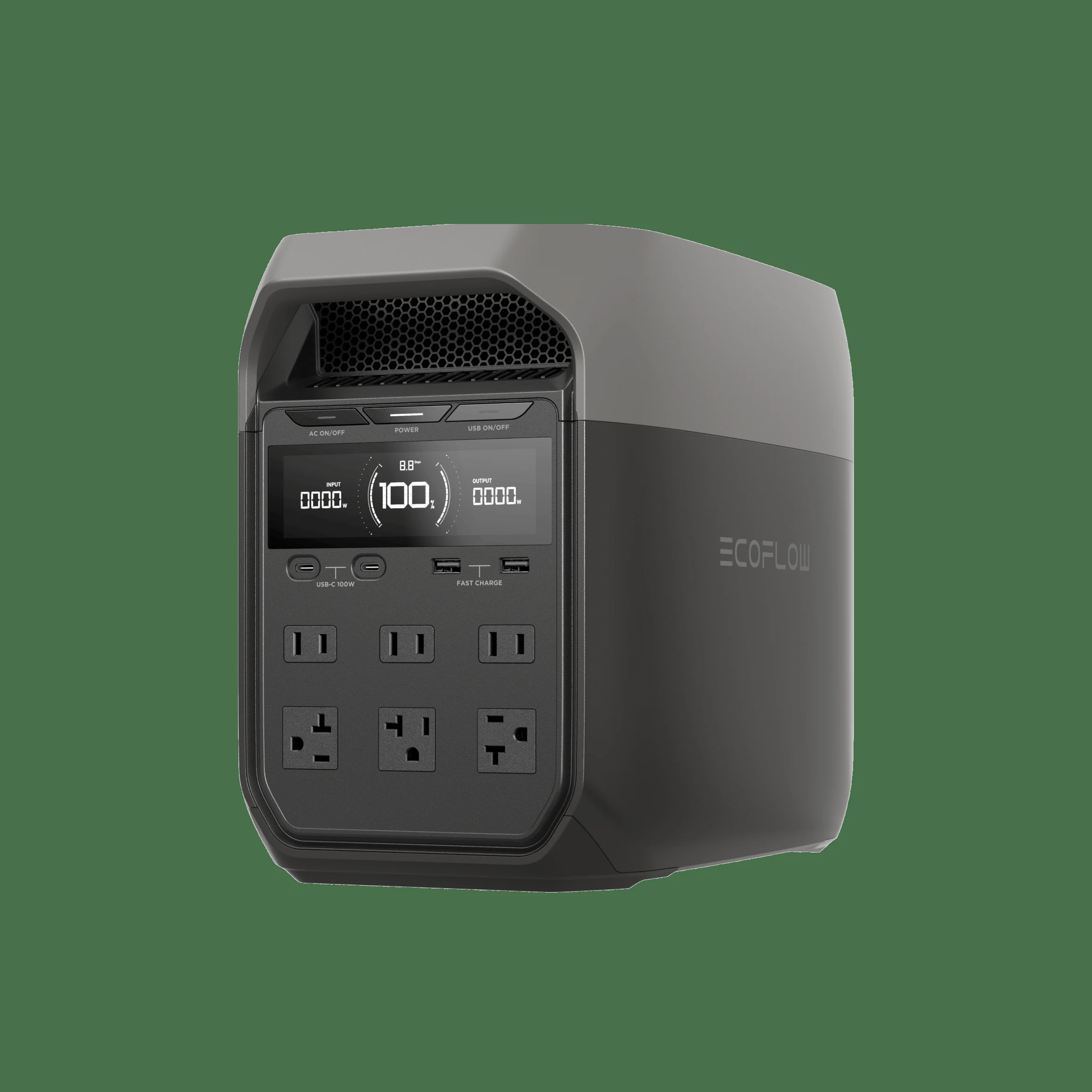
Budget home backup with 1,024Wh, 1,800W output, 50 minute charging, and a path to 3,072Wh. It covers a fridge, router, and lights through a typical outage, then grows later.
Full review →