
anker-solix
Anker SOLIX F2000 (PowerHouse 767)
Anker 2kWh backup with a decade rated battery, four AC outlets, three USB-C ports, and a dedicated RV outlet. Familiar, quiet, and built to sit ready for a decade.
Full review →
Categories
CampingQuiet electricity for the campsite: lights, phones, a fan, and the coffee maker, without a generator's noiseHome backupWhen the grid drops, essentials stay on: fridge, router, lights in one room, phones charged, medical devicesEvents & on-siteRunning shows, shoots, food stalls, and vendor booths off the grid, with clean power and no fumesEmergency prepThe battery you want charged before the storm: communications, lighting, refrigeration, and medical devicesRV / off-gridHouse power that moves with you: 12-volt ecosystems, solar pairing, and batteries that charge from the12V & jump startThe 12-volt rescue: keeping vehicle accessories, lights, and small 12-volt systems alive when you are the onlyProducts
All power stationsCompare specsAferiyAllpowersAnker SOLIXBLUETTIEcoFlowGeyotoGoal ZeroGrowattJackeryRenogyYEAGULCHArticles
Residential vs Business Portable Power: How to Tell What You Actually NeedPortable Power for a Landscaping Company: Ditching the 200-Foot Extension CordPortable Power for a Food Truck That Wants to Plug In AnywhereRunning Job Site Power Without a GeneratorWhole Home Backup vs Appliance Backup: Pick the Right SizeHow Long Will a Power Station Run: A Practical Planning GuidePairing a Solar Panel for a Power Station: What to MatchPortable Power for Outdoor Events: Weddings and ReceptionsGuides
Portable Power for Camping: The Complete Guide to On-Site ElectricityPortable Power for Home Power Outages: A Real Backup Plan for the GridPortable Power for Events & On-Site Work: Running Shows, Shoots, and Stands Off the GridPortable Power for Emergencies: The Battery You Want Charged Before the StormPortable Power for Jump-Starting a Car & Vehicle PowerPortable Power for RV, Van Life & Off-Grid Living Compare AboutTrust
Affiliate Disclosure Privacy Policy Terms of UseWhen a storm takes the power for days and you need most of a house working for a stretch rather than a single evening, the EF ECOFLOW DELTA 2 Max is the larger answer in the DELTA family. It stores 2,048Wh of lithium iron phosphate energy, double the standard DELTA 2, and drives a 2,400W inverter with 3,400W of surge, which opens room for a fridge running all day alongside a television, a router, and a laptop, with headroom left for a microwave or a small space heater on low. A single unit can carry roughly a full day of fridge duty plus other essentials, or stretch toward two days when the load stays at lights, Wi-Fi, and refrigeration. Recharge speed is the headline against rival 2kWh stations. Wall power combined with solar lifts the battery from empty to 80 percent in about 43 minutes, and the solar input accepts up to 1,000W, the highest ceiling in the EcoFlow portable range. A solid panel array can therefore hold the battery near full through a cloudy multi day outage, which is exactly the condition where slow solar chargers fail households. Even from the wall alone, the battery returns to useful capacity quickly during a rolling outage. The cells are rated for more than 3,000 cycles to 80 percent, and the EcoFlow phone app shows charge, output, and battery health from the sofa. Outlets include four AC, a 100W USB-C port, two USB-A, a vehicle port, and a 12V 20 amp DC line. Two extra batteries through the X-Port connection can raise capacity to 6,144Wh for buyers who plan a larger reserve. At 71 pounds the Max is a cart or dolly item rather than a carry up the stairs. It suits multi day storm homes, tool users, and vehicle based RV power where output, solar headroom, and expansion all matter together. Read the full review below, then check the current offer.
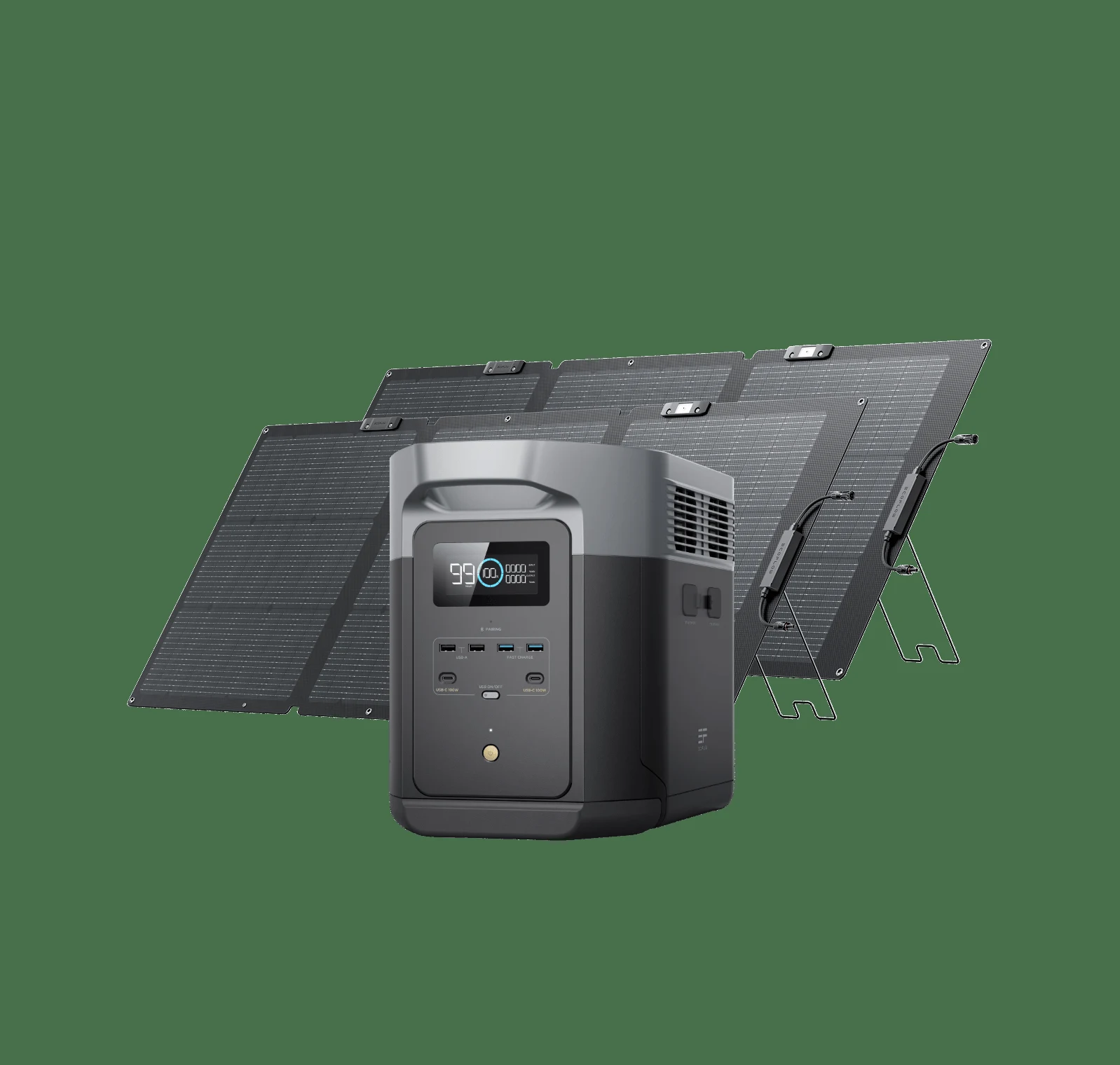
The DELTA 2 Max exists for the reader whose outage history has stopped being theoretical. It doubles the standard DELTA 2's battery to 2,048Wh and pushes the inverter to 2,400W continuous with a 3,400W surge, which opens up a genuinely larger slice of the household: a refrigerator running all day alongside a television, a router, and a laptop, with real room left for a microwave or a small space heater. When a buyer keeps asking whether a 1kWh station will survive a three-day storm, this is the fast-charging home backup that answers yes without arithmetic on the edge.
The output ceiling is where the Max separates itself from the base model. A 2,400W inverter starts compressor appliances cleanly and sustains them, so a cordless-drill pack charger, a small table saw, or a bigger refrigerator motor all behave. For a fast-charging home backup that also needs the output to match the capacity, that is the combination to check. The 2,048Wh capacity translates to roughly a full day of fridge duty plus the rest of the essentials, or close to two days if the load stays at lights, Wi-Fi, and the refrigerator. That is long-outage territory for a single unit, and it is the difference between recharging mid-outage and simply waiting out the weather.
**The recharge story is the feature to check first when comparing fast-charging home backup options, and the Max is EcoFlow's strongest answer.** Wall input pulls the battery from 0 to 80 percent in about 43 minutes when paired with solar, and the unit absorbs up to 1,000W of solar, the highest ceiling in the line. A decent panel array keeps the station near-full through a cloudy multi-day stretch, which is exactly what a long outage demands. Even from a wall outlet alone, the battery is back to useful capacity in roughly an hour, so rolling outages never leave the house dark for long.
The trade is physical: at 71 pounds and a 17.5-inch footprint, this is a basement or garage install, not a staircase carry. Capacity expands to 6,144Wh with two additional batteries, which is the path for a buyer planning serious multi-day home coverage or a full RV build. If your outages are short and the load is a fridge and a router, the smaller DELTA 2 does the job at a lower price; if you need most of the normal household running for a couple of days without a generator, the DELTA 2 Max is the large home power station to point to, and the current asking price is posted on EcoFlow's product page.
The DELTA 2 Max exists for the reader who keeps asking whether a 1kWh station will survive a three day storm, because this model is the answer that stops the arithmetic on the edge. Double the battery, a 2,400W inverter with a 3,400W surge, and a fridge plus television, router, and laptop running together with room left for a microwave or a small space heater. When outages are measured in days, that combination is what ends the debate.
The recharge ceiling is the second reason this station suits long outages. Up to 1,000W of solar input is the highest in the line, so a decent panel array keeps the station near full through a cloudy multi day stretch instead of lagging the weather. Even from a wall outlet alone the battery returns to useful capacity in roughly an hour, which means rolling outages never leave the house dark for long.
The fast charge is the feature to check first when comparing fast charging home backup options. Wall input paired with solar pulls the battery from 0 to 80 percent in about 43 minutes, faster than most rivals in either the 1kWh or 2kWh class. A station that refills in under an hour during a short restoration window is a station that serves the whole storm.
The 2,400W inverter ceiling saves time on the work side as well. A cordless drill pack charger, a small table saw, or a bigger refrigerator motor all start cleanly and stay running, so a power tool day does not wait for the grid. Capacity without output is a battery with no tools, and this model matches the two.
Think in tiers: the base station covers a long outage for essentials, one extra battery extends the work day, and two take the system to 6,144Wh for multi day whole house duty. Confirm the warranty on the station and each battery before you buy, and check whether panels are bundled or priced separately. Size the solar array toward the 1,000W ceiling, since that ceiling is the reason to choose this tier over a smaller station.
This fits a household that needs most of the normal load running for a couple of days, plus power tool use, full vehicle RV power, and multi day camping. It suits a fridge, television, router, and laptop together with a microwave in bursts. It does not fit a backpacker at 71 pounds, and it is a basement or garage install, not a staircase carry. Buyers with short outages and a small load list are better served by the smaller DELTA 2.
How long will 2,048Wh run the house. Roughly a full day of fridge duty plus the rest of the essentials, or close to two days if the load stays at lights, Wi-Fi, and the refrigerator. Solar input refills the battery during the day and stretches that coverage through a longer storm. Run time depends on exactly what stays plugged in, so a disciplined load list buys another day.
Will it run power tools without tripping. Yes, because 2,400W of continuous output starts compressor appliances cleanly and sustains them, and a 3,400W surge covers the startup draw. A drill pack charger, a small table saw, or a large fridge motor all behave. That output ceiling is where the Max separates itself from the base model.
How does the 1,000W solar ceiling change a multi day outage. A decent array can push close to a kilowatt on a clear day, which refills the battery while the house draws from it. That turns a two day reserve into a system that can wait out the weather. A smaller 500W ceiling cannot keep pace with a 2kWh battery through a cloudy stretch, which is why the ceiling matters.
Against the standard DELTA 2 the Max trades price and weight for double the battery and higher output. The smaller unit is lighter and cheaper and covers a fridge, router, and lights through a typical outage. The Max wins when the household wants the television and a microwave in the same evening as the fridge, which is exactly where the base model's budget ends.
Against sealed 2kWh rivals the Max trades a closed system for solar ceiling and expansion. Sealed units are lighter and simpler but accept less solar and cannot grow past 2kWh. The Max accepts 1,000W of solar and expands to 6,144Wh with two add on batteries. Choose the sealed station for a single night and this one for a system that will be used for years.
A common mistake is running the whole refrigerator, TV, and space heater at once without watching the battery. The 2,400W inverter handles the combination, but 2,048Wh drains faster than anyone expects when the load list grows. Keep the always on list to essentials and use the microwave and heater in shifts.
A second mistake is treating 71 pounds as portable enough for a campsite carry. This is a garage or basement install with a 17.5 foot footprint, and it should be given a permanent spot with short cable runs. Plan the install before it arrives rather than discovering the weight on the stairs.
Get the most from this setup by pairing the station with a panel array that approaches the 1,000W ceiling. Two mid size folding panels or a fixed array can keep the battery near full through a bright outage day and turn a two day reserve into multi day coverage. Test the layout at home so the storm day is execution, not learning.
A second habit is keeping the station at a mid range charge in storage and testing the load list each season. A written outage list with fridge, TV, router, and laptop in order costs nothing and prevents the kettle argument during the storm. Stations that are tested every spring stay proven in the winter that matters.
Store the battery at a mid range charge, run a full cycle a couple of times a year to let the monitor recalibrate, and keep the vents clear of dust so the fans hold up under sustained load. The 3,000 plus cycle LiFePO4 design rewards a dry, temperate spot and a regular top up, and it punishes a battery left empty in a hot garage until the storm arrives.
Links open the official listing. Price, terms, and availability can change, so the live page is the source of truth.
Same situation, different option. Worth comparing before you decide.
Anker 2kWh backup with a decade rated battery, four AC outlets, three USB-C ports, and a dedicated RV outlet. Familiar, quiet, and built to sit ready for a decade.
Full review →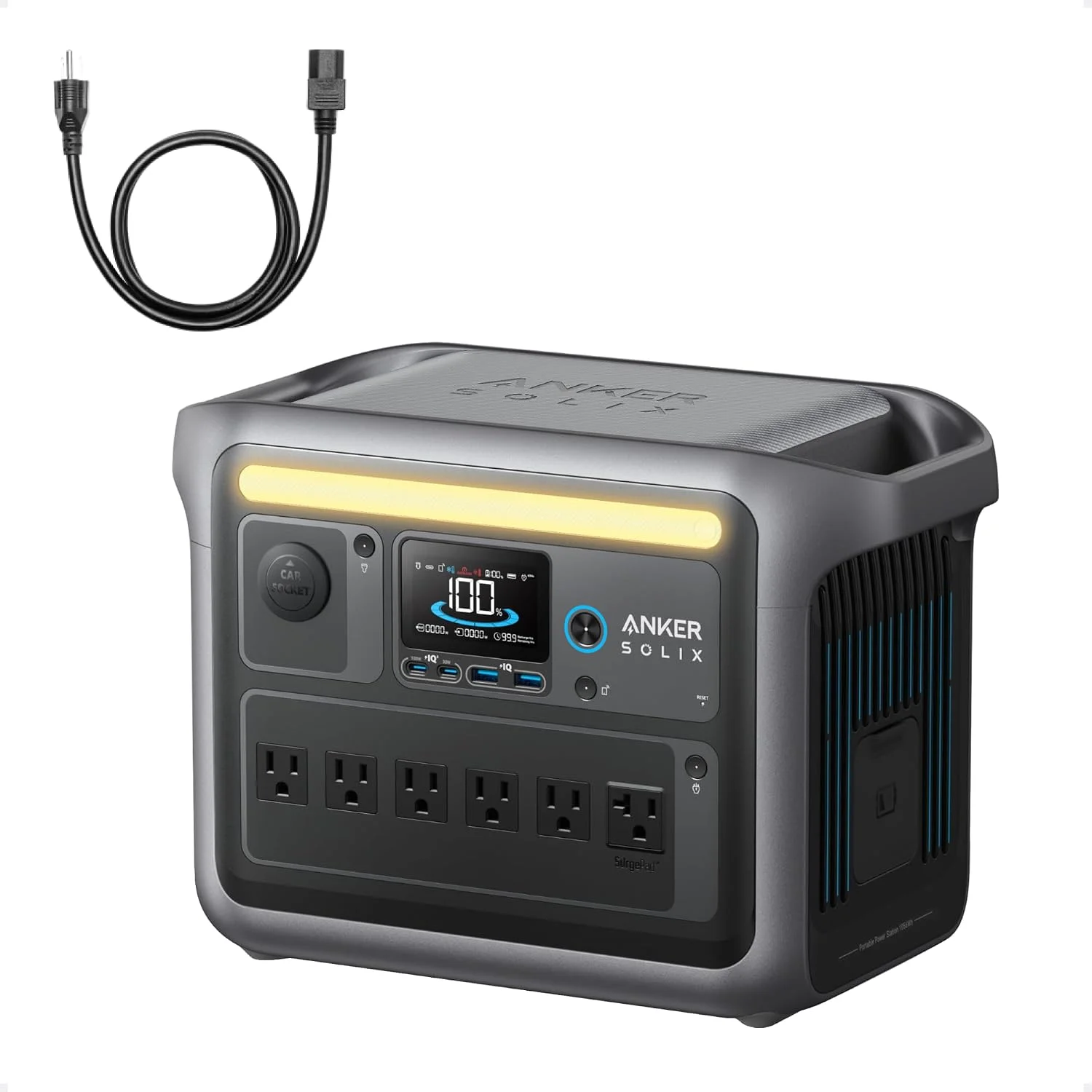
Anker trust with a 15 percent smaller 1kWh body, 80 percent charging in 43 minutes, and a 1,800W inverter. The easy first buy for home backup, camping, and the truck.
Full review →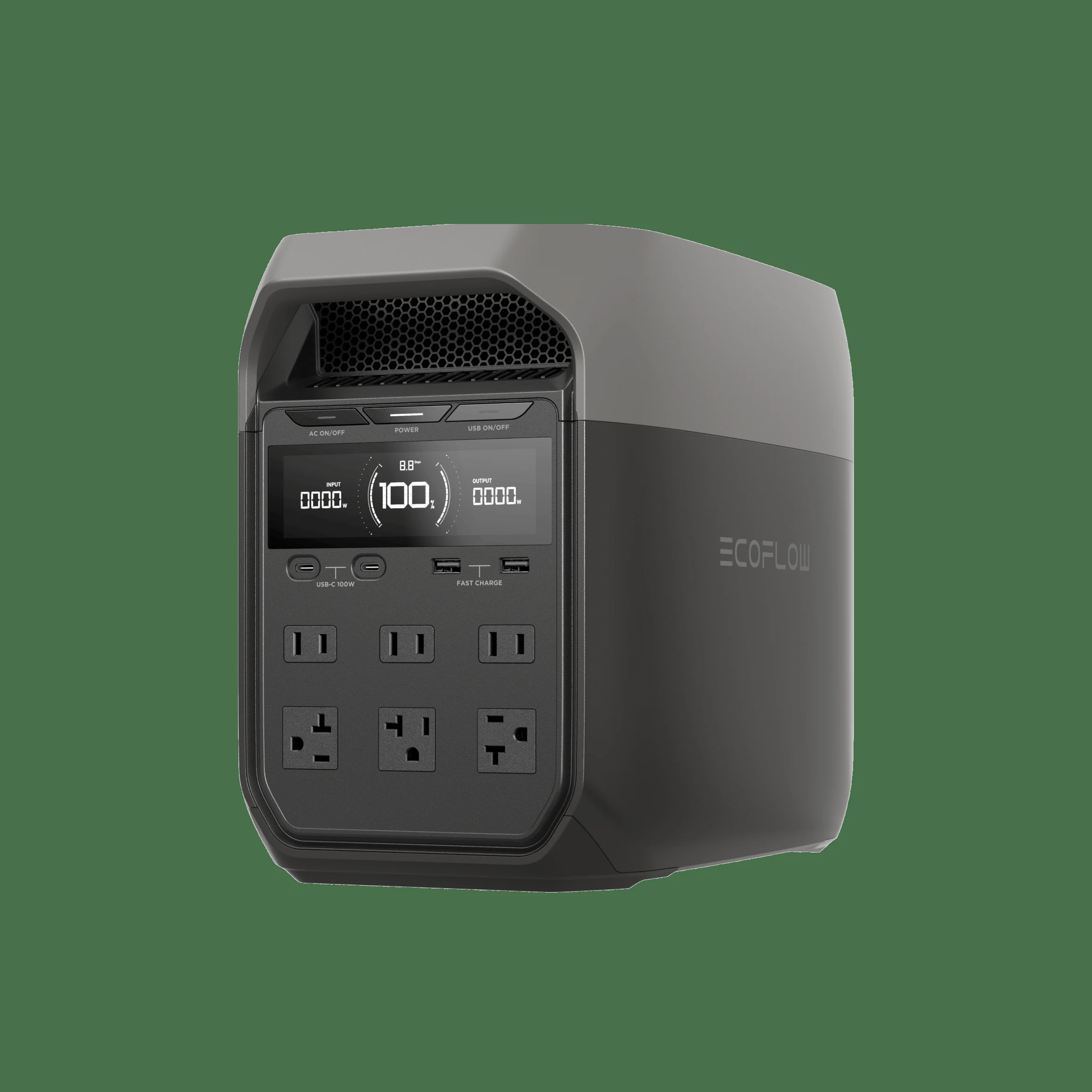
Budget home backup with 1,024Wh, 1,800W output, 50 minute charging, and a path to 3,072Wh. It covers a fridge, router, and lights through a typical outage, then grows later.
Full review →